- Higher nickel costs support mill hikes
- Indonesian 304 2B prices hold firm
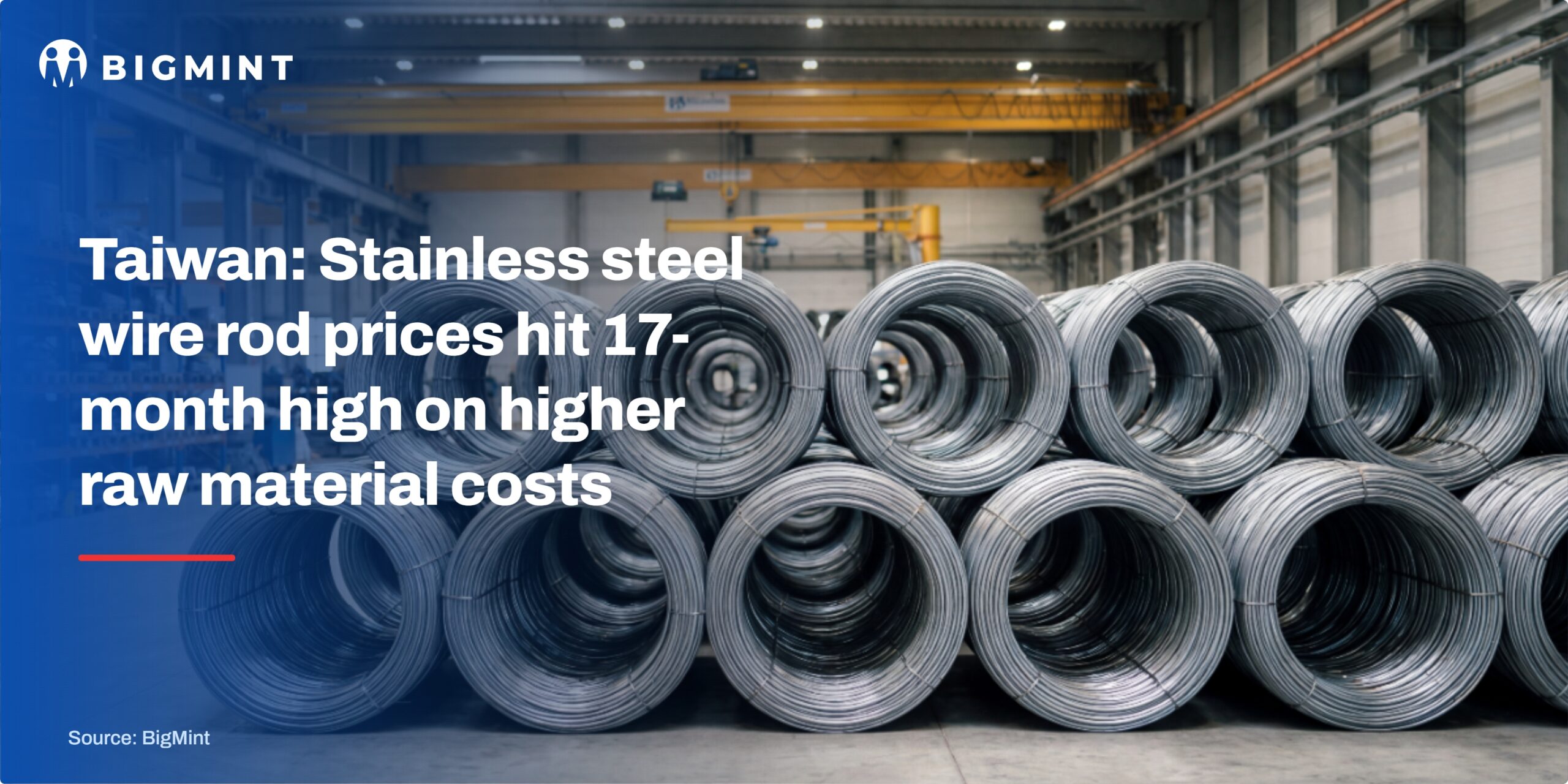
Taiwan’s stainless steel wire rod export prices have risen above NT$97,000/t ($3,050/t), reaching a 17-month high and increasing by more than NT$19,000/t ($597/t) over the past seven months. The increase has been supported by higher raw material costs, particularly nickel, prompting mills to raise domestic list prices and pushing export values higher.
Higher prices have benefited major Taiwanese producers such as Walsin Lihwa and Yieh Hsing. However, export volumes remained subdued, with Taiwan’s stainless steel wire rod exports totaling around 58,900 t during January-August. Market participants noted that the impact of higher selling prices on producers’ profitability will depend on whether export volumes improve alongside price realisations.
304 stainless steel prices rise for third consecutive month
Taiwanese steelmakers raised 304 stainless steel prices by NT$1,000/t ($31/t) for October, taking the cumulative increase to NT$4,000/t ($126/t) over three consecutive monthly adjustments. Market participants expect the current period to serve as a price verification phase, with mills maintaining firm pricing while distributors assess replenishment requirements.
Although raw material costs have shown some fluctuations, finished stainless steel markets have remained relatively resilient. Indonesian 304 2B cold-rolled stainless steel export prices have remained firm, while broader Asian quotations continue to hold at elevated levels.
Higher inventory carrying costs have also prompted distributors to gradually reduce the availability of lower-priced material. Market participants expect pricing to remain firm, with the low-end range likely to narrow depending on developments in the Chinese market after the holiday period and the strength of downstream transactions.
Outlook
Taiwan’s stainless steel market is expected to remain firm in the near term, supported by higher raw material costs and stable regional stainless steel prices. However, sustained price increases will depend on downstream demand, distributor replenishment and export volumes. Post-holiday developments in China and transaction activity across Asian markets will remain key indicators for the next price direction.
Leave a Reply