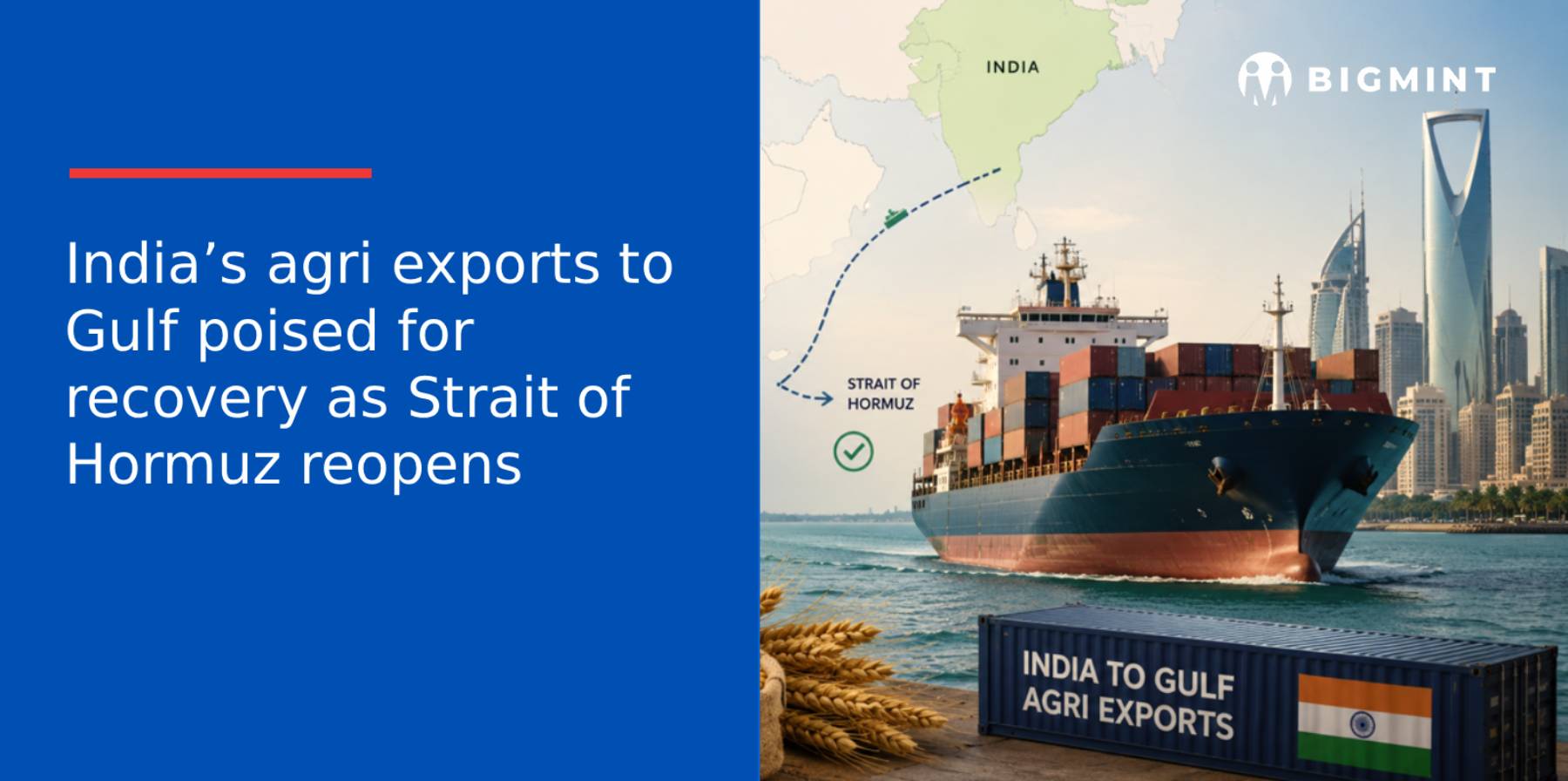
- Strait of Hormuz reopening is set to normalize agricultural exports to the Gulf.
- Lower freight costs and smoother logistics are expected to boost Indian agri exports.
After months of logistical disruptions and elevated transportation costs, India’s agricultural export sector is expected to witness improved trade flows following the reopening of the Strait of Hormuz. The restoration of one of the world’s most strategic shipping routes is likely to provide significant relief to exporters serving the Gulf and wider West Asian markets.
The temporary disruption had impacted shipments of key commodities such as basmati rice, onions, chillies, bananas, pomegranates, mangoes, and other fresh produce, with exporters facing delays, container shortages, and exceptionally high freight charges. Cargo movement through Dubai’s Jebel Ali Port, a major transshipment hub for the region, had also slowed, affecting onward deliveries to Saudi Arabia, Qatar, Kuwait, and neighboring markets.
Freight Costs and Logistics to Improve
During the disruption, freight rates reportedly surged to several times their normal levels, making exports economically challenging for many suppliers. The reopening of the shipping corridor is expected to reduce transportation costs, improve vessel availability, and shorten transit times. Shipping insurance premiums, which had increased amid geopolitical uncertainty, are also expected to soften, further lowering overall export costs and improving trade efficiency.
Positive Outlook for Rice Exports
The development is particularly significant for India’s rice sector, where the Middle East remains a critical destination. More than 70% of India’s basmati rice exports are shipped to Gulf and West Asian countries, making uninterrupted maritime connectivity essential for sustaining trade volumes. Improved shipping conditions are expected to accelerate pending shipments while enhancing India’s price competitiveness in major importing markets such as Iran, Saudi Arabia, Iraq, and the United Arab Emirates. Lower logistics costs could also support stronger export demand in the coming months.
Fresh Produce Trade Expected to Resume
Perishable commodities, including fruits and vegetables, were among the most affected due to delays in cargo movement and rising transportation expenses. The normalization of shipping operations is expected to restore supply chains, enabling exporters to resume regular shipments to Gulf buyers and reduce post-harvest losses.
Gulf Remains a Strategic Market
West Asia continues to be one of India’s most important agricultural export destinations, accounting for around 22% of the country’s food exports, with strong demand for rice, bananas, spices, meat, dairy products, and fresh produce. Despite this strategic importance, recent trade data reflected the impact of logistical challenges. During April–May 2026-27, India’s, Rice exports declined by 0.71% year-on-year to approximately $2.03 billion, Fruit and vegetable exports fell by 14.67% year-on-year to around $0.59 billion.
Market Outlook
The reopening of the Strait of Hormuz is expected to restore confidence across agricultural supply chains, supporting smoother cargo movement, lower export costs, and improved delivery schedules. As freight rates and insurance premiums normalize, Indian exporters are likely to regain competitiveness in the Gulf market, potentially driving a recovery in rice and fresh produce exports over the coming months.
Leave a Reply