- Busan sees no pending scrap cargoes
- Future inflows hinge on mill strategies
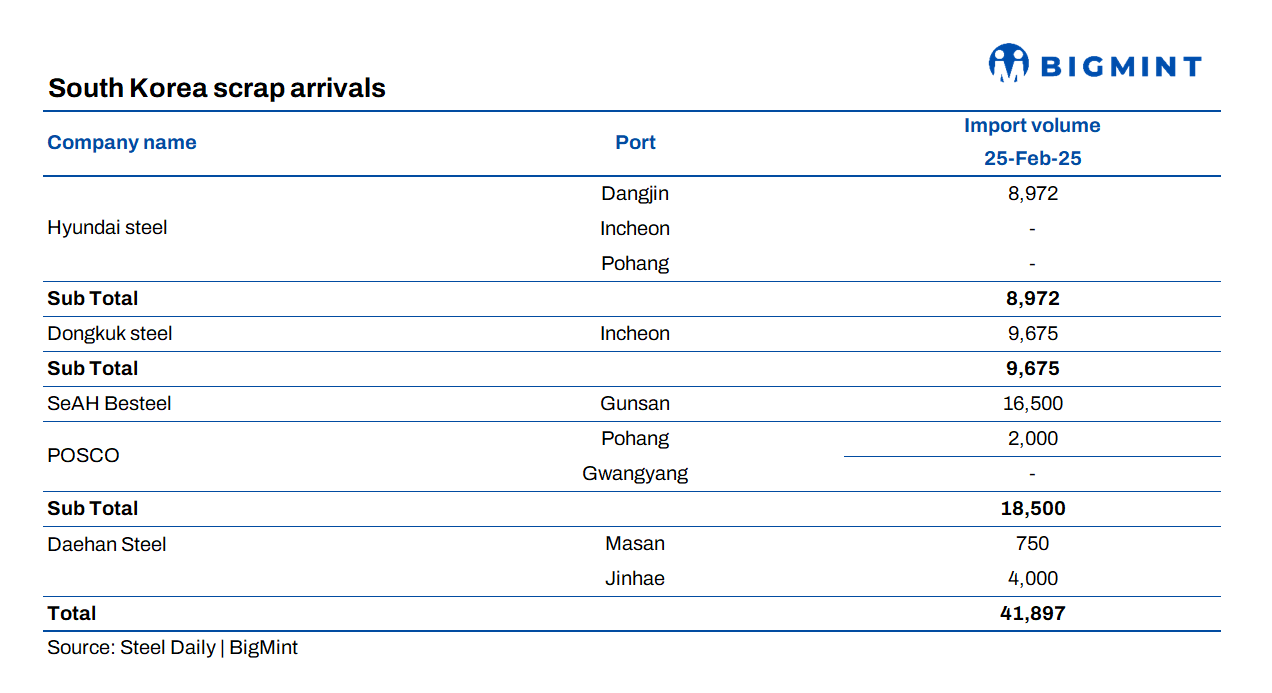
SteelDaily: As of 19 February, immediately after the Lunar New Year holiday, total imported scrap arrivals pending discharge at South Korea’s major ports stood at 41,897 tonnes (t), down by 14,406 t compared to the 11 February survey conducted just before the holiday.
Despite the decline, inflows remain notable, reflecting earlier booking activity by major steelmakers amid tight domestic scrap availability and firm prices.
Port-wise position
- Gunsan Port (SeAH Besteel): Accounted for the largest share of pending arrivals at 16,500 t, all awaiting discharge.
- Incheon Port (Dongkuk Steel): Reported 9,675 t, primarily linked to Dongkuk Steel’s inbound cargoes.
- Dangjin Port (Hyundai Steel): Registered 8,972 t, reflecting steady inflows for Hyundai Steel’s Dangjin works.
- Jinhae Port (Busan-Gyeongnam region): Around 4,000 t of imported scrap was awaiting unloading.
- Pohang Port (Gyeongbuk): Approximately 2,000 t was discharged, with shippers yet to be confirmed.
- Busan Port: No imported scrap cargoes were reported during the survey period.
Market participants indicated that the post-holiday influx is largely linked to a series of contracts signed with Japanese suppliers in recent weeks, as mills sought to secure material amid supply shortages and rising domestic prices.
However, fresh booking activity appears limited. With little news of new contracts from major importers such as POSCO and SeAH Besteel, overall import volumes are unlikely to rise significantly in the near term.
A trader noted that while arrivals remain healthy, future inflows will depend on domestic price trends and mill procurement strategies in the coming weeks.
Note:This article has been published in accordance with a content exchange agreement between SteelDaily and BigMint.
Leave a Reply