- Total scrap import arrivals decline by 8,000 t
- Major mills continue selective scrap inventory replenishment
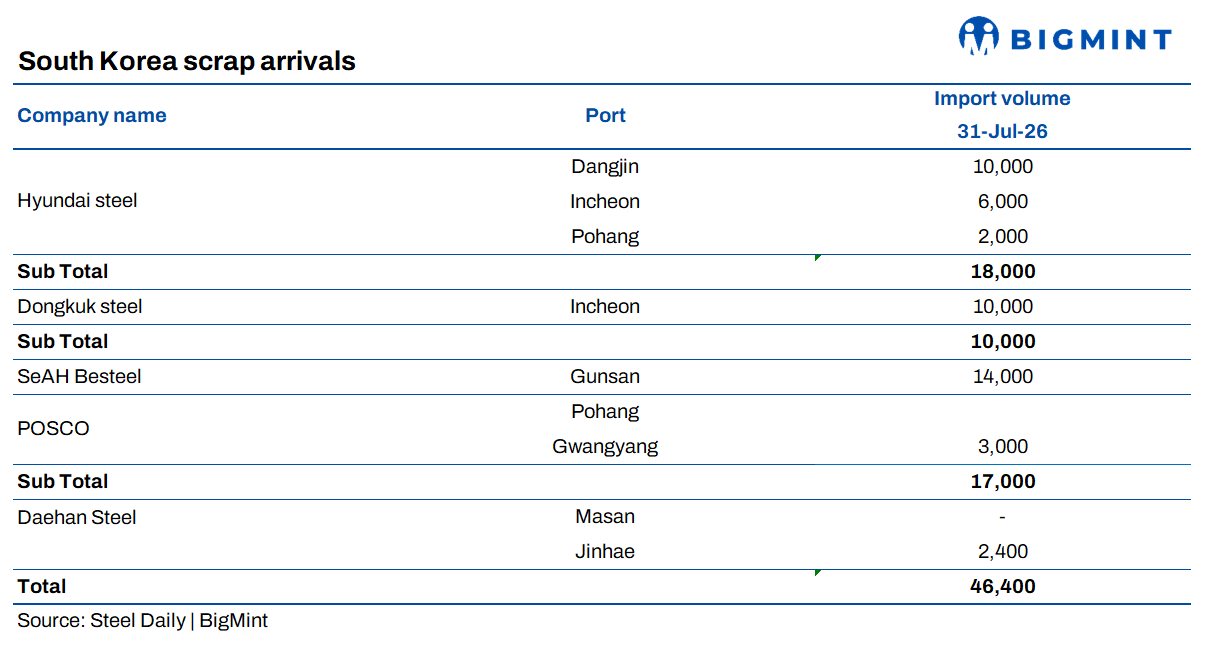
South Korea’s ferrous scrap import arrivals at major ports totaled 46,400 t as of 30 July, down by around 8,000 t compared with the previous survey on 16 July. Despite the overall decline, Hyundai Steel surpassed SeAH Besteel to become the largest importer after increasing scrap arrivals at its Incheon and Dangjin facilities. Import activity remained concentrated in the metropolitan and central regions, while southern ports recorded relatively lower volumes.
Import declarations by companies
- Hyundai Steel declared 18,000 t, comprising 6,000 t at Incheon, 10,000 t at Dangjin, and 2,000 t at Pohang, making it the largest importer during the survey period.
- SeAH Besteel reported 14,000 t of imported scrap.
- Dongkuk Steel declared 10,000 t at its Incheon plant.
- Jinhae Wharf handled around 2,400 t of imported scrap.
- Pohang received approximately 4,000 t, shared between Hyundai Steel and Deokin.
- POSCO declared 3,000 t of imported scrap.
Market updates
While overall import arrivals declined slightly, mills continued to procure scrap selectively to maintain stable inventories. Hyundai Steel’s increased arrivals offset part of the decline reported by SeAH Besteel, reflecting ongoing restocking by major producers despite cautious domestic steel demand.
Port activity also included billet imports and scrap exports. Around 20,000 t of imported billets, reportedly destined for Korea Special Steel, arrived at Jinhae Wharf and are scheduled for unloading through early August. Meanwhile, approximately 1,369 t of scrap was reported being loaded for export at Dangjin’s Godae Wharf, indicating continued two-way movement of steel raw materials.
Note: This article has been written in accordance with a content exchange agreement between SteelDaily and BigMint.
Leave a Reply