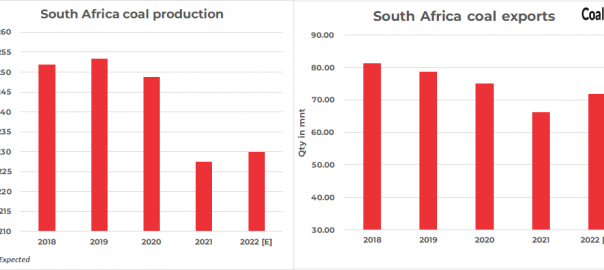
South African coal production has recorded a drop of 8% in the past five years and is estimated to be at 230 million tonnes (mnt) in 2022, as per CoalMint data.
Coal accounts for more than 5% of South Africa’s gross domestic product and the coal industry employs 125,000 people. About 80% of the country’s power generation takes place using coal. However, due to the fossil fuel’s polluting nature and strong protests by the local communities, the country’s government has shifted focus to green transition for power generation. In fact, the reputed coal miners are shying away from making investments in coal mines.
While 2020 was the COVID-19 year, the country’s coal production didn’t record a significant drop compared with 2021 and 2022. This was majorly because of weather-related supply disruptions that heavily hampered the country’s coal production in the past two years.
Exports plummet
South African coal exports share

South Africa is a key coal exporter globally; however, exports have recorded a significant drop of 27% in the past five years. This is majorly because of a curb in demand from two key destinations, India and Pakistan.
India and Pakistan are the top buyers of South African coal since the past five years. In 2022, India’s share in South Africa’s total coal exports have fallen to 29% against 44% five years back, whereas Pakistan’s share has come down to 6% against 12% in 2018.
In India, both the sponge iron and power sectors used to buy high CV South African coal, while in Pakistan power utilities were the key buyers. However, in the past two years (2021-2022), South African coal prices have increased significantly, making Asian buyers opt for alternative origins or indigenous coal.
South African thermal coal prices RB1

While in 2021, South African coal prices rose due to supply disruptions triggered by weather events, Transnet’s rail derailments, cable thefts, vandalism and IT glitches, prices touched all-time highs in 2022 because of the Russia-Ukraine war that resulted in a surge in European demand for South African coal as the sole alternative to Russian coal.
Outlook
With multiple domestic issues, rising constraints and constant pressure to switch to green fuel for electricity generation, South Africa’s coal output is expected to go down further in the coming years. In fact, South Africa and Indonesia will receive a combined $1 billion from the Climate Investment Fund to replace some of their coal-fired power plants with renewable energy facilities, part of the global effort to cut planet-warming emissions.

Leave a Reply