- Carrier capacity discipline, Red Sea disruptions lift index
- Asia-US West Coast logs sharpest w-o-w decline
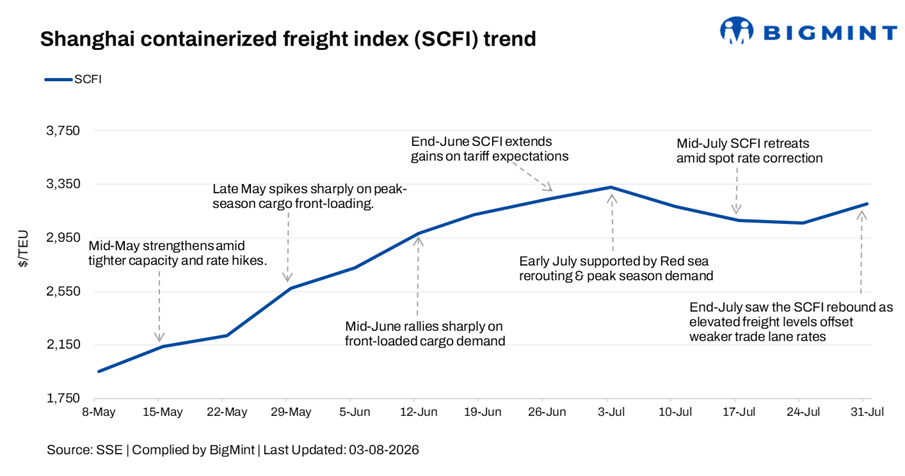
The Shanghai Containerized Freight Index (SCFI) increased 4.67% w-o-w to 3,205.97 on 31 July 2026 from 3,062.95 on 24 July, ending its three-week declining streak and remaining above the 3,200 mark despite softer freights across major east-west trade lanes. The rebound reflected an overall elevated freight environment, although improving vessel availability and moderating booking activity suggested that peak-season momentum is gradually easing.
Across the key corridors, Asia-Europe was largely stable, with only a marginal decline as higher vessel availability and softer export bookings offset support from ongoing Red Sea diversions. Asia-US West Coast recorded the sharpest w-o-w drop, pressured by increased capacity deployment and the fading impact of tariff-driven front-loading. Asia-US East Coast also edged lower as demand and vessel supply moved into better balance.
The Asia-Mediterranean route experienced the most pronounced correction, with additional sailings and slower export demand weighing on freight levels. However, continued Cape of Good Hope rerouting and congestion-related disruptions prevented a steeper decline.
Looking ahead, the scope for a significant downside remains limited. Carrier capacity discipline through blank sailings, prolonged Red Sea disruptions, longer voyage distances, and persistent geopolitical uncertainty continue to tighten effective vessel supply, helping keep overall freight levels well above historical averages.

Outlook
In the near term, the SCFI is expected to remain elevated but may witness further corrections as peak-season demand gradually loses momentum and vessel availability improves across key east-west trade lanes. Softer booking activity and additional capacity deployment are likely to keep freight rates under pressure, particularly on Asia-US and Mediterranean routes.
However, any sharp decline is expected to be limited. Continued carrier capacity discipline through blank sailings, ongoing Red Sea diversions, longer voyage distances, and persistent geopolitical uncertainty are expected to constrain effective vessel supply, providing underlying support to freight levels over the coming weeks.

Leave a Reply