- Out-of-quota duty raised sharply to EUR 490/t from Nov’26
- Higher duties may redirect scrap toward domestic, EAEU markets
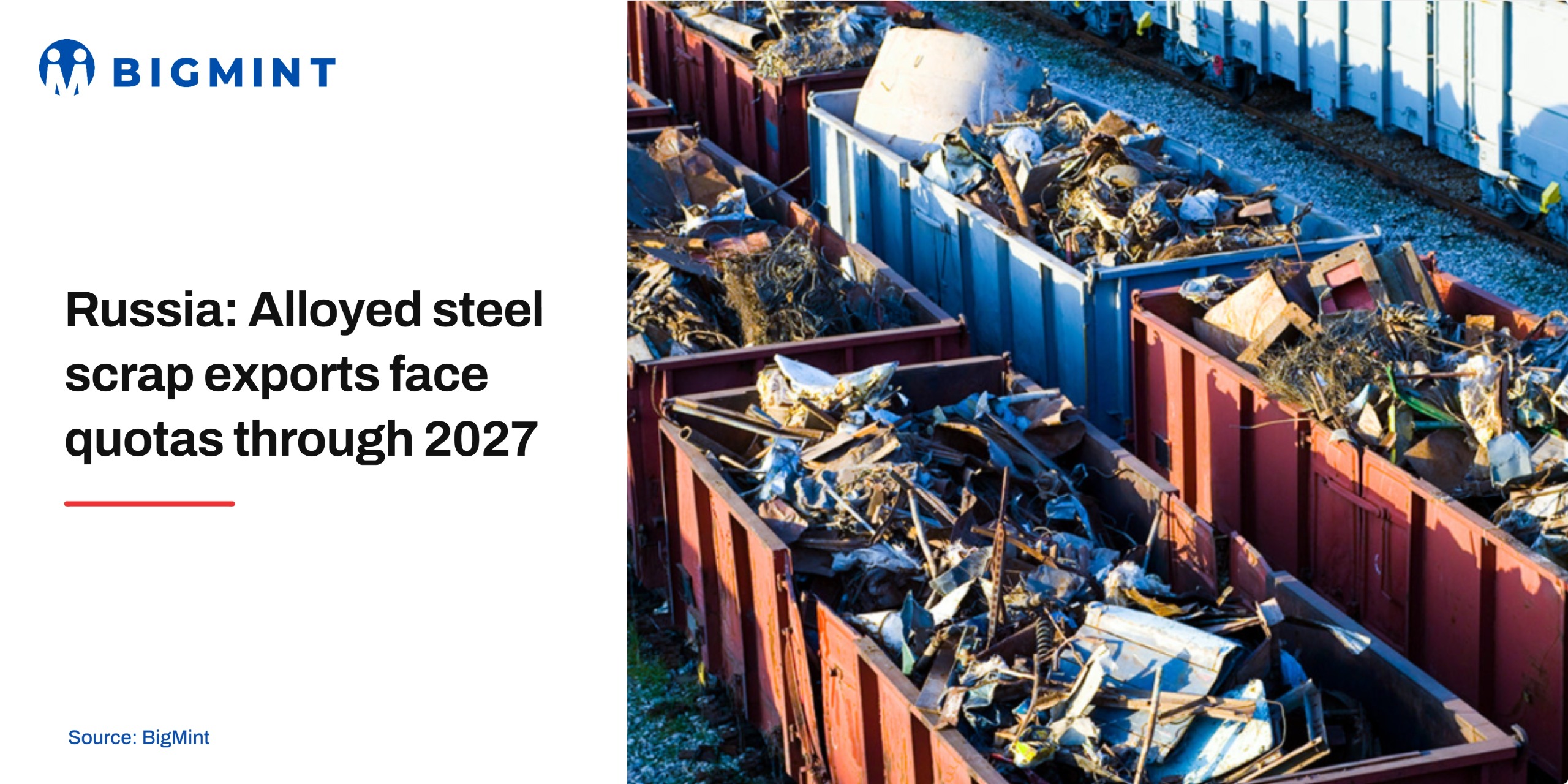
Russia has introduced tariff quotas on exports of alloy steel scrap outside the Eurasian Economic Union (EAEU), with restrictions applying through the end of 2027. The move adds a new layer of control to Russia’s scrap trade and is expected to limit export volumes of alloyed grades outside the bloc.
Alloyed steel scrap exports capped
Under the new measure, exports of alloyed steel scrap under EAEU customs codes 7204 21 and 7204 29 will be subject to quotas. The quota for exports outside the EAEU is set at 7,000 t for the remainder of 2026 and 20,000 t for 2027. The resolution will take effect seven days after its official publication.
Exports within the quota will attract a customs duty of 5%, subject to a minimum of EUR 70/t, through the end of 2027. For volumes exceeding the quota, the minimum duty will rise significantly to EUR 290/t ($332/t) until 31 October 2026, before increasing further to EUR 490/t ($561/t) from 1 November 2026 through 31 December 2027.
Higher duties could restrict out-of-quota shipments
The steep difference between in-quota and out-of-quota duties is likely to make shipments beyond the allocated volumes considerably more expensive. This could encourage exporters to remain within quota limits or redirect eligible material towards domestic or EAEU markets.
The measure comes as Russia continues to maintain broader controls over exports of certain raw materials and scrap, with ferrous and non-ferrous metal scrap among products covered by its wider foreign-trade restrictions.
Additionally, Russia extended its temporary ban on precious metal scrap and waste exports until 30 November 2026, aiming to secure secondary raw materials for domestic refining and maintain higher facility utilisation.
Outlook
The new alloyed steel scrap quotas are likely to keep Russia’s exports of specialised scrap grades tightly controlled through 2027. The significantly higher duties on shipments beyond quota limits could further discourage additional exports, while the continued precious-metal scrap ban reinforces Russia’s broader focus on retaining secondary raw materials for domestic processing.
Leave a Reply