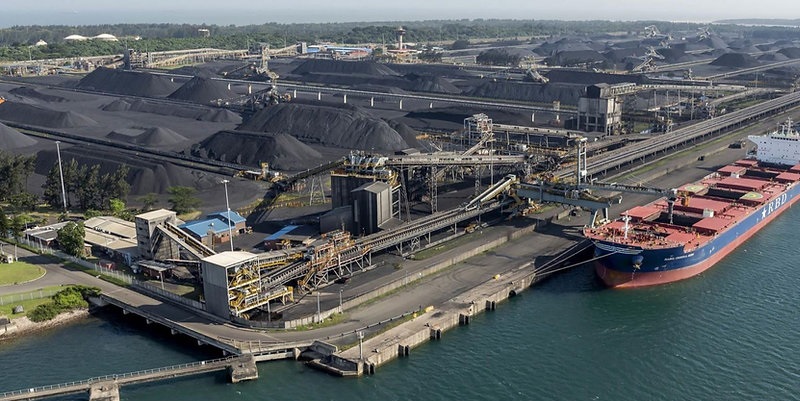
- RBCT inventories down 7.4% y-o-y
- South African deliveries to India rise 11% m-o-m in March
Coal inventories at South Africa’s Richards Bay Coal Terminal fell to 3.8 mmt in April 2026, down 7.4% y-o-y and 5% below the historical April average of 4 mnt based on data since 2009. The inventory drawdown comes despite weaker overall Indian imports in the first quarter, suggesting that South African coal is finding buyers in alternative markets including Pakistan, Vietnam, and other Asian destinations.
Inventory drawdown despite mixed export performance
RBCT’s stock levels have been on a downward trajectory. The April 2026 inventory of 3.8 mnt compares with 4.1 mnt in April 2025. This represents a reduction of 0.3 mnt or 7.4%.
More significantly, current stocks are 0.2 mnt or 5% below the average April inventory since 2009, which stands at 4 mnt.
On a month-on-month basis, April inventories rose 6.6% from March levels of 3.57 mnt. However, this seasonal build has not been sufficient to return stocks to historical norms.
Export performance has been mixed. Indian imports from South Africa in March rose 11% month on month to 3.3 mnt. However, for the first quarter of 2026 as a whole, Indian imports from South Africa fell to 8.7 mnt, down 0.17 mnt or 2% year on year.
RBCT has been operating efficiently, but the inventory drawdown reflects sustained demand from non-Indian buyers.
Pakistan and other buyers step in
The resilience in RBCT offtake, despite lower Indian first-quarter imports, can be explained by demand from other buyers. Pakistan has emerged as a significant destination for South African coal.
Severe LNG shortages in Pakistan have increased the country’s reliance on imported coal. Seaborne coal imports are set to hit a four-year high in April 2026.
Vessel tracking data indicates that multiple Panamax and Supramax cargoes have left RBCT for Pakistani ports including Port Qasim. The freight rate from Richards Bay to Port Qasim was assessed at $24.05-24.10/t for Supramax vessels.
Other Asian buyers, including Vietnam and Sri Lanka, have also taken South African coal. Sri Lanka’s Norochcholai power plant, facing coal shortages linked to a quality controversy, has sought RBCT cargoes.
Price support for FOB Richards Bay grades
The inventory drawdown at RBCT provides price support for South African coal grades, particularly the benchmark 5,500 kcal/kg NAR and 6,000 kcal/kg NAR products.
With Indonesian supply tightening and Russian coal facing continued sanctions-related complexities, South African coal is well positioned to capture market share in price-sensitive Asian markets.
The FOB Richards Bay 5,500 kcal/kg NAR assessment was at $92-93/t.
For Indian buyers, South African coal offers a competitive alternative to Indonesian and United States supplies, particularly for coastal power plants and cement plants on the east coast.
If Indian import demand recovers in the second quarter of 2026, as power plant inventories draw down, RBCT could see further stock depletion and upward price pressure. South African coal is positioned as the swing supplier for the Indian Ocean basin.

Leave a Reply