- India targets 1,200 GW of non-fossil capacity by 2047
- Green Hydrogen Mission to be backed by 125 GW of additional capacity
- PLI for electrolyser manufacturing, BESS extending technology frontiers
Morning Brief: India’s clean energy transition is increasingly becoming an industrial strategy as the government seeks to align renewable energy expansion with the decarbonisation of energy-intensive sectors such as steel. The next phase of the transition extends beyond adding renewable power capacity to developing green hydrogen, domestic manufacturing and policy frameworks capable of supporting low-carbon steel production while preserving industrial competitiveness.
Presenting the Ministry of New and Renewable Energy’s (MNRE) roadmap at BigMint India Ferrous Week 2026, Arun Choudhary, Scientist and Deputy Director, (MNRE), outlined the government’s renewable energy, green hydrogen and manufacturing plans that are expected to underpin the steel sector’s low-carbon transition.
Renewable energy capacity continues expanding
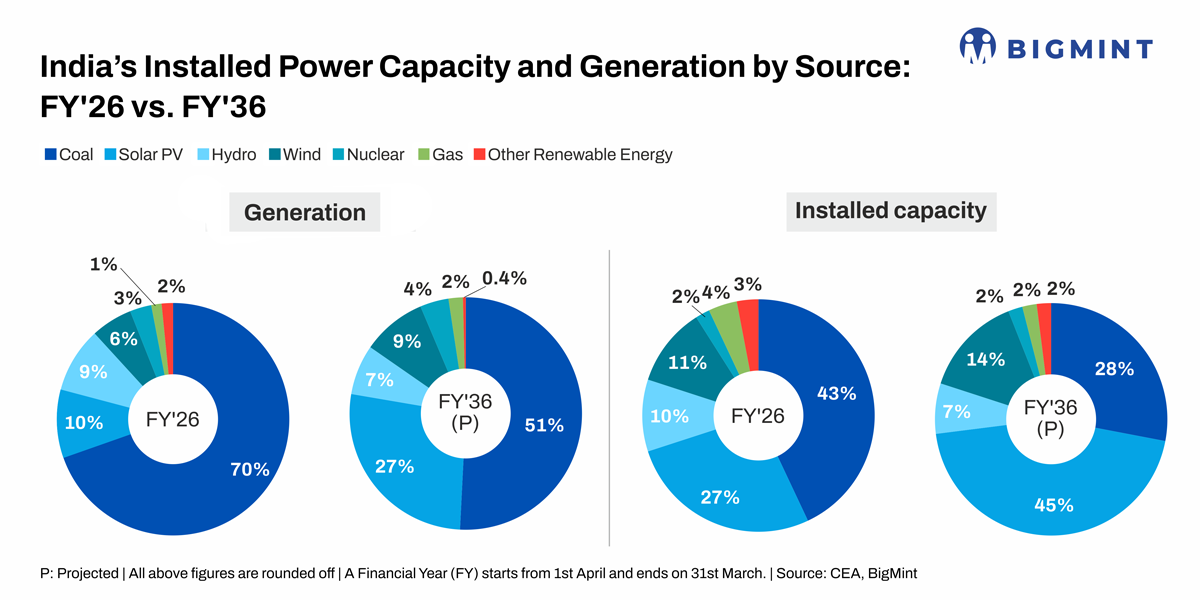
India’s installed power capacity currently stands at 551.99 GW, of which 300.50 GW comes from non-fossil sources, including large hydro. Non-fossil sources now account for 52.85% of installed capacity, making India the world’s third-largest renewable energy market.
Choudhary outlined the government’s target of increasing installed non-fossil capacity to 500 GW by 2030 and 1,200 GW by 2047, while raising the share of non-fossil electricity generation to 77% under its Vision 2047 roadmap. Achieving these targets will require continued expansion of solar, wind, hybrid projects, transmission infrastructure and energy storage alongside greater domestic manufacturing of renewable energy equipment.
Green hydrogen central to steel decarbonisation
The presentation identified the National Green Hydrogen Mission as the government’s principal policy instrument for decarbonising hard-to-abate industries. Backed by an outlay of INR 19,744 crore, the programme targets annual production of at least 5 million tonnes of green hydrogen by 2030, supported by 125 GW of additional renewable energy capacity, more than INR 8 lakh crore of investments and the creation of around six lakh jobs.
Choudhary’s presentation also highlighted the pace of private-sector participation, with 48 announced green hydrogen and green ammonia projects representing a combined production capacity of 3.5 mnt/year, alongside 19 electrolyser manufacturing projects announced by companies including Reliance, Adani, BHEL, L&T, GAIL, John Cockerill-Greenko, Ohmium and H2E Power. Together, these projects are expected to strengthen the domestic supply chain required for hydrogen-based direct reduced iron (DRI) and other low-carbon steelmaking technologies.
Policy and financing remain critical
The MNRE spokesperson also outlined policy measures including Green Open Access, Renewable Purchase Obligation (RPO), BESS, production-linked incentives, domestic content requirements and transmission planning to accelerate renewable energy deployment across industry.
Government estimates presented during the session project renewable energy investment requirements rising from INR 6.3 lakh crore during 2014-22 to INR 27 lakh crore between 2023 and 2030, underscoring the need for greater participation from banks and financial institutions alongside deeper green bond markets and longer-tenor financing.
Outlook
India’s steel decarbonisation pathway is increasingly being shaped by the pace at which renewable energy, green hydrogen and supporting infrastructure can be deployed at scale. Technologies such as hydrogen-based DRI, electric arc furnaces and carbon capture are expected to play an expanding role, but their commercial adoption will ultimately depend on the availability of competitively priced renewable power, transmission networks, financing and policy support. As India pursues simultaneous growth in steel capacity and emissions reduction, the effectiveness of these enabling frameworks is likely to determine the industry’s long-term global competitiveness.
Leave a Reply