- Focus on value addition, processing and premium market opportunities
- IRRI to support preservation of aroma, genetic purity and quality
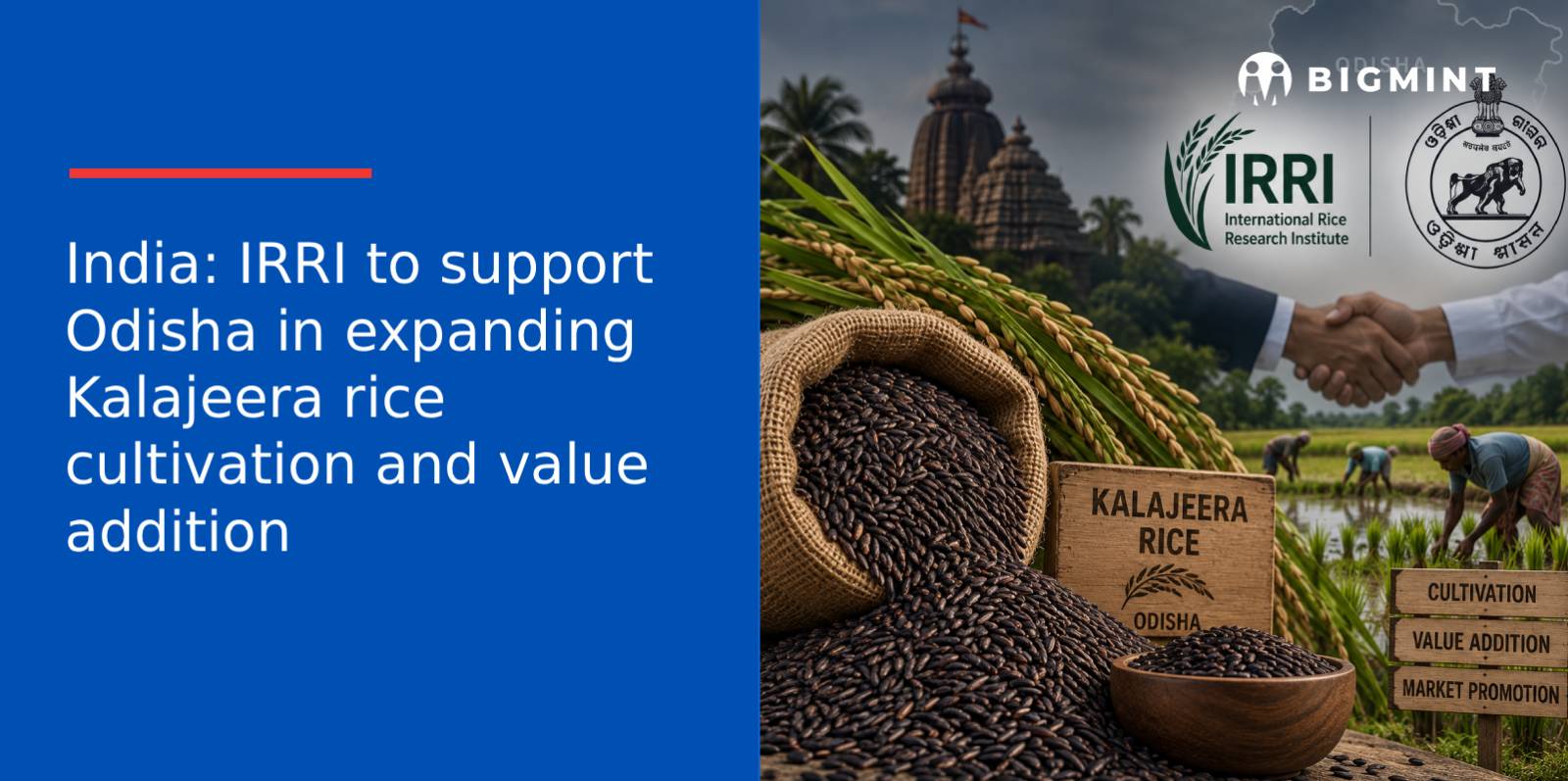
The Odisha government plans to promote Kalajeera rice as a primary demonstration project to encourage farmers to expand cultivation of the indigenous specialty variety. The initiative aims to help farmers benefit from the variety’s premium market value and higher returns, while strengthening the commercialisation of Odisha’s traditional rice varieties.
IRRI to support quality and value addition
Under the proposed collaboration, the International Rice Research Institute (IRRI) will provide technical assistance to preserve the unique aroma, genetic purity and quality of Kalajeera and other indigenous specialty rice varieties. The programme will also focus on developing health-oriented rice varieties, including low-GI (Glycemic Index) rice, expanding opportunities for differentiated rice products.
Focus on processing and broken rice utilisation
The collaboration will seek to increase farmers income through rice value addition, including the development of food products from broken rice. Plans are also underway to establish localised raw rice milling units and regional processing infrastructure, including parboiled rice milling facilities. The development of local processing capacity is expected to create additional opportunities for farmers and rural entrepreneurs.
Women entrepreneurship and market linkages
The initiative will also promote women-led rice-based enterprises, with knowledge and best-practice exchanges involving IRRI scientists from the Philippines. IRRI has invited the Odisha government to participate in the upcoming national-level buyer-seller business meet “Beyond the Bowl”, which aims to strengthen market linkages between rice producers, buyers and other stakeholders.
Outlook
The IRRI-Odisha collaboration could help strengthen the premium and specialty rice segment by combining improved cultivation practices with processing, value addition and stronger market linkages. Expanding Kalajeera cultivation while developing local milling and value-added products could provide farmers with better market opportunities and higher-value revenue streams.
Leave a Reply