- Policy shift aims to boost local steel production
- Indian exporters of niche grades may benefit
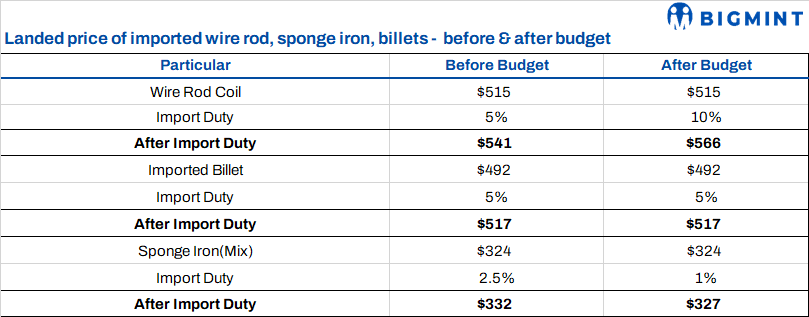
The Nepal Union Budget 2024-25 has introduced notable revisions in import and excise duties impacting the steel sector. The changes aim to balance domestic production incentives while adjusting raw material inflows. Among the significant modifications, the duties for wire rod coils (WRCs) were lifted and those for sponge iron were reduced.
Key changes in import duties
- WRCs
The import duty on WRCs was increased from 5% to 10%, a move aimed at protecting domestic rolling mills and encouraging local billet-to-WRC conversion. This will impact Indian exports to Nepal, resulting in a reduction in export volume. - Sponge iron
In a development that will bring significant relief for local induction furnace (IF) units, the import duty on sponge iron has been reduced from 2.5% to 1%. This is expected to ease raw material costs and support melting operations, especially at a time when global sponge prices are volatile. - Cast iron
No changes have been implemented yet, but duty revisions are expected in the upcoming quarter as part of a broader tariff restructuring plan for non-ferrous and ferrous products.
Market implications
- Policy shift – favouring sponge over billets
Nepal’s FY’24-25 budget reduced the import duty on sponge iron and increased that on WRCs, keeping those for billets unchanged at 5%. This move shows that the government continues to favour the import of sponge iron for local billet production, discouraging direct imports of semi-finished or finished products. - Scrap, sponge import trends
Sponge iron and scrap imports from India are expected to remain strong, potentially substituting for billet arrivals further. - Billet imports
There is limited availability of specific grades, such as wire rod-grade low-carbon billets and prime billets for premium steel products in Nepal, as the country does not have manufacturers for such specialised products. Consequently, Indian exporters specialising in specific billet grades not readily available in Nepal may find niche markets. Continuous monitoring of Nepal’s production capabilities and policy changes will be crucial for identifying such opportunities.
Outlook
With Nepal’s steel industry becoming increasingly self-reliant, the latest tariff changes signal a policy push toward strengthening backward integration. While these changes support local production, stakeholders urge for consistency in tariff policy to ensure long-term planning and investment stability.
Leave a Reply