- New 0.5 mnt smelter planned by 2030
- Green power share target 30% by 2030
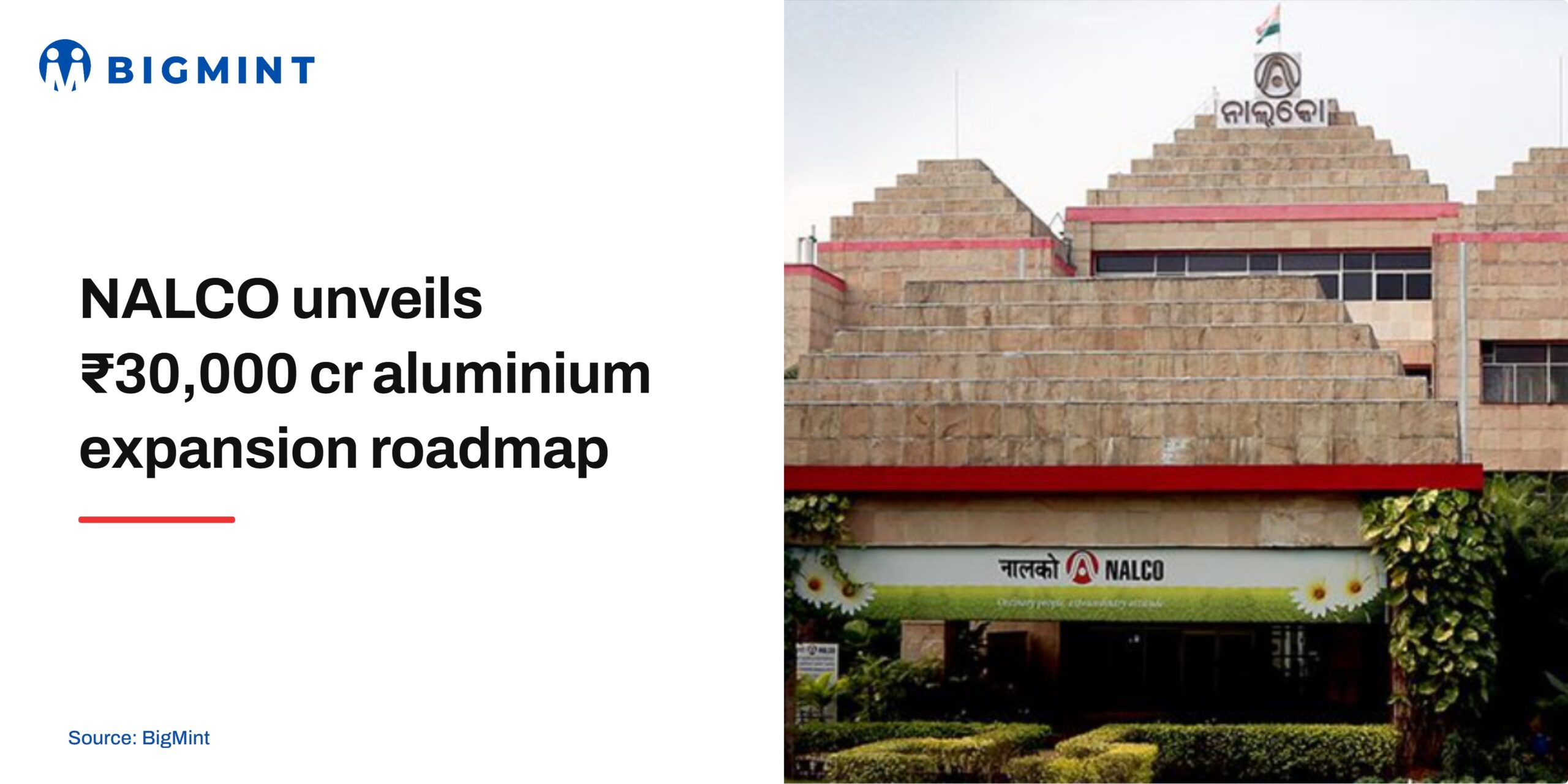
State-owned National Aluminium Company Limited (NALCO) is set to invest around INR 28,000-30,000 crore over the next three to four years to significantly expand its aluminium production capacity, reinforcing its long-term growth strategy amid rising domestic demand.
The investment will primarily support the development of a 0.5 million tonne (mnt) greenfield aluminium smelter along with a 1,000 MW captive power plant, according to NALCO Chairman and Managing Director Brijendra Pratap Singh.
The company plans to complete the Detailed Project Report (DPR) during FY27, followed by the tendering process next year. Groundwork for the projects is expected to commence around August-September 2027, with commissioning targeted by 2030 or 2031.
Of the planned investment, around INR17,000 crore will be allocated to the aluminium smelter, while nearly INR 10,000 crore will be invested in the captive power plant.
Capacity expansion aligns with rising aluminium demand
NALCO’s expansion comes at a time when India’s aluminium consumption is projected to increase from the current 6.2-6.3 mnt to nearly 8 mnt by 2030, driven by infrastructure, transportation, renewable energy and electric mobility.
India’s primary aluminium production currently stands at around 4.3 mnt, leaving a sizeable supply gap that is largely met by the secondary aluminium industry through imported aluminium scrap.
To strengthen domestic supply, NALCO is expanding its aluminium production capacity from 0.46 mnt to 0.96 mnt, while other leading producers are also undertaking capacity additions.
According to the company, strengthening India’s aluminium recycling ecosystem will remain equally important, as improved domestic scrap availability can help secondary producers bridge the widening demand-supply gap.
Green energy remains central to decarbonisation strategy
Alongside capacity expansion, NALCO is accelerating its decarbonisation roadmap by targeting 30% of its total power requirement from green energy sources by 2030.
Power generation remains the largest contributor to carbon emissions in aluminium production. However, the company noted that a complete transition to renewable energy remains commercially challenging, with green power costing around INR 5.5-6 per unit, compared with its existing captive generation cost of nearly INR 3.15 per unit.
Currently, NALCO operates 198 MW of wind power across four locations and 1 MW of solar capacity. The company is also adding another 7 MW of rooftop solar installations, evaluating floating solar projects and sourcing 150 MW of renewable power from Gridco during daytime operations.
These initiatives are expected to lower the company’s carbon emissions by around 4-4.5% in the near term.
Raw material security remains key priority
NALCO is simultaneously strengthening its upstream operations to support future production growth.
Its immediate capital expenditure programme is focused on commissioning the fifth stream of its alumina refinery, involving an investment of around INR 5,700 crore. The project will increase alumina production capacity from 2.1 mnt to 3.1 mnt, with approximately INR 4,950 crore already invested.
The company is also developing the Potangi bauxite mine with an investment of around INR 2,000 crore, ensuring a reliable supply of bauxite to the expanded refinery.
According to the company, existing reserves of around 150 mnt at the Panchpatmali mines and another 110 mnt at Potangi are expected to support refinery operations for the next 15-16 years.
NALCO has also requested the Ministry of Mines and the Odisha government to provide greater preference to captive users in future bauxite mine allocations while continuing to participate in mineral block auctions.
Diversification into critical minerals
Beyond aluminium, NALCO is expanding its presence in critical minerals to support India’s strategic mineral security.
Through Khanij Bidesh India Ltd (KABIL), the company is advancing lithium exploration projects in Argentina. Following completion of preliminary exploration, invasive exploration is currently underway, with results on resource quality and commercial viability expected by October-November 2027.
NALCO is also collaborating with the Bhabha Atomic Research Centre (BARC) and the Heavy Water Board to recover gallium from Bayer liquor, while working with CSIR-IMMT and NML Jamshedpur on extracting rare earth elements such as scandium from red mud.
Leave a Reply