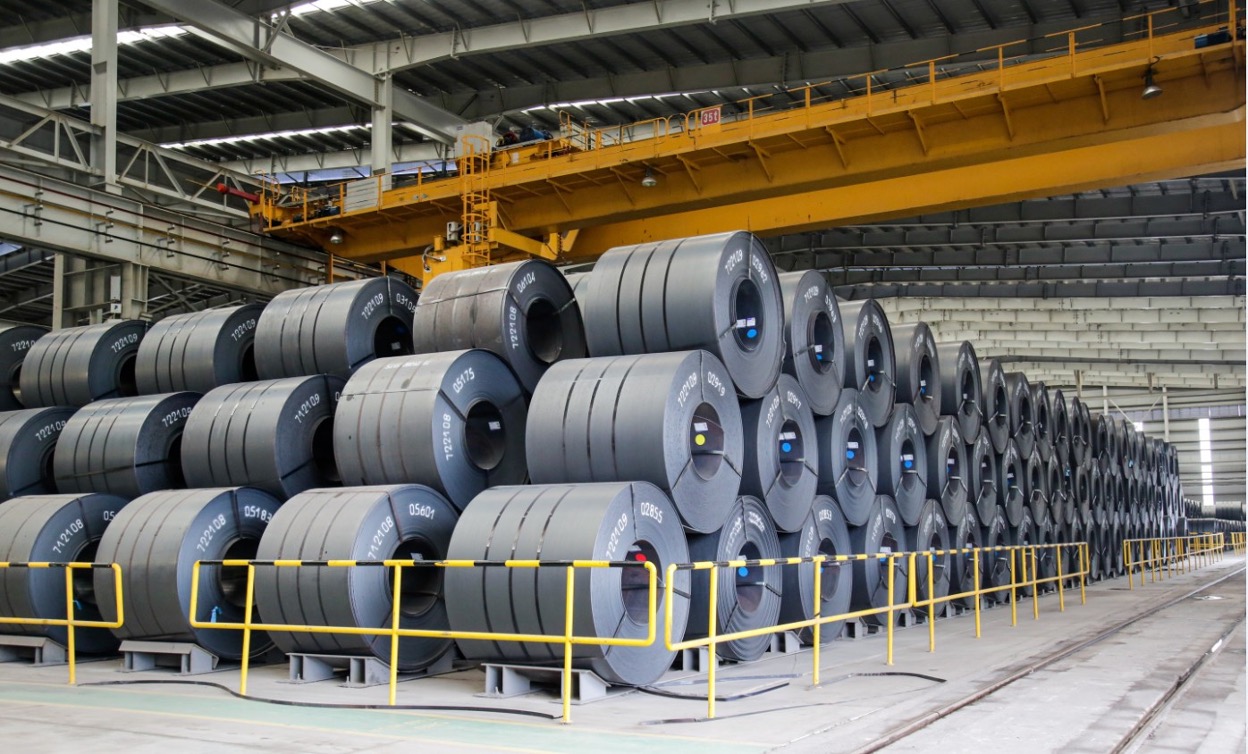
- Trading resumption slow amid frenzy of dumping probes
- Raw material prices may head north, support steel tags
MySteel: China’s steel market is expected to gain upward momentum from the consumption recovery among steel end-users this month, although the price movement may vary among different product types, Mysteel’s Chief analyst Wang Jianhua predicted in his latest monthly market outlook.
China’s steel prices faced downward pressure during February due to the widespread bearish sentiment among market players, but this month the market will be driven by healthier fundamentals, Wang noted.
On February 28, the country’s composite steel price was assessed by Mysteel at RMB 3,591/tonne ($493/t) including the 13% VAT, lower by RMB 20.5/t from a month earlier, though the average price for February edged up RMB 3/t from that in January.
Trading in China’s steel market gradually resumed after the official Chinese New Year (CNY) holiday ended in early February, but end-users’ steel demand recovered relatively slowly last month, prompting some investors to actively take short positions in the futures market, Wang pointed out. This also undermined confidence in the steel spot market, he added.
Moreover, anti-dumping actions against Chinese steel products became more frequent in the international market, with the US, India, South Korea, and Vietnam all announcing plans to impose additional tariffs on steel imports from China in February alone, as Mysteel Global reported. This raised concerns in the domestic steel market and weighed on steel prices as well, according to Wang.
“(The application of anti-dumping tariffs) will undoubtedly have a negative impact on China’s steel market in the long run,” Wang said. “However, hot-rolled coil (HRC) will be the most affected, while the impact on other products will be limited,” he added.
For example, “China’s rebar prices will not see a notable drop in the coming month unless HRC producers intensively shift to rebar production and cause oversupply,” he maintained.
Even if rebar production does expand this month, demand for long products is expected to grow at a faster rate, according to Wang, noting that most building contractors in China are set to expedite their construction in March, ushering in the traditional peak season for steel consumption. By late March, some regions may even experience shortages in steel items of certain specifications, he explained.
More importantly, low steel inventories across the country have laid a solid foundation for an improvement in steel market fundamentals, Wang stressed.
As of February 26, the total inventories of the five major carbon steel products held by the steelmakers and trading houses across 35 cities under Mysteel’s monitoring had fallen by a significant 25% on year to reach 18.8 million tonnes (mnt), Mysteel data show. This was the lowest level recorded during any post-Chinese New Year holiday month in the past four years, Wang observed.
“Even though steel demand was not robust in February, the steelmakers’ output was still effectively absorbed by downstream industries,” Wang said. This means that supply and demand will reach a better balance in March when steel consumption rises further, he noted.
Steelmakers are expected to lift production in response to growing demand this month, which will likely drive up the prices of steelmaking raw materials and in turn lend cost support to steel prices, according to Wang.
By the last week of February, the total output of hot metal by the 247 blast furnace steel mills under Mysteel’s tracking had rebounded to 2.28 mnt/day on average, ending a two-week drop.
Note: This article has been written in accordance with a content exchange agreement between MySteel Global and BigMint.
Leave a Reply