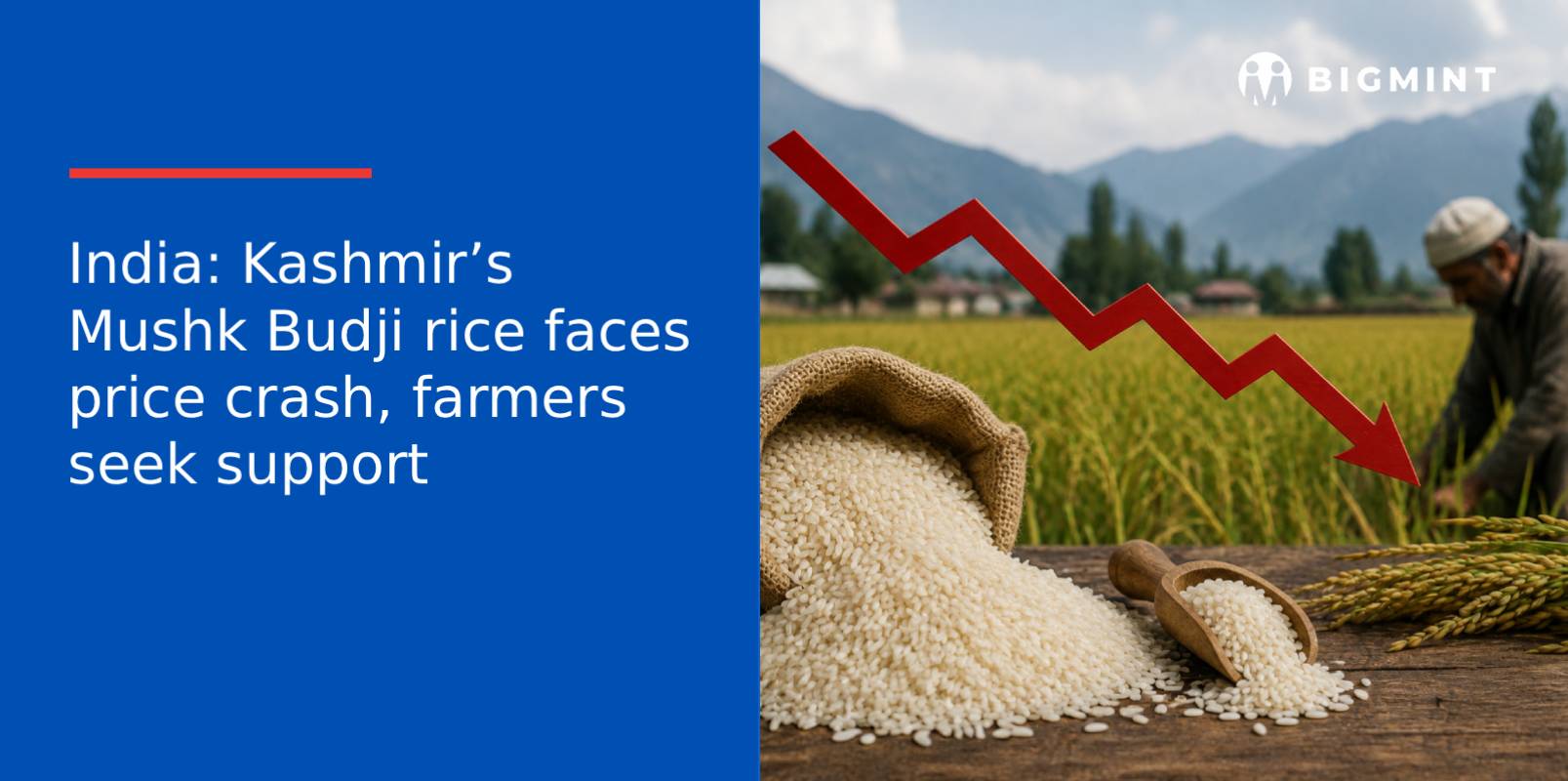
- Mushk Budji rice prices have fallen to ₹6,000-₹8,000/q from nearly ₹25,000 earlier
- Farmers face unsold stocks and falling returns from the traditional aromatic variety
Kashmir’s famed aromatic Mushk Budji rice is facing a steep price decline, putting farmers under pressure as unsold stocks accumulate. The premium traditional variety, known for its distinctive aroma and taste, was earlier fetching nearly ₹25,000 per quintal, but prices have now dropped to around ₹6,000-₹8,000 per quintal, according to farmers.
Sharp decline puts farmers under pressure
The steep fall in prices has significantly reduced returns for growers of Mushk budji rice. Farmers say the weak prices are making cultivation increasingly difficult to sustain, particularly as stocks remain unsold. Mushk budji is traditionally associated with Sagam in Kokernag, which is considered one of the best natural areas for cultivating the variety. However, the current price situation has raised concerns among growers about whether cultivating the variety will remain economically viable.
Farmers seek market support
Farmers have appealed to authorities for intervention to improve market support and ensure remunerative prices for Mushk budji rice. The sharp price correction has also renewed concerns over the The developments come at a time when India is looking to expand its premium rice exports, including greater access to the Japanese market, while its basmati rice continues to face a geographical identity dispute with Pakistan in Europe. However, despite the strong demand potential for premium rice in international markets, Mushk Budji farmers are struggling to get a fair price in the domestic market, with prices falling sharply.
Factors driving the price decline
The price decline is mainly linked to weak demand, rising production and growing unsold stocks. Farmers also face limited processing and marketing facilities, quality concerns and competition from cheaper rice sold as Mushk Budji. Although cultivation had declined after rice blast affected Kashmir’s crop in the 1960s, the GI tag awarded in July 2023 raised hopes of better branding and wider markets. However, farmers say these benefits have yet to materialise, while the expansion of cultivation into areas with different climatic conditions has further weakened the market for the traditional variety.
Outlook
Mushk budji prices may remain under pressure in the near term as farmers continue to face unsold stocks and weak market returns. Without stronger market support and better price realization, prolonged low prices could reduce the economic viability of cultivating the traditional variety and pose challenges to its continued preservation.
Leave a Reply