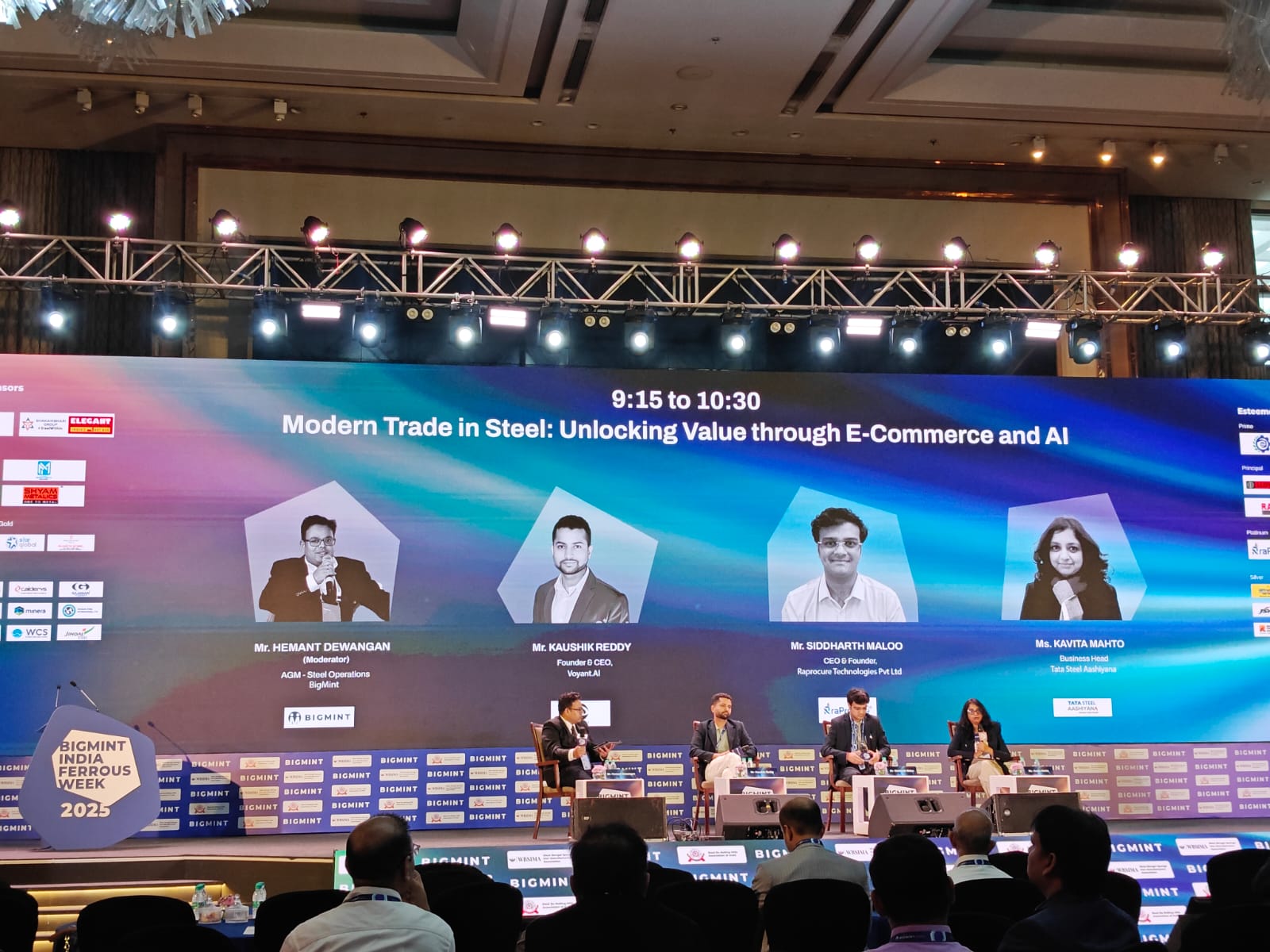
The steel industry, long defined by entrenched distribution channels and heavy reliance on traditional networks, is undergoing one of its most significant transformations in decades. Digitization, automation, and artificial intelligence (AI) are no longer optional—they are fast becoming imperatives for competitiveness.
At a recent panel discussion on “Modern Trade in Steel: Unlocking Value through E-Commerce and AI”, industry experts examined how e-commerce platforms, automation tools, and blockchain are streamlining procurement, enhancing transparency, and reshaping customer expectations across the value chain.
E-Commerce is Changing the Way Steel is Bought and Sold
E-commerce has brought steel trade closer to other consumer-facing industries by making pricing, access, and delivery more transparent. Procurement platforms now enable buyers to float inquiries, conduct reverse auctions, and compare quotations in real-time. This has created measurable savings—in both cost and time—while broadening access for smaller buyers traditionally excluded from bulk markets.
Panelists highlighted that more than 14,000 users adopted online procurement within 12 months on one such platform, underscoring the pace of change. Although India remains in the early stages of adoption, the competitive push and customer expectations are accelerating the shift. One speaker summed it up succinctly: “The biggest challenge is no longer technology—it is mindset.”
At the retail level, younger consumers are embracing online steel purchasing in much the same way as they buy books, groceries, or electronics. The insight is simple but powerful: customers don’t benchmark their experience against legacy steel trade practices. They expect the same convenience, speed, and reliability that applies to digital transactions everywhere else.
Automation and AI
AI is emerging as a true game-changer. In logistics, where freight accounts for up to 30% of landed cost for some inputs, the timing of procurement can significantly impact margins. As panelists noted, accurate freight timing through AI-enabled insights can save as much as $200,000 on a single bulk shipment.
This type of decision-making was once the preserve of global trading majors with large teams and proprietary data. Today, AI-driven pattern recognition, forecasting, and optimization are democratizing access, enabling small and medium traders to compete effectively.
The use cases extend beyond freight and procurement:
- Inventory planning through AI prompts ensures just-in-time delivery.
- Predictive analytics improve cost efficiency and demand planning.
- Recommendation engines help end users, from contractors to individual homebuilders, make informed material choices.
As one panelist noted, “If you’re not using AI, you are not standing still—you are falling behind, because someone else is already using it.”
Blockchain for trust & Transparency
Steel as a commodity often suffers from friction in disputes around quality, delivery, and payment terms. Blockchain offers a long-term solution by recording specifications, contracts, and quality certifications on tamper-proof ledgers. This strengthens trust among supply chain partners, improves traceability, and accelerates settlements.
Smart contracts and tokenized invoicing are seen as particularly promising in international trade, where multiple jurisdictions and intermediaries otherwise slow the process. By reducing paperwork and shortening settlement cycles, blockchain directly improves working capital efficiency—an advantage both buyers and sellers welcome.
Evolving consumer profiles
The discussion also emphasized shifting consumer profiles and expectations. One panelist shared the example of a young professional purchasing steel online at 1 a.m.—not because of industry-specific drivers, but because he expected the same digital convenience he enjoyed in other parts of life.
Another key observation: more than 50% of new online buyers fall within the 25–40 age group, illustrating how younger consumers are reshaping demand practices in construction and housing. These buyers are looking not only for materials but also for knowledge, tools, and support as they undertake projects.
As a response, platforms are investing in “content-to-commerce” strategies—offering interactive tools for budget estimation, design visualization, and project planning alongside product sales. Notably, one AI-driven recommendation engine that mapped neighbourhood buying patterns contributed 20–30% of gross merchandise value (GMV) for its platform within months.
The message is clear: steel e-commerce is no longer about digitizing transactions alone. It must deliver customer empowerment.
Overcoming resistance and channel conflict
Despite rapid digitalization, cultural resistance persists. Many stakeholders—dealers, contractors, and legacy businesses—remain cautious about adopting new platforms. The consensus is that this reluctance is less about technology and more about mindset. Initial hesitancy often gives way once users witness cost savings and improved efficiency.
Interestingly, the conflict between offline and online sales channels is being neutralized through marketplace strategies. Instead of bypassing traditional dealers, some steel giants are onboarding them as sellers on e-commerce platforms, ensuring inclusivity across the ecosystem. This collaborative model reduces friction, accelerates adoption, and expands the overall market.
Key takeaways
- E-commerce platforms are transforming procurement by enabling price transparency, expanding buyer access, and digitizing credit and documentation.
- AI in logistics and procurement is generating real savings—optimizing freight, improving demand planning, and driving efficiency.
- Blockchain technology offers robust tools for trust, dispute resolution, and faster settlements across the global steel value chain.
- Consumer behavior is changing rapidly, with younger, digital-native buyers expecting the same seamlessness in steel purchases as in consumer goods.
- Cultural change and mindset shifts remain challenges, but collaboration across online and offline channels is creating an inclusive path forward.
Conclusion
The steel industry stands at the threshold of a decisive decade. The message from the panel was clear: digitalization is no longer a choice but a necessity. Competitive advantage will flow to those who harness AI, e-commerce, and blockchain to transform everyday operations and customer experiences.
One panelist captured the spirit with a memorable line: “It is not the big fish that swallows the small, but the fast fish that outpaces the slow.”
For steel businesses, speed in digital adoption will determine who thrives in the new age of modern trade.
Leave a Reply