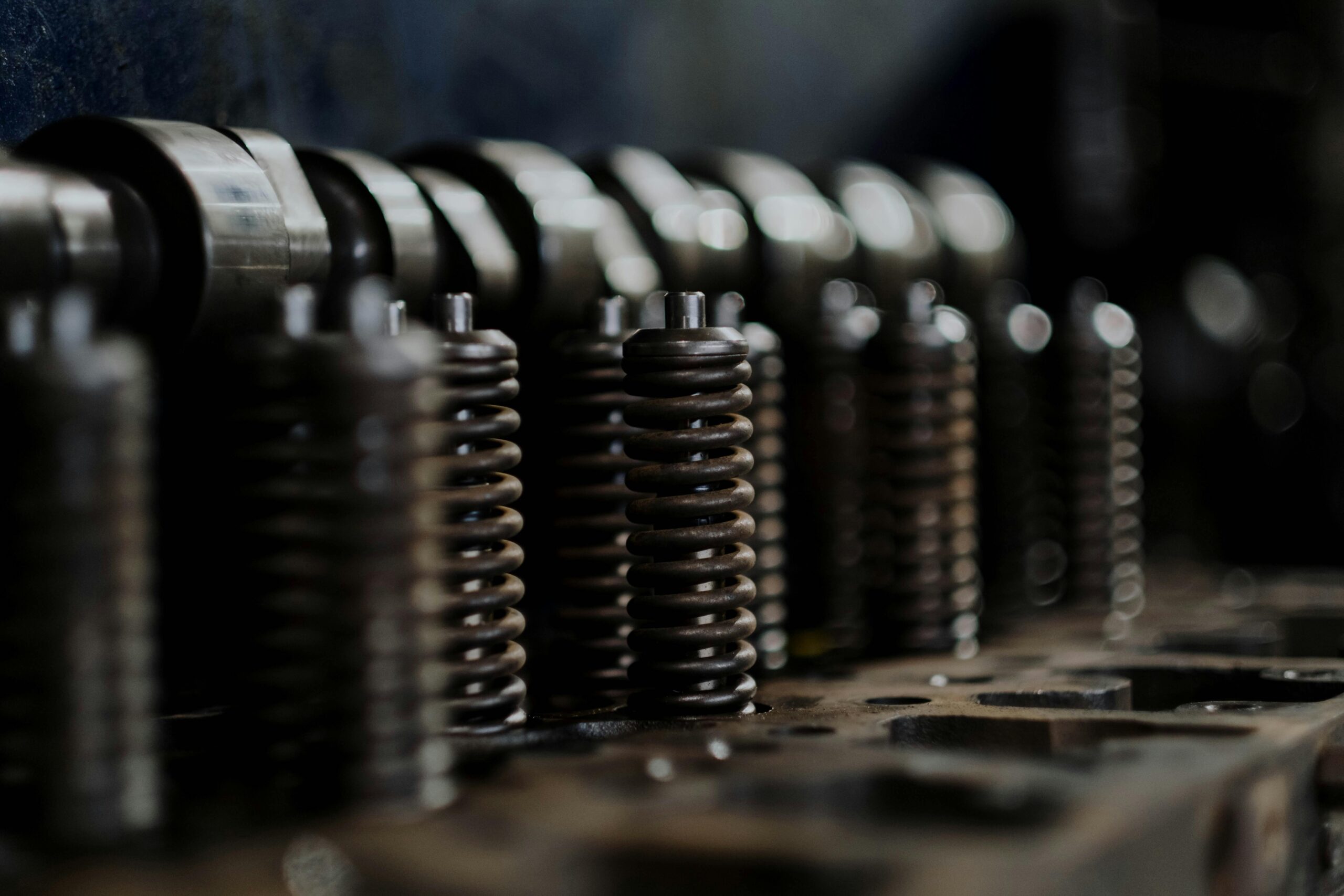
- True steel performance metric is fatigue resistance
- Auto forged steel demands advanced secondary metallurgy
When people talk about modern automobiles (electrification, batteries, software, light-weighting) attention naturally goes to body panels, aluminum castings and electronics. But a vehicle does not move because of sheet metal. It moves because of long products.
Alloy bars, forging quality rounds, bearing steels and spring steels form the rotating skeleton of every vehicle. They carry torque, transmit motion, survive billions of cycles and decide whether a machine lasts 10 years, or fails suddenly. These are not visible parts. They are life governing parts.
Automotive long products
What are automotive long products? Long products are steels produced as bars, rods or rounds and later forged, machined or heat treated into critical components: Crankshafts, gears, transmission shafts, axles, hubs, steering knuckles, bearings, springs, wheel studs and heavy duty chains all originate from forging bars or rounds.
In heavy vehicles and infrastructure equipment, the same metallurgical logic extends to anchor chains and large forged components, parts that must never fail catastrophically. Unlike sheet steel (which protects occupants), long products ensure the vehicle keeps functioning over time.
Real design target: fatigue, not strength
Most people assume stronger steel means better performance. For rotating automotive parts, this is only partly true. The real enemy is fatigue. A crankshaft may rotate billions of times in its life. A bearing experiences microscopic repeated stresses every second. A spring deflects millions of cycles over rough roads.
These parts rarely fail because they were not strong enough.
They fail because a microscopic crack started, and slowly grew. Therefore the true performance metric is not ultimate strength, not yield strength but resistance to crack initiation and crack growth. And that depends primarily on steel cleanliness and microstructure control.
Why steel cleanliness matters
In fatigue loaded parts, the most dangerous feature inside steel is not carbon level or alloying, it is non-metallic inclusions. A single hard inclusion acts like a needle tip inside the material. Under repeated loading, a crack begins there. This is why automotive forging steels demand advanced secondary metallurgy: vacuum degassing to remove gases, calcium treatment to modify sulphides, ladle refining and argon stirring, and controlled casting to avoid segregation.
Modern bearing steels and critical shafts are designed not merely by composition but by maximum allowable inclusion size. In long products, durability is created in the steel plant, not the machine shop.
Balancing hardness and toughness
Different components require different metallurgical strategies. Crankshafts and shafts use quenched and tempered alloy steels that combine strength with toughness. Gear steels are carburised: hard on the surface for wear resistance, but ductile in the core to avoid fracture. Spring steels rely on elastic strength and fatigue resistance rather than hardness. Bearing steels are extremely clean high carbon chromium steels capable of sustaining rolling contact for millions of cycles.
Microalloyed Nb-V-Ti steels are increasingly used because they refine grain size and improve fatigue life while reducing distortion during heat treatment. The challenge is always the same, a hard surface with a forgiving interior.
Forging is shaping not just geometry, but grain flow. Forging does more than give shape. It aligns the internal grain flow along the load path. A machined component cut from plate has random grain orientation. A forged component has directional strength. This dramatically improves fatigue resistance and crack arrest capability.
Closed die forging is therefore fundamental for automotive reliability, particularly for rotating and impact loaded parts.
Surface engineering is where life is multiplied. Most fatigue cracks start at the surface. So after forging and heat treatment, critical components undergo: induction hardening, carburising or nitriding, shot peening, and precision grinding and superfinishing.
Shot peening introduces compressive stress at the surface, making it harder for cracks to open. This single step can multiply fatigue life several times. The final performance of a part is not determined by steel composition alone but by the complete metallurgical chain.
Relevance in EV era
Electrification removes some traditional components, but it does not remove long products. Instead, requirements shift. Higher RPM motors demand better bearings. Single speed gearboxes carry higher torque pulses. Regenerative braking increases cyclic loading. NVH expectations require smoother rotating assemblies.
The frequency of loading increases, which increases fatigue sensitivity. Therefore steel quality requirements become tighter, not looser. EVs are not reducing metallurgical importance. They are increasing precision requirements.
The bigger perspective
Sheet steel protects life in accidents. Long products protect reliability during life. If body steel determines crash survival, forging steel determines operational survival. A modern vehicle is therefore governed by two metallurgies: energy absorption metallurgy (structures) and endurance metallurgy (motion).
The second is quieter, but no less critical.
Final thought
Automotive progress is often described in terms of software, batteries and light weighting.
Yet the difference between a vehicle that works flawlessly for 300,000 km and one that fails early often comes down to microscopic features inside a forged bar. Not visible engineering but decisive engineering. The future of mobility will still be written, quite literally, in steel grain boundaries.
This article is published by BigMint in collaboration with author Mr. R.V. Sridhar, Senior Independent Advisor, McKinsey & Co.
Leave a Reply