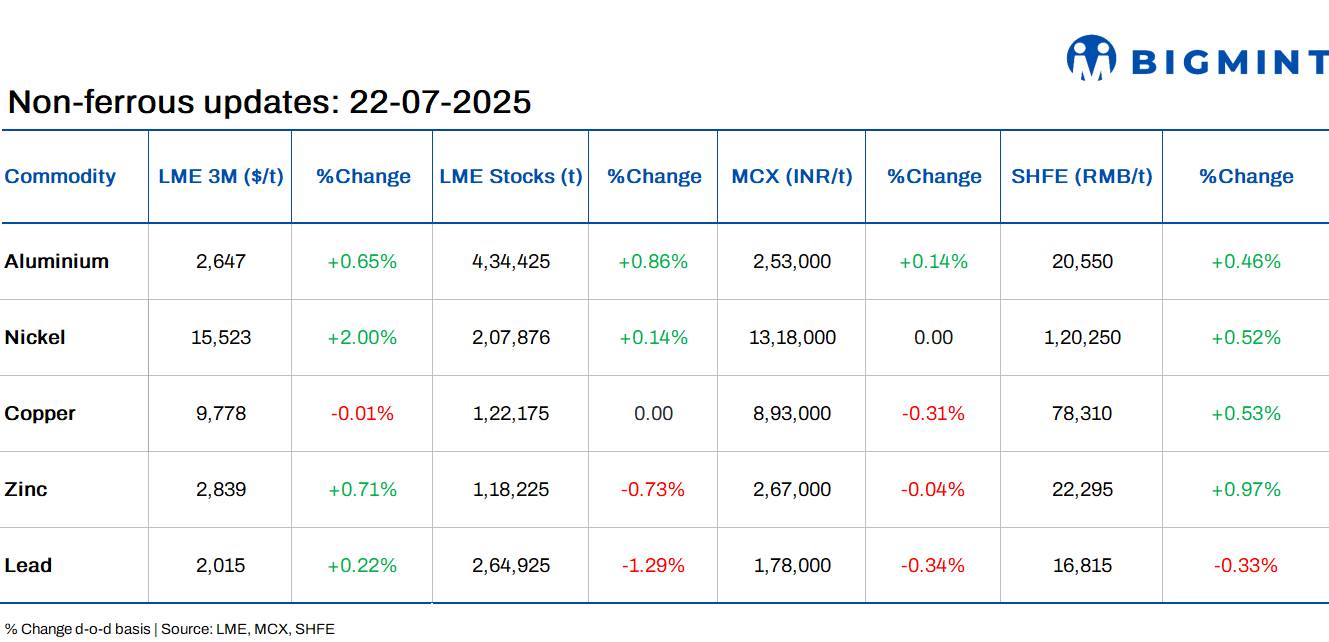
- LME nickel up 2% d-o-d
- Lead inventory records highest decline
Base metals prices on the London Metal Exchange (LME) saw positive trends d-o-d, with nickel increasing by 2% to $15,523/tonne (t). Meanwhile, inventories at LME-registered warehouses registered divergent movements d-o-d, with lead recording the highest decline of 1.29%.
Indian market overview
In India’s non-ferrous metals markets, BigMint assessed domestic copper armature scrap at INR 811,000/t ex-Delhi, up by INR 14,000/t d-o-d. Aluminium Tense scrap prices increased by INR 1,000/t d-o-d, with ex-Delhi at INR 198,000/t and ex-Chennai at INR 201,000/t.

Market updates
BHP exits Kabanga, Lifezone takes control
BHP has sold its 17% stake in Tanzania’s $942M Kabanga Nickel Project to Lifezone Metals for up to $83M. Lifezone now fully controls the project, which is expected to produce 50,000 t of nickel annually after a six-year ramp-up. The move reflects BHP’s shift amid a challenging global nickel market.
Anglo Asian ramps up copper ambitions
Anglo Asian Mining has taken a major step toward becoming a mid-tier copper producer with the start of production at its Demirli mine in Azerbaijan’s Karabakh region. The mine is expected to yield 4,000 t of copper concentrate in 2025, ramping up to 15,000 t annually from 2026. This marks the company’s second copper asset brought online this year, following the launch of the Gilar mine. CEO Reza Vaziri called the move a “significant step” in the firm’s transition from gold to copper, with three more copper projects in the pipeline.
Oil slips on trade war fears, demand concerns
Oil prices fell as rising trade tensions between the US and EU sparked worries over weakening global fuel demand. Additional pressure came from growing supply and potential US sanctions on Russian crude. Although a softer dollar offered some support, investor sentiment remained cautious amid fears of tariff hikes, economic slowdown, and the gradual rollback of OPEC+ output cuts.
Leave a Reply