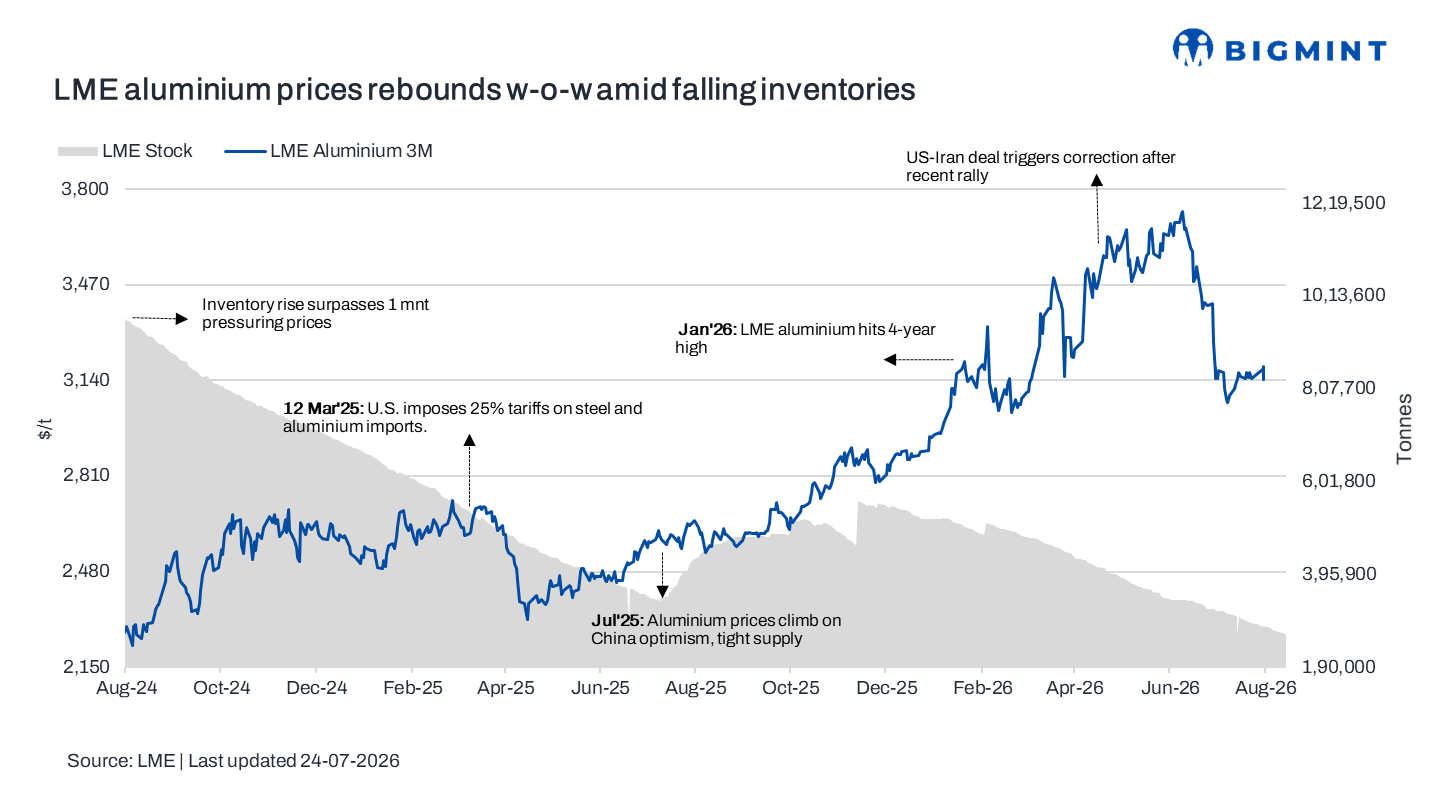
- Tight prompt supply underpins LME aluminium prices
- Indonesian supply growth limits aluminium price upside
LME aluminium prices remained firm in the week ended 8 August 2026, with the three-month contract averaging around $3,280/t, up 0.7% w-o-w from $3,259/t recorded in the previous week.
Prices strengthened during the week, supported by tighter exchange inventories and firm global market sentiment. However, gains remained moderated by subdued physical demand and expectations of improving global supply.
W-o-w, LME aluminium inventories declined by 0.6% to 257,900 t from 259,400 t a week earlier. The continued drawdown in exchange stocks indicated tightening availability and provided underlying support to aluminium prices.
What impacted aluminium prices?
LME aluminium prices remained firm in the week ended 8 August 2026, with the three-month contract averaging around $3,280/t, compared with $3,259/t in the previous week. The price strength was primarily supported by continued declines in LME inventories and tightening availability of readily deliverable metal, with the latest market data showing stocks falling further during the week. Aluminium also benefited from a broader firming trend across base metals, particularly the strong rally in copper, which improved overall sentiment toward industrial metals.
On the supply side, China’s aluminium production remains constrained by its capacity ceiling, limiting the scope for significant additional output, while power-related risks and production disruptions outside China continue to keep the global supply outlook relatively tight. At the same time, expectations of rising Indonesian aluminium supply and higher exports are preventing a sharper price increase, as new capacity is gradually adding material to the global market. LME aluminium inventories declined to 257,900 t from 259,400 t a week earlier, reinforcing concerns over prompt availability and providing a fundamental floor to prices.
Outlook
LME aluminium prices are expected to remain firm in the near term, supported by declining exchange inventories, tight prompt availability and constrained Chinese production. However, improving Indonesian supply and subdued physical demand could limit further upside, keeping prices range-bound with a positive bias.
Leave a Reply