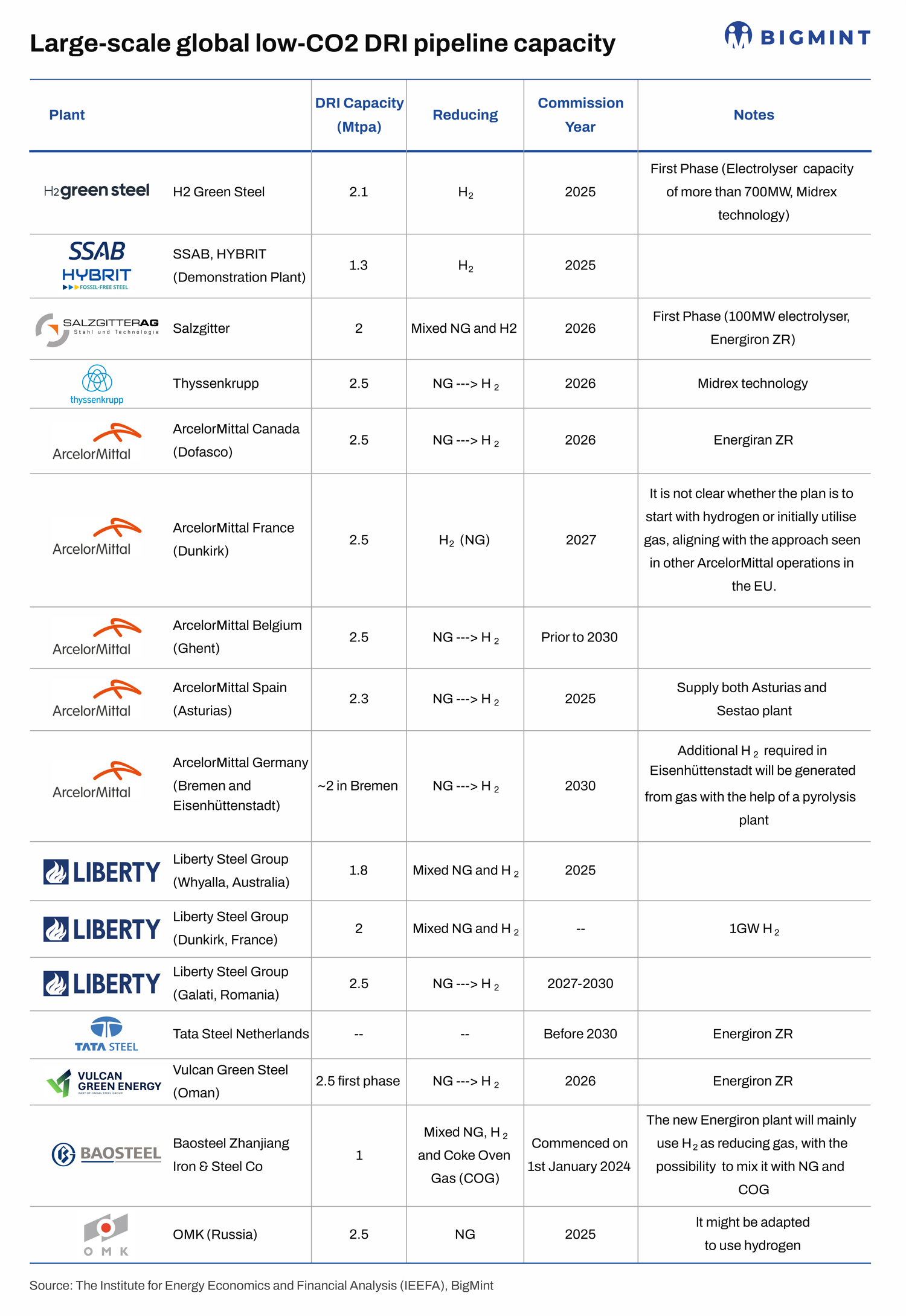
Research by the HYBRIT partners, working on a pioneering H2-DR technology, shows that a BF emits 1,600 kgCO2 from the combustion of coking coal and oil to produce one tonne of crude steel. The DRI route only emits 25 kgCO2 while consuming approximately 58 kg of hydrogen, in turn using 2,633 kWh of power. While the BF-BOF route has a CO2 intensity of over 2 tCO2/thm (tonne of hot metal) and the natural gas (NG)-DR-EAF route emits around 0.8 tCO2/thm, H2-DR paired with EAF steelmaking emits just over 0.1 tCO2/thm. In contrast with land transportation or shipping or even as a source of industrial heat, the potential of H2 to cut emissions in the steel sector is the highest as it is used not just as a fuel but also a reductant.