- Hyundai Steel lodges complaint, KTC to launch probe
- Probe comes as shock for Japanese steel mills
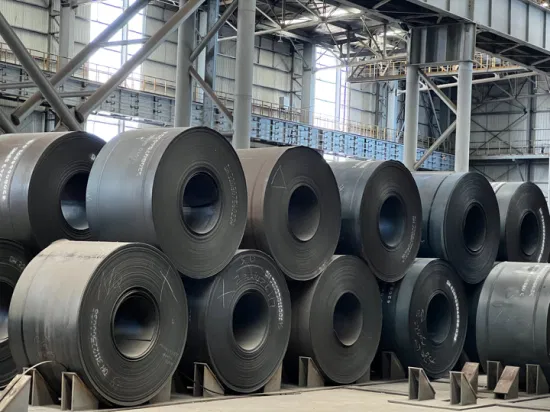
MySteel: South Korea plans to begin a formal investigation of claims that carbon steel and alloy steel hot-rolled coils (HRCs) from Japan and China have been dumped, upholding a complaint lodged by the country’s second-largest steel company, Hyundai Steel, last December, that maintained its business was being “materially injured by unfair trading practices” of the two countries’ low-priced HRC exports, as Mysteel Global had reported.
The probe will be launched by the Korea Trade Commission (KTC), under South Korea’s Ministry of Trade, Industry & Energy (MOTIE), after the publication of relevant information in the official gazette on 4 March, according to news widely reported in the Korean media. HRC imports reached some 3.43 million tonnes (mnt) between January and November last year, with Chinese and Japanese products accounting for nearly 97% of the total, BusinessKorea reported.
In the petition it filed with the KTC on last 19 December, Hyundai Steel had claimed that imported HRCs in the domestic retail market were priced 10-30% below coil produced by it and POSCO, the country’s two dominant HRC producers. However, the full scope of the KTC’s investigation, including any preliminary dumping margins, will not be known until the probe is gazetted. Industry watchers are also keen to see if POSCO and other mills have joined Hyundai Steel in pursuing a claim.
For Chinese steelmakers, it is probably a case of “another week, another probe” into their steel exports. In mid-January, the KTC upheld a complaint lodged by Korean stainless plate producer DK Corp and recommended that a provisional dumping duty of 21.62% be imposed on Chinese stainless plate imports, as reported, a recommendation MOTIE passed to the finance ministry on 5 February.
Less than three weeks later, on 20 February, the KTC announced that in response to a petition also lodged by Hyundai Steel, it was recommending that AD duties of as much as 38.02% be imposed on imports of Chinese carbon steel heavy plates, also as reported. Hyundai Steel had argued that the surge in exports of Chinese steel plates to Korea “caused by China’s delayed economic recovery and overproduction” had resulted in financial harm to the country’s heavy plate producers.
During last year, China’s HRC exports to South Korea declined by 8.1% on year to around 1.61 mnt, according to data from China’s General Administration of Customs, while China’s total HRC exports worldwide jumped by 31.1% on year to reach 27.47 mnt.
For the Japanese mills, meanwhile, that the KTC is proceeding with its probe into their HRC exports to Korea has come as more of a shock. The two-way steel trade between Japan and South Korea has continued for 50 years and apart from a few flashes of tension, the trade has expanded steadily, strongly and generally amicably. For Seoul to initiate a dumping investigation into items as crucial to the Japanese mills as hot coils has caused dismay in Tokyo.
Japan Iron & Steel Federation (JISF) statistics show that during the first ten months of Japan’s current fiscal year beginning in April, Japan exported 1.42 mnt of HRC to South Korea, lower by 10.6% from the previous April-January period, though South Korea was nonetheless the largest buyer in the total of 9.99 mnt of HRC Japan had exported globally.
Some of the Japan-made HRCs would have been destined for Korean coated sheet producer KG Steel, the former Dongbu Steel, which has had a long relationship with Japan’s JFE Steel for technology and feed supplies, as reported.
On the other hand, during the same ten months Japan imported 1.27 mnt of HRC from all sources worldwide – up 3.9% on year – of which South Korea was by far the largest supplier, shipping 702,800 tonnes, down 0.8% on year, the JISF numbers show.
The Japanese had been hoping that the hot coil dumping dispute might be resolved through bilateral discussions, particularly through this year’s Japan-Korea ‘Steel Dialogue’ involving government and steel industry representatives, traditionally the forum where steel market conditions and trade matters are discussed. Last year’s dialogue was held in April and the Japanese had been considering asking Japan’s Ministry of Economy, Trade and Industry to liaise with MOTIE to bring forward this year’s talks so the HRC issue could be addressed, as reported.
Significantly, Japanese government and steel firm executives had travelled to New Delhi in early February for the Third India-Japan Steel Dialogue held on 4 February. The Japanese are concerned about India’s plans for applying ‘safeguard duties’ on all flat steel imports – but so far, there has been no schedule announced for a Korea-Japan dialogue. One Japanese source suggested that the ongoing political turmoil in South Korea would make arranging any government-to-government talks on steel trade difficult.
Looming in the background is the fact that in June this year, Japan and South Korea will mark the 60th anniversary of the normalization of diplomatic relations, the Treaty on Basic Relations having been signed between Tokyo and Seoul on June 22, 1965. The associated events to celebrate the anniversary will doubtless focus on friendly ties and mutual prosperity, and both governments would hope that tensions in bilateral trade – including that in steel – could be minimized.
“There is a possibility that Japan and South Korea will not be able to mutually hope for free trade as they have done in the past,” observed Japanese industry daily Tekko Shimbun. “The steel trade between Japan and South Korea is at a crossroads,” it warned ruefully.
Note: This article has been written in accordance with article exchange agreement between MySteel Global and BigMint.
Leave a Reply