- E-commerce platforms streamline steel procurement
- Digital tools, AI ensure smarter purchasing decisions
- Latest innovations enhance credit access, delivery speed
The India Steel Supply Chain Summit 2025 (ISSCS 2025), held on 17-18 April and organised by BigMint in partnership with Quesrow, brought together industry leaders to address the evolving dynamics of India’s steel sector.
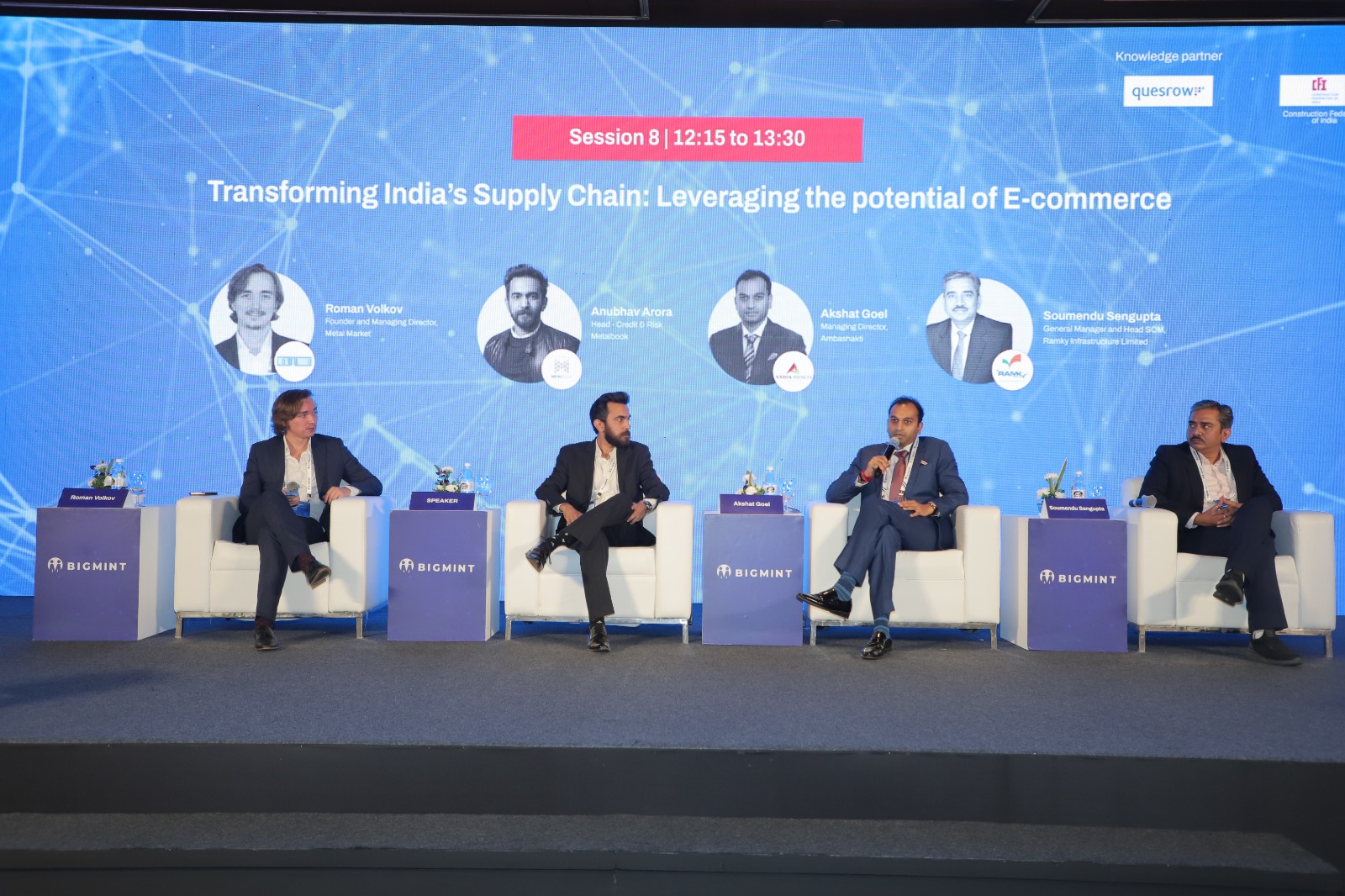
A key session, “Transforming India’s Supply Chain: Leveraging the Potential of E-commerce,” focused on analysing the practical applications of e-commerce in streamlining the steel industry’s supply chain, from procurement to delivery. The panellists discussed how the use of blockchain can enhance transparency, reduce inefficiencies, and strengthen trust among stakeholders in the steel supply ecosystem.
Key takeaways
E-commerce platforms transforming steel procurement
- Disintermediation, efficiency: B2B platforms are streamlining steel procurement by removing intermediaries, reducing credit costs for MSMEs, and increasing price transparency.
- Financing support: Digital platforms help address capital gaps by connecting MSMEs with institutional financing, mitigating conservative lending practices by traditional banks and non-bank financial companies (NBFCs).
- Access to export markets: E-commerce opens new global opportunities for underutilised Indian manufacturers, positioning the country as a potential China-plus-one alternative.
Quality assurance through digital infrastructure
- Trust through technology: E-commerce platforms use real-time GPS tracking, digital documentation, and radio-frequency identification (RFID) tagging to ensure quality, prevent tampering in transit, and build buyer trust.
- Supplier accountability: Legal frameworks, strong service level agreements (SLAs), and integrated quality assurance with manufacturers reduce disputes and enhance reliability in the supply chain.
Fintech integration, credit management
- Structured credit enablement: Online marketplaces act as fintech enablers, offering credit to MSMEs while using transaction history and AI-based risk scoring to build creditworthiness.
- TReDS, invoice discounting: Adoption of digital factoring platforms such as the Trade Receivables electronic Discounting System (TReDS) improves cash flow, offering MSMEs low-cost post-shipment financing.
AI, automation in steel commerce
- Operational efficiency: AI enhances procurement through demand forecasting, process automation, and document handling based on optical character recognition (OCR), reducing manual overheads.
- Strategic decision support: AI-driven insights on regional demand trends and order patterns support inventory planning and supplier alignment.
Procurement standardisation, consolidation
- Centralised procurement: Large infrastructure players benefit from platforms that standardise specifications, consolidate demand, and streamline sourcing across locations.
- Vendor validation: Pre-qualified vendors and platform-based audits ensure quality compliance, faster order cycles, and minimised rejections.
Logistics, delivery optimisation
- Real-time transport management: Digital freight tracking and integration with verified transport partners enhance delivery efficiency and utilisation rates.
- Government enablement: Tools such as e-way bills and the digitised logistics framework in India support smoother documentation and logistics flow.
Conclusion
E-commerce platforms are revolutionising steel procurement by removing intermediaries, enabling financing for MSMEs, and improving access to export markets. They enhance trust through digital tools, streamline logistics, and support structured credit via TREDS. AI-driven insights boost efficiency, while standardised procurement and vendor validation ensure quality and timely delivery, making digital platforms vital to the industry’s growth.
Leave a Reply