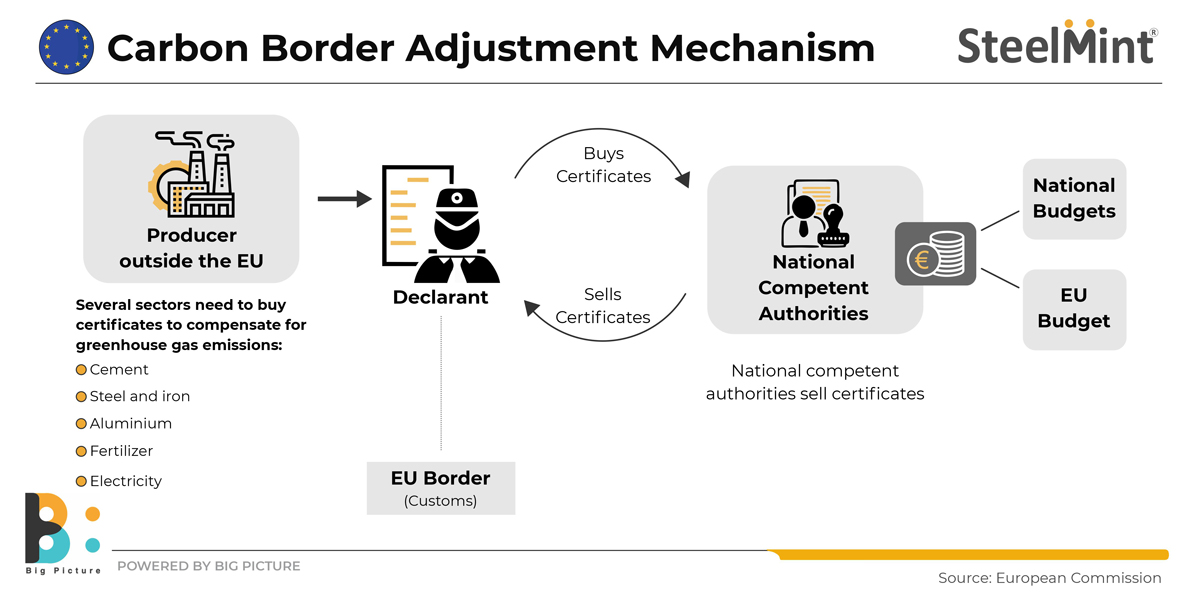
As the European Union (EU) enforces its Carbon Border Adjustment Measures (CBAM), the steel industry in Japan actively adopts the European Commission’s data standards for CO2 emissions during the transitional reporting period from October to December 2023. The initial reports under this scheme are expected to be submitted by 31 January 2024. To address concerns about protecting trade secrets such as steel scrap usage and alloy composition, these specifics will not be included in the reported data.
Facing the extensive and uncertain reporting requirements of CBAM, Japanese steel entities are taking a minimalist approach. They plan to provide essential data, focusing on CO2 emissions for steel products destined for the EU market. This cautious strategy aims to test the waters with the European Commission.
Scheduled for launch in January 2026, the EU’s Carbon Border Adjustment Mechanism specifically targets imports of steel, aluminium, and cement from countries lacking robust carbon pricing policies. The implementation process took a significant step forward with the initiation of a mandatory reporting system for these imports in October 2023, covering the October-December period. The deadline for submitting this crucial data has now passed, marking progress toward the full implementation of CBAM.
Initially, the EU required detailed CO2 emission data for each manufacturing site producing steel products. However, in response to industry concerns, especially from Japan, a temporary option was introduced, allowing the use of standardized values based on HS codes. This transitional measure aims to facilitate a smoother transition while addressing potential concerns about protecting sensitive trade secrets.
Despite the selective reporting, excluding details like scrap usage and alloy components due to trade secret concerns, the Commission’s response to this approach remains uncertain. There are hints at a potential direct data exchange system between manufacturers and EU authorities. Japan is closely monitoring further developments from the EU in this regard.
Rather than directly burdening local importers, Japanese steelmakers are currently experimenting with a new approach for exports to Europe. This involves providing basic data to export trading companies in advance, potentially streamlining the data exchange process for individual shipments.
Despite the passing of the deadline for implementing the CBAM’s reporting system in January 2024, several key details and rules remain unclear. While the EU aims to refine the system through verification during the transition period, Japanese steel exporters harbor serious concerns about launching amid lingering ambiguities.
As the reporting system encounters widespread issues, Japan specifically expresses concern about three main points:
- The provisional nature of accepting reports at standard value
- The lack of clarity on unified operation across EU member states
- The potential increase in reporting costs.
The European Commission presently allows the use of standard CO2 emission values based on HS codes for reporting, but this is a temporary measure lasting only six months. Companies are likely to be required to submit detailed data for each individual manufacturing site by autumn, raising concerns about potential trade secret leaks, as site-specific data can be sensitive.
Despite standardized reporting procedures by the European Commission, individual member states manage the customs review process. This creates a risk of inconsistent application across countries, potentially forcing Japanese steelmakers, exporters, and importers to adapt their responses for each nation, adding unnecessary complexity.
The complexity and cost of data exchange serve as significant barriers for local importers, discouraging their participation. Simplifying procedures and reducing costs would significantly increase participation.
The European Commission has announced a one-month extension to the initial deadline for submitting reports in the CBAM system. This means companies now have until the end of February to submit their reports, instead of the original January deadline.
Note: This article has been written in accordance with an article exchange agreement between Japan Metal Daily and BigMint.