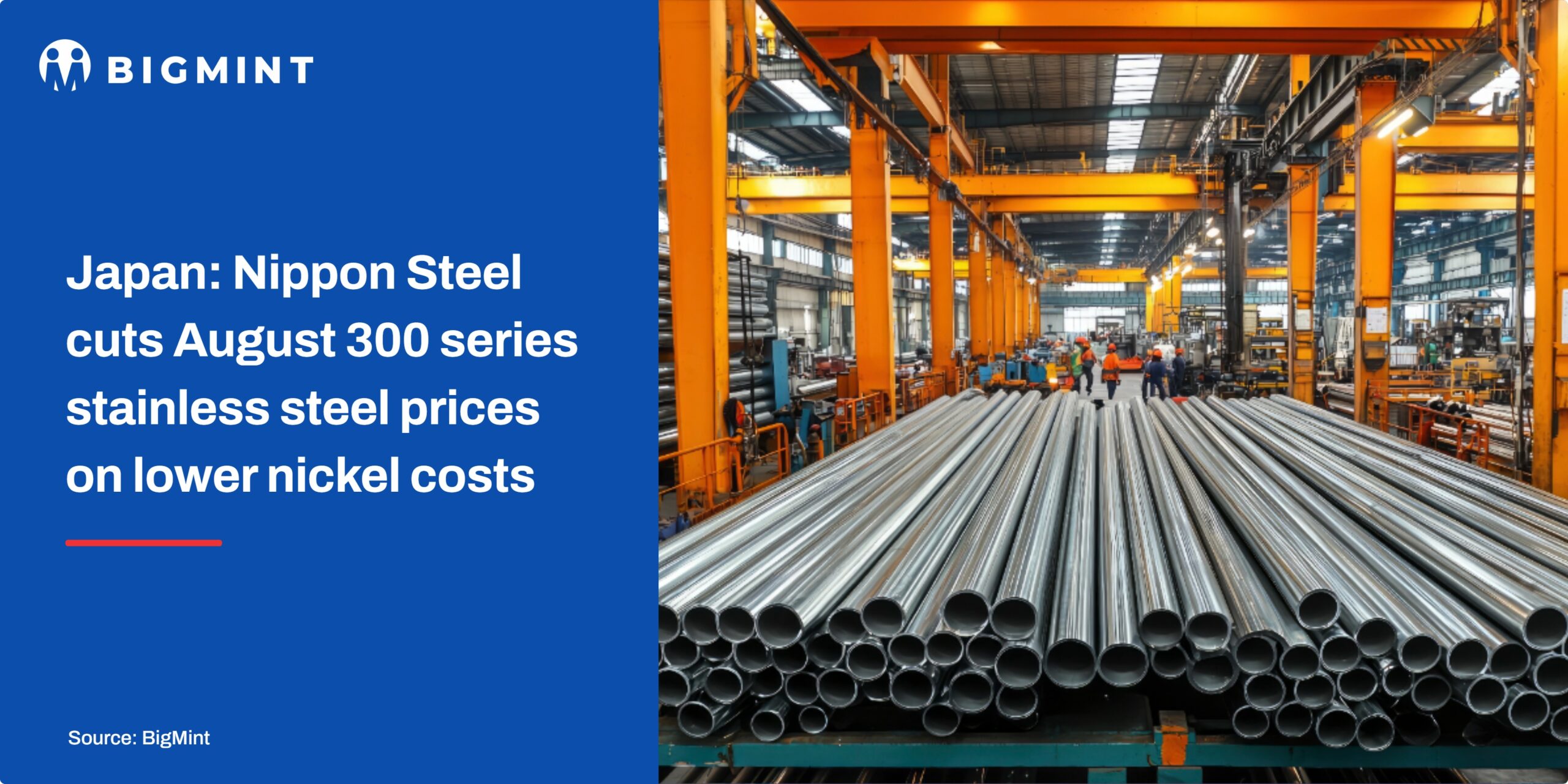
- 300 series cut by $63/t m-o-m amid easing nickel supply concerns
- Chromium-based 400 series prices unchanged for second month
Japan’s Nippon Steel Corporation (NSC) reduced prices for nickel-based (300 series) stainless steel products by JPY 10,000/t ($63/t) m-o-m for August deliveries, following lower nickel raw material costs. Meanwhile, prices for chromium-based (400 series) stainless steel products were kept unchanged for the second consecutive month, reflecting relatively stable chromium costs.
Nickel benchmark declines, reducing production costs
NSC’s nickel cost benchmark used for August pricing fell 5.8% m-o-m to $7.79/lb, marking the second consecutive monthly decline. Although the Japanese yen weakened against the US dollar, increasing import costs, the currency impact was insufficient to offset the decline in nickel prices.
The exchange rate used for raw material procurement depreciated 1.3% m-o-m to JPY 162.69 per US dollar.
400 series prices remain stable
In contrast, NSC maintained prices for 400 series stainless steel products for the second straight month, as the chromium benchmark price slipped only 1.5% m-o-m to around $1.67/lb, resulting in limited changes to production costs.
Indonesia policy eases supply concerns
Market sentiment also weakened after Indonesia’s Ministry of Energy and Mineral Resources announced on 3 August that it would relax the 2026 Work Plan and Budget (RKAB) in a measured manner, easing earlier concerns over tighter nickel ore supply.
The announcement reduced expectations of prolonged supply constraints from Indonesia, contributing to weaker nickel market sentiment.
Nickel futures retreat
Following the policy change announcement, the most-active Shanghai Futures Exchange (SHFE) nickel contract declined by more than 3% in August, reflecting easing supply concerns and lower raw material cost expectations.
Outlook
Market participants expect stainless steel pricing in the near term to remain closely linked to nickel price movements, Indonesia’s nickel ore supply policy, and currency fluctuations. While easing raw material costs have prompted lower 300 series prices, any renewed supply disruptions or rebound in nickel prices could influence future pricing decisions.
Leave a Reply