- US emerges as Japan’s largest naphtha supplier in May
- Alternative sourcing supports rising petrochemical output
Japan’s dependence on the Middle East for naphtha imports continued to decline in May as refiners expanded procurement from the United States, Europe, and other alternative suppliers, according to the latest government trade data.
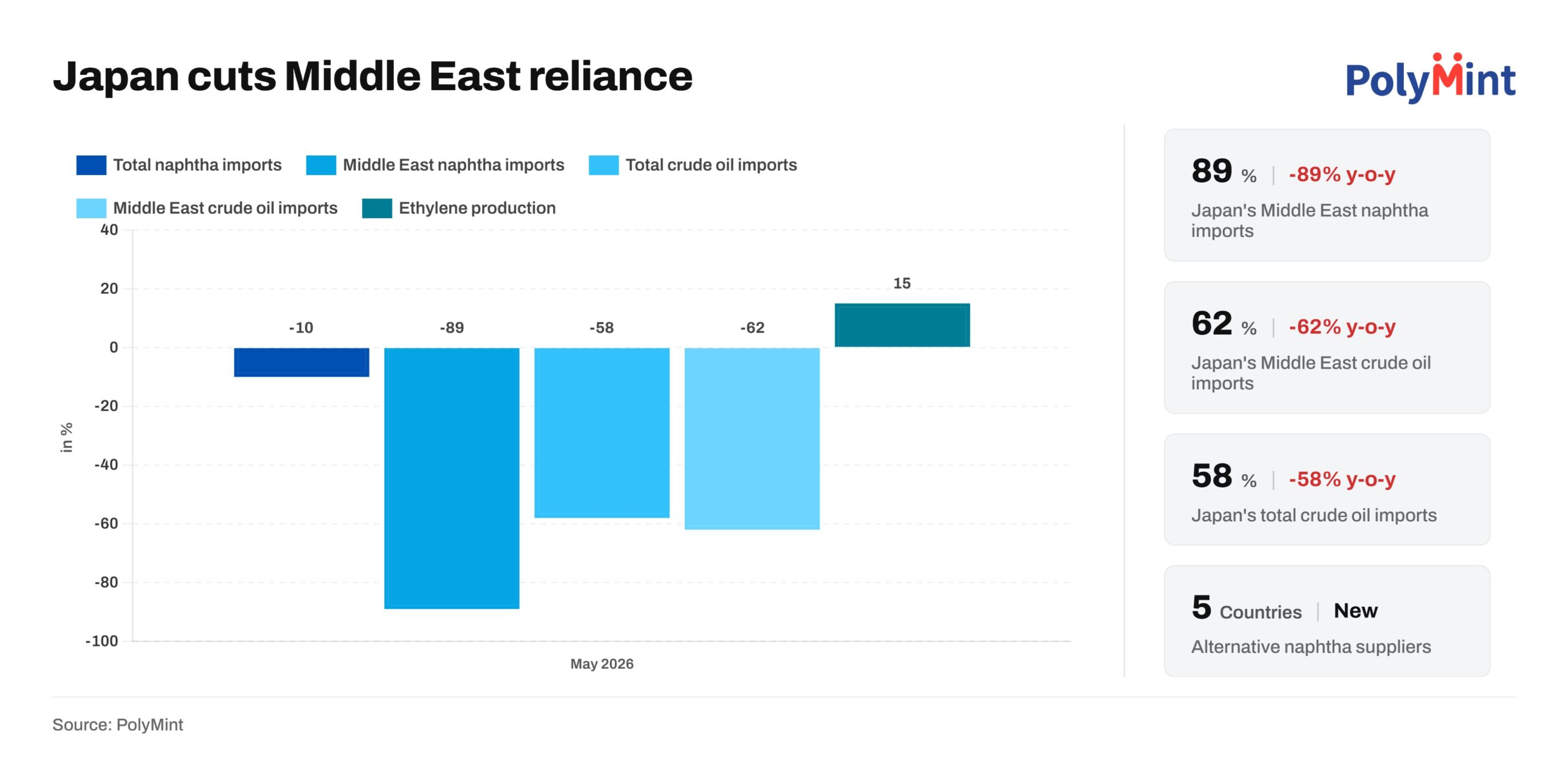
Total naphtha imports fell 10% y-o-y in May, though it was significantly softer than the 46% decline recorded in April. The United States emerged as Japan’s largest supplier during the month, with shipments increasing more than sixfold compared with a year earlier. In contrast, imports from the Middle East plunged 89%.
Japan also received naphtha cargoes from new supplying countries, including Algeria, India, Italy, Portugal, and the Netherlands, reflecting broader efforts to diversify feedstock sourcing.
According to Yuki Ito, economist at Nomura Securities, Japan’s dependence on Middle Eastern naphtha has declined substantially as buyers actively broaden procurement options.
The diversification follows disruptions caused by the conflict involving Iran earlier this year, which affected shipping through the Strait of Hormuz. Improved use of alternative shipping routes appears to have supported a gradual recovery in regional trade compared with April.
Government data also showed that crude oil imports declined 58% y-o-y in May, improving from a 64% fall in April. Imports from the Middle East dropped 62%, although the region still accounted for more than 90% of Japan’s crude oil imports. Purchases from the United States increased 23%, while imports from Oman, Russia, Azerbaijan, and Malaysia also rose.
Japan’s Ministry of Economy, Trade, and Industry said sufficient supplies of crude oil and naphtha remain available and noted that procurement from outside the Middle East has increased to support domestic industries. The ministry expects crude oil procurement volumes to return to last year’s levels by July.
Demand from the petrochemical sector also remained resilient. Ethylene production, a key indicator of naphtha consumption, increased 15% from April, according to the Japan Petrochemical Industry Association. The association said member companies have strengthened supply security by combining domestically produced naphtha with alternative imported sources.
Improving supply conditions also influenced prices. Tokyo open-spec naphtha, the regional benchmark, fell below levels seen before the escalation of geopolitical tensions at the end of February, reflecting expectations of more stable supply and shipping conditions.
Japan’s broader trade with the Middle East also showed signs of recovery. Import values from the region declined 43% y-o-y in May, compared with a 57% decline in April, while exports fell 32%, improving from a 56% decline a month earlier.
Country-level trade performance was mixed. Exports to Saudi Arabia increased 2% after a sharp decline in April, whereas shipments to the United Arab Emirates remained lower, but the pace of decline moderated to 23% from 40% in the previous month.
Leave a Reply