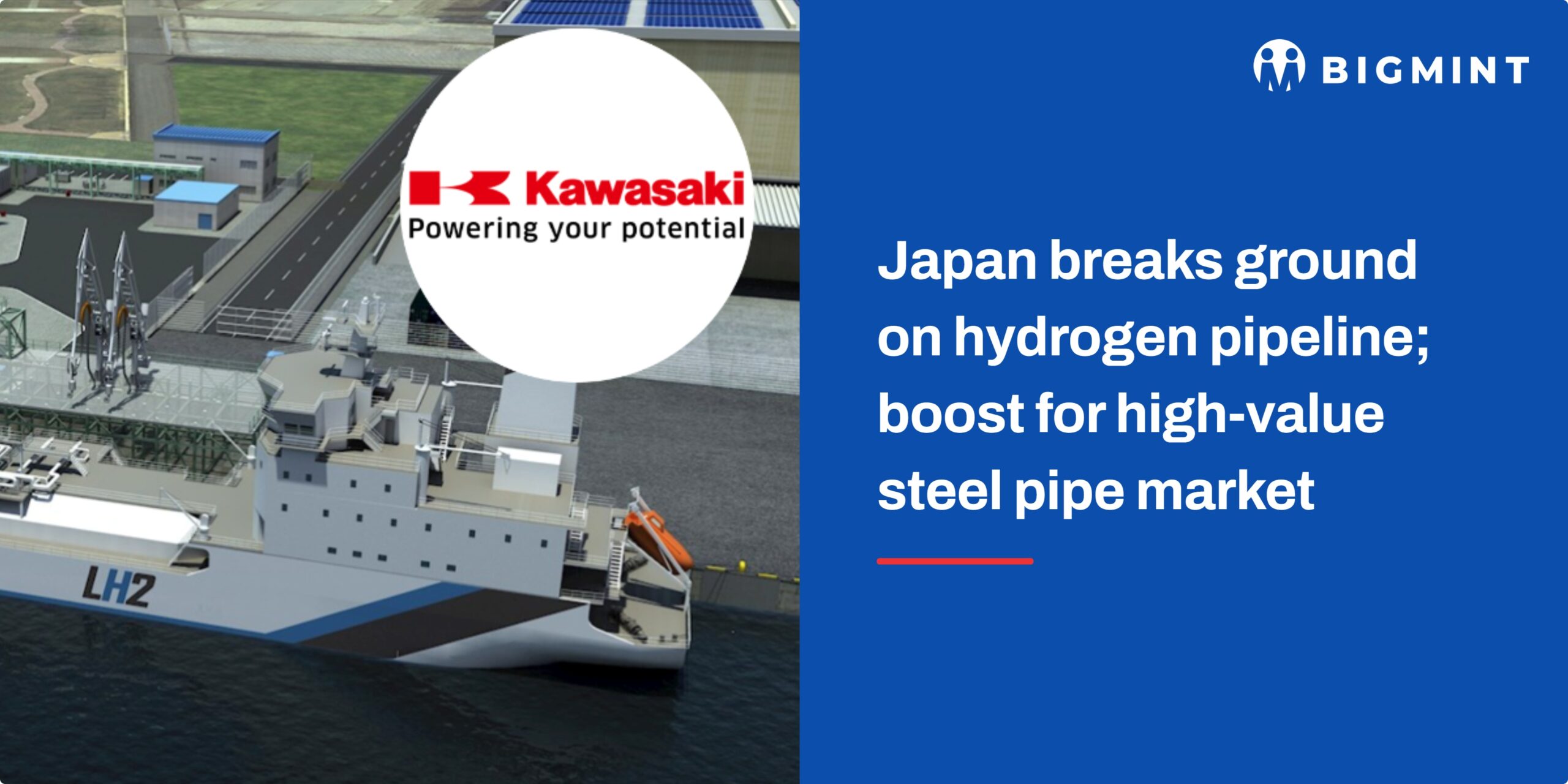
- Pipeline designed to handle 1 mnt of H2 annually
- Market expects demand to expand for value-added steel pipes
As Japan’s first pipeline project for transporting high-pressure hydrogen gets underway, expectations are rising for the expansion of the steel pipe market for hydrogen. This project is considered highly significant as it establishes core infrastructure for a future large-scale hydrogen supply chain.
JFE Engineering announced on 13 July that it had signed an EPC (engineering, procurement, and construction) contract with Japan Hydrogen Energy (JSE) for Japan’s first high-pressure hydrogen pipeline to be built in the coastal area of Kawasaki, Japan.
This project is part of the ‘Large-scale Hydrogen Supply Chain Construction Project,’ a Green Innovation (GI) fund initiative of Japan’s New Energy and Industrial Technology Development Organization (NEDO).
JSE is leading the project, while JFE Engineering is handling the pipeline design, equipment procurement, and construction in a turnkey manner.
The pipeline will have a total length of 4 km. During the demonstration phase, it will supply domestically produced hydrogen to the Kawasaki LH₂ Terminal currently under construction in the Kawasaki coastal area, and after commercialisation, it will be utilised as a key infrastructure to vaporise imported liquefied hydrogen and supply it to industrial companies in the coastal area.
Japan’s first H2-only pipeline
The steel pipe industry is paying attention to the fact that this project is Japan’s first high-pressure hydrogen-only pipeline.
Because hydrogen molecules are smaller than those of ordinary natural gas, hydrogen can lead to hydrogen embrittlement; consequently, it requires higher material performance and welding quality than standard steel pipes. For this reason, steel pipes for hydrogen pipelines are regarded as a representative high-value-added product.
In particular, this pipeline was designed to transport up to 1 million tonnes (mnt) of hydrogen annually in preparation for future increases in hydrogen demand. Although the section currently under construction is only 4 km long, it holds significant symbolic importance as a foundational infrastructure for establishing a large-scale hydrogen supply chain in the future.
Opportunity for high-tech steel pipe producers
The industry anticipates that the market for high-pressure hydrogen steel pipes will enter a full-scale growth phase if the Japanese government expands hydrogen supply infrastructure in line with its carbon neutrality policy. As high-strength steel, specialised welding technology, and stringent quality certifications are required, opportunities for steel pipe manufacturers equipped with relevant technological capabilities to participate in the market are also expected to expand.
Meanwhile, the contract value and the specifications and volume of the steel pipes to be used were not disclosed. The industry views this project as a starting point for the Japanese hydrogen piping market, and attention is focused on whether there will be an expansion of follow-up projects in the future.
This article is published as part of an article sharing agreement between Steel Daily and BigMint
Leave a Reply