- Inflation, external financing remain key challenges – Fitch
- Turkish exports to GCC countries down 40% amid geopolitical conflict
SteelOrbis: Mustafa Gültepe, chairman of the Turkish Exporters Assembly, has stated that Turkish exports to the Gulf countries have decreased by 40% due to the ongoing conflict involving the US-Israel and Iran in the Middle East.
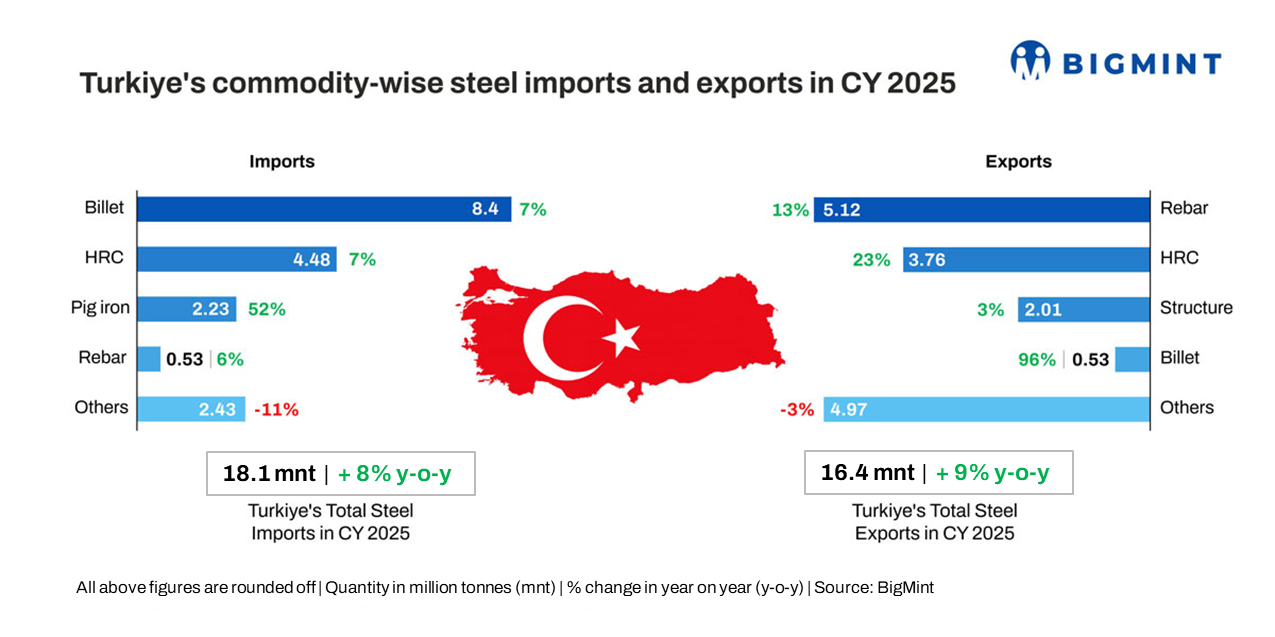
Turkiye is a major exporter in the region, especially of steel, and the ongoing conflict in Iran has already had a major impact on Turkish exports. Turkiye’s crude steel production in 2025 was over 38 mnt, while exports were over 16 mnt.
Therefore, any impact on Turkish exports will have a damaging effect on its economy and steel production, as well as ferrous scrap consumption. Turkiye’s imports of scrap in 2025 stood at around 19-20 mnt.

Impact on economy
International credit ratings agency Fitch Ratings has stated that the impact of the ongoing Iran conflict on Turkiye and its banking sector will largely depend on the Turkish authorities’ policy response, highlighting rising risks linked to energy prices and market volatility. The agency noted that geopolitical tensions in the Middle East could create additional macroeconomic pressure, though the overall impact remains uncertain and scenario-dependent.
According to Fitch, the resilience of Turkish banks will be closely tied to how policymakers react to the evolving situation. The agency indicated that economic policy measures will play a critical role in limiting potential negative effects on financial stability and credit conditions. Noting that changes in macroeconomic conditions could influence the operating environment for banks, Fitch stated that potential risks include tighter financial conditions, increased funding costs, and pressure on asset quality.
GDP outlook stable under baseline scenario
The report indicates that the Iran conflict adds to existing macroeconomic challenges, including inflation and external financing needs, which remain key factors for Turkiye’s economic outlook.
Fitch’s baseline scenario assumes that the conflict will be temporary and contained, under which the impact on Turkiye’s economy is expected to remain manageable. In its broader sovereign assessment, Fitch projects Turkiye’s GDP growth at around 3.5% in 2026 and 4.2% in 2027. However, the agency indicated that a prolonged period of geopolitical tension could weaken growth through external shocks.
Oil prices and external balances in focus
Fitch highlighted that one of the main transmission channels is through higher oil prices, which could affect Turkiye’s macroeconomic indicators.
Turkiye is considered relatively exposed to energy price shocks, meaning that sustained increases in oil prices could widen the current account deficit, increase inflationary pressures and put pressure on the exchange rate.
This article is published in accordance with an article sharing agreement between SteelOrbis and BigMint
Leave a Reply