- Higher down-payment requirements raise procurement costs
- Tighter IME limits curb buying activity and liquidity
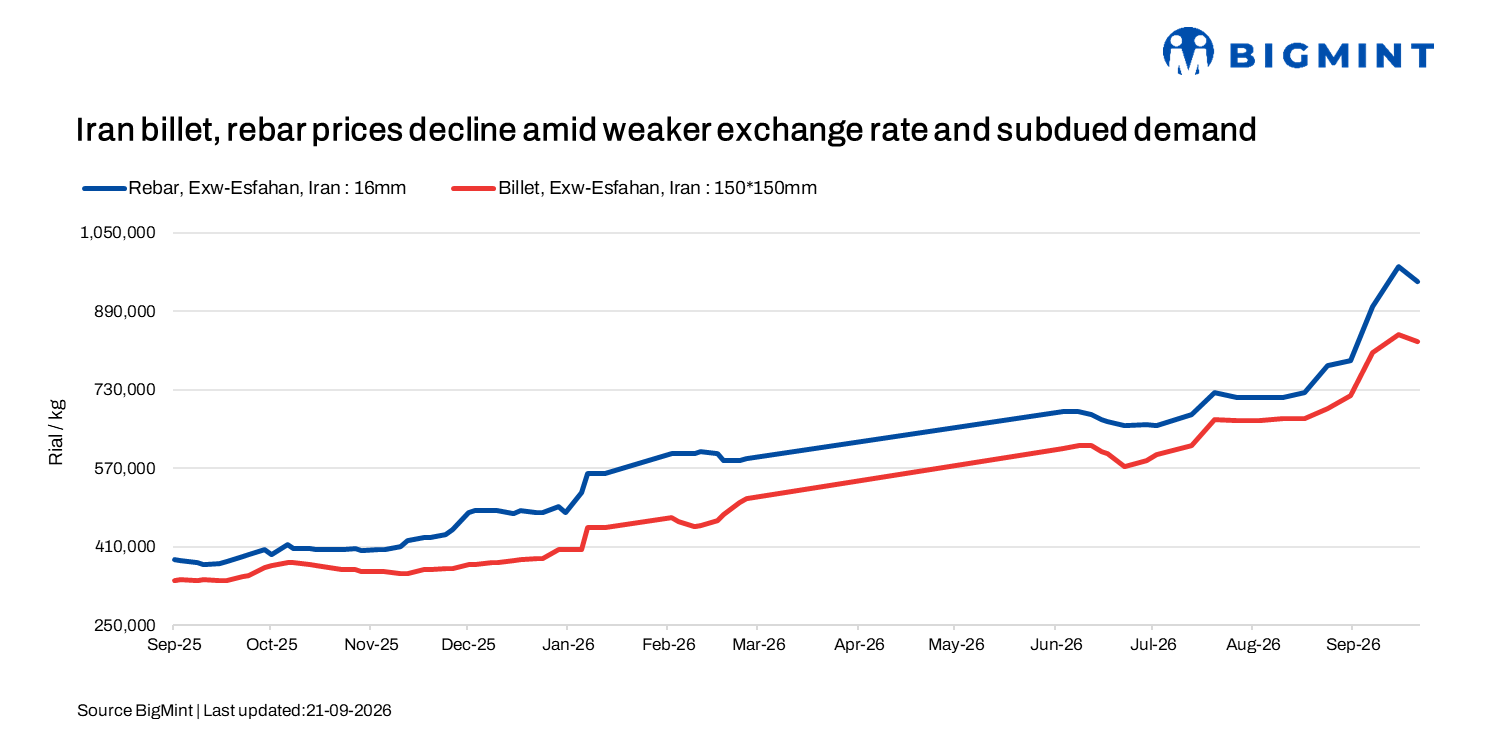
Iranian billet prices declined by 13,500 rial/kg ($8/t) w-o-w to 828,500 rial/kg ($494/t), while rebar prices fell by 30,000 rial/kg ($18/t) to 950,000 rial/kg ($567/t). The decline was mainly driven by a lower exchange rate, which reduced steel prices across the domestic market. Intervention in exchange-market transactions also contributed to weaker billet prices.
In the rebar segment, the lower exchange rate encouraged mills and traders to release previously purchased low-priced stocks, increasing market availability and putting downward pressure on prices. Demand also remained weak as buyers stayed cautious amid tighter liquidity and month-end money-transfer constraints.
Meanwhile, new Iran Mercantile Exchange (IME) regulations increased the required down payment from 10% to 30% and tightened purchase limits, raising the financial burden on mills and traders. This could further restrict market activity and potentially reduce production if producers face difficulties securing working capital.
Despite supply-side concerns, the immediate price direction remained negative as weaker currency conditions, increased availability of low-cost inventory and subdued demand outweighed supply constraints.
Leave a Reply