- Middle East conflict raises concerns about domestic supply security
- Higher production could ease coal supply tightness in Asian markets
Indonesia, the world’s largest thermal coal exporter, is on the verge of a significant policy reversal that could reshape global coal supply dynamics. The government is preparing to revise its coal production guidance upward, abandoning a strategy of supply restraint that had been in place since the beginning of the year.
The original strategy
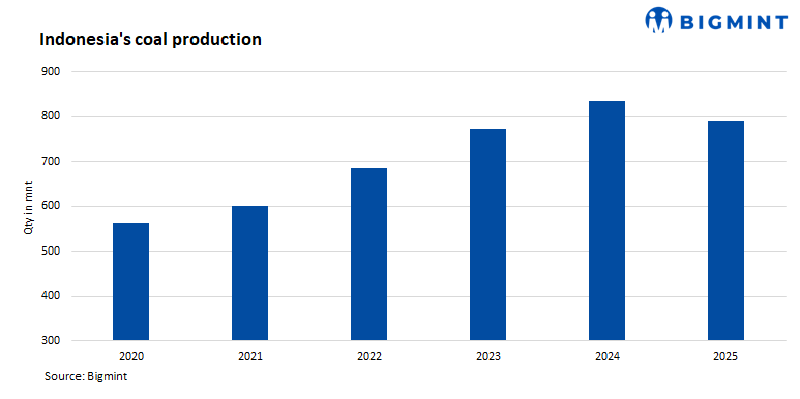
At the start of 2026, the Indonesian government set a remarkably low production target of 600 million tonnes (mnt) for the year. This was widely interpreted as a deliberate strategy to tighten global supply and support coal prices, which had been under pressure from the energy transition narrative and fluctuating demand from major importers such as China and India.
The strategy appeared to be working. Prices had begun to firm, and Indonesian producers were operating within a framework designed to maximise value over volume.
The unforeseen catalyst
The crisis in the Middle East changed everything. As tensions escalated and the threat to oil shipments through the Strait of Hormuz materialised, energy markets across the board experienced sharp price increases. Coal prices surged more dramatically and more quickly than anyone had anticipated.
What was intended as a managed price-support mechanism was suddenly overtaken by geopolitical events. Prices rose beyond levels that the Indonesian government had likely considered, and with them came an unintended consequence: concerns about domestic supply adequacy.
The presidential intervention
In response to these developments, Indonesia’s president has personally intervened. He has instructed the Ministry of Energy and Mineral Resources to consider increasing coal production to ensure adequate supplies for domestic demand. The ministry has been tasked with developing a new production target by the end of March.
This represents a fundamental shift in approach. The government is now prioritising supply security over price support, at least in the short term. The domestic market obligation, which requires coal miners to set aside a portion of their output for local power plants, has become the focal point of policy considerations.
Market implications
This policy reversal, while significant in its political messaging, may not represent a dramatic change in actual supply. Since January, analysts have been forecasting much higher production and export levels than the government’s official 600-mnt target.
The current export forecast for 2026 stands at 486 mnt. When combined with the projected domestic demand of 245 mnt, this implies total production of 731 mnt — substantially above the original government target. The new guidance expected by the end of March will likely bring official policy closer to these market realities.
Anyhow, the implications of this shift are significant. If Indonesia does indeed increase production and exports, it could ease some of the supply tightness that has supported recent price gains. However, the timing and magnitude of any production increase remain uncertain.
For buyers in China, India, and other Asian markets, Indonesian coal has long been a staple. An increase in Indonesian supply would provide more options at a time when Russian coal is dominating arbitrage opportunities. However, the new policy direction is focused primarily on domestic security, and any increase in export volumes may be secondary to ensuring local power plants have adequate fuel.

Leave a Reply