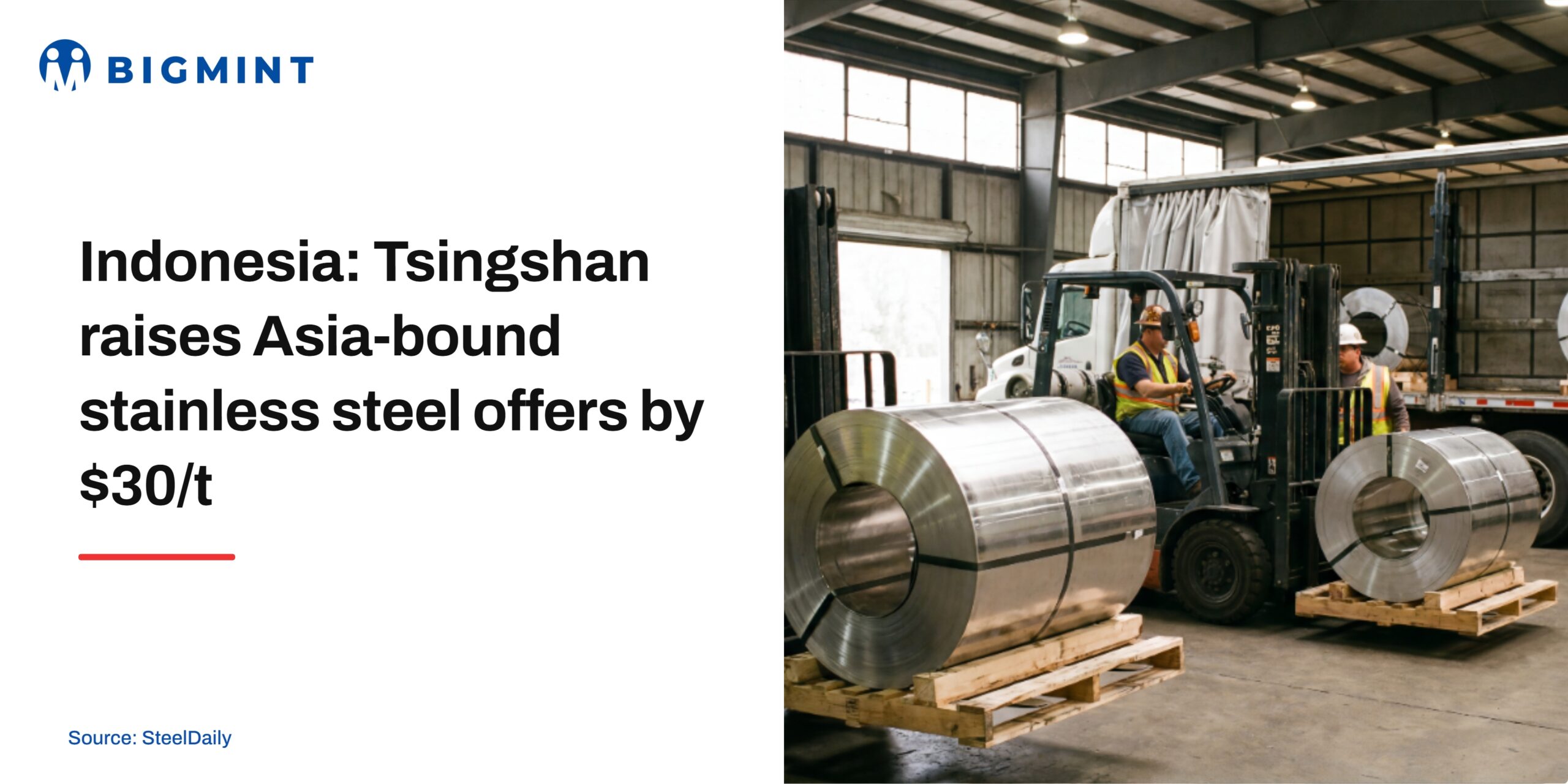
- Tsingshan raises Asia-bound stainless steel offers by $30/t
- Exchange rates amplify perceived import price declines
Indonesia’s Tsingshan Holding Group has raised its Asia-bound stainless steel offer prices by around $30/t, complicating expectations of further price declines across the regional market. While demand remains weak and inventories elevated, the increase suggests rising raw-material costs are beginning to establish a floor under export offers from Asia’s largest suppliers.
Market participants said Tsingshan revised its offers on 21 September, with traders attributing the increase primarily to higher upstream raw-material costs and continued pressure on producer margins. The move comes as buyers across Asia continue delaying purchases in anticipation of lower prices.
Producer offers are proving more resilient than buyers expected
Tsingshan’s latest increase follows the release of its fourth-quarter offer levels for Korea, where expectations of a sharper reduction have so far failed to materialise. Offers for 304 cold-rolled stainless steel are estimated at around $2,280-2,300/t delivered Korea, compared with an expected floor of approximately $2,250/t. Third-quarter offers were generally around $2,300/t, although some transactions were concluded closer to $2,200/t, leaving only a limited reduction between the two quarters in dollar terms.
The perceived decline has been considerably larger in the Korean domestic market because of the won-dollar exchange rate. A relatively modest reduction in dollar-denominated offers translates into a steeper fall after currency conversion, strengthening expectations that imported material will become cheaper. Excluding exchange-rate movements, overseas suppliers have so far shown limited willingness to lower prices despite subdued demand across Asia.
Higher Indonesian offers are influencing regional suppliers
Tsingshan’s pricing is also affecting other Asian producers. Malaysia’s Bahru Stainless has increased its offer price for Korean shipments by around $30/t, with current offers understood to be approximately $2,300/t. Market participants attributed the increase to higher raw-material costs rather than improving downstream demand.
Taiwanese stainless steel producers are also considering higher prices for future shipments. However, Taiwanese mills have already exhausted their allocation for the Korean market during 2026, shifting attention towards negotiations for 2027 volumes, which are expected to begin in November.
Those discussions will determine whether Taiwanese suppliers can retain their previous price competitiveness against Indonesian material.
Raw-material costs are increasingly offsetting weak demand
Asian stainless prices are being pulled in opposite directions. Weak downstream sales, elevated inventories, cautious procurement and expectations of further declines in Chinese domestic prices continue to limit buying activity across the region.
At the same time, higher nickel and other raw-material costs are increasing production costs, while Tsingshan’s pricing continues influencing upstream black coil, hot-rolled coil and slab markets. Anti-dumping measures and tighter restrictions on cross-border movement of cold-rolled stainless steel are also reducing the availability of competitively priced imports across several Asian markets. The interaction between those factors is slowing the pace of price declines rather than reversing the market trend.
Inventory strategy could shape Q1 procurement
Most buyers remain focused on reducing inventories acquired at higher prices during Q4. That strategy carries increasing procurement risk if overseas offers stabilise instead of continuing to decline. Buyers delaying purchases through the remainder of the year could face fewer sourcing options when inventories require replenishment during Q1 2027, particularly if Indonesian producers maintain higher offer levels and regional trade restrictions continue limiting import availability.
Exchange rates will remain an additional variable. Currency movements can materially alter the competitiveness of imported stainless steel even when dollar-denominated offers remain broadly unchanged.
Outlook
Tsingshan’s latest $30/t increase, followed by a similar move from Bahru Stainless, indicates that rising raw-material costs are beginning to establish a floor under Asian stainless steel offers despite continued weakness in downstream demand.
Further price direction will depend on whether nickel costs continue increasing, Indonesian raw-material policies change, additional anti-dumping measures restrict regional trade and Taiwanese producers maintain competitive pricing when negotiations for 2027 shipments begin later this year.
The market is therefore moving beyond the question of how far stainless prices can decline during Q4. The more important issue is whether buyers reducing inventories today will still have access to similarly priced imported material when procurement resumes in early 2027.
Note: This article is published as part of a content exchange agreement between SteelDaily and BigMint.
Leave a Reply