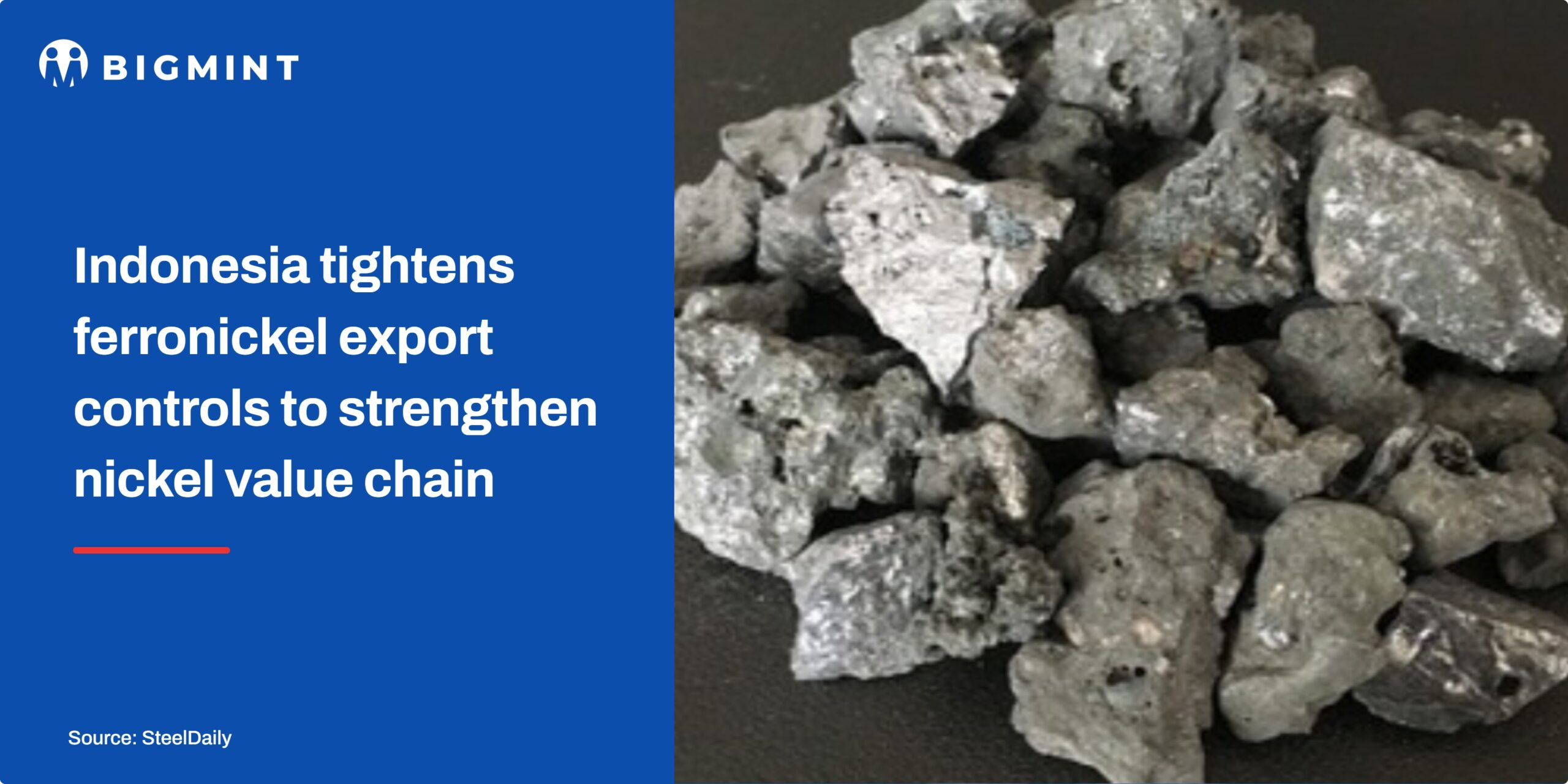
- Indonesia tightens ferronickel export control regulations
- Policy may impact Asian stainless steel raw materials
SteelDaily: Indonesia has introduced stricter export regulations for ferronickel as part of its broader strategy to strengthen oversight of the country’s nickel value chain. The Ministry of Finance has issued Finance Minister’s Decree No. 32/MK/BC/2026, effective 1 June 2026, imposing tighter export requirements for ferronickel products classified under HS Code Ex.7202.60.00.
The revised regulation covers ferronickel containing 8% or more nickel, sponge and granular ferronickel with 4% or more nickel, and low-grade ferronickel containing 2-4% nickel with at least 75% iron. Exporters will now be required to obtain a Laporan Surveyor (surveyor’s report) along with the necessary export permits to verify compliance with Indonesian trade regulations.
Further tightening will take effect from 1 January 2027, when exports of covered ferronickel products will be routed primarily through Indonesia’s state-owned export company (BUMN Ekspor). Private exporters may continue shipments only after obtaining a special certificate from the Ministry of Trade, while certain export destinations may qualify for exemptions from inspection requirements.
The new framework replaces earlier export provisions under Finance Minister’s Decree No. 24/MK/BC/2026, establishing a separate regulatory regime for strategic iron alloy products. Market participants expect the revised rules to increase administrative compliance and strengthen government control over ferronickel exports in the short term.
Although the regulation does not directly target nickel pig iron (NPI), tighter controls on ferronickel exports could influence raw material availability for stainless steel producers across Asia. The overall market impact will depend on how strictly the new rules are enforced and the extent of exemptions granted by Indonesian authorities.
Outlook
Indonesia’s latest policy reinforces its long-term strategy of increasing control over critical mineral exports and downstream processing. While immediate supply disruptions are unlikely, stricter export procedures could affect ferronickel trade flows and procurement strategies for Asian stainless steel producers, making regulatory developments in Indonesia a key factor to watch in the coming months.
Note: This article is published as part of a content exchange agreement between SteelDaily and BigMint.
Leave a Reply