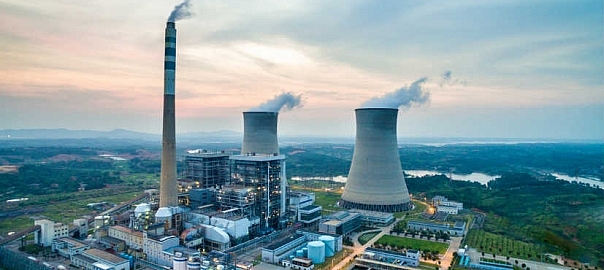
The Indonesian government on 22 February launched the first phase of the mandatory carbon trading mechanism for coal-fired power plants as part of the country’s efforts to achieve its goal of net-zero emissions by 2060.
The largest economy in Southeast Asia depends on coal to produce more than half of its electricity. It is understood that the first phase of the carbon trading mechanism will cover 99 power plants with a total installed capacity of 33.6 GW, which are directly connected to the power grid operated by the Indonesian national power corporation PLN.
“There will be 500,000 tonnes of carbon dioxide equivalent involved in the transaction,” Mohamad Priharto Dwinugroho, an Indonesian energy ministry official, was quoted by Reuters as saying.
The figure is understood to be an estimate of emissions from all power plants beyond a total of 20 million tonnes of carbon dioxide equivalent. Under the mechanism, power plants that emit more than their allowances can buy carbon credits from plants that emit less than their allowances or from renewable energy plants.
The exact carbon price will be based on market mechanisms, but according to a study by the Energy Ministry, the carbon trading price is estimated to be between $2-18/t, Dwengroho said.
Currently, Indonesia’s carbon trading mechanism applies to power plants with at least 100 MW of installed power generation capacity. But Indonesia’s energy minister Arifin Tasrif said the carbon trading mechanism would later be extended to smaller coal and other fossil-fueled plants, as well as to power plants not yet connected to PLN’s grid.
Arifin said carbon pricing could improve energy efficiency, reduce reliance on carbon-emitting energy and imported energy, and would also be a source of revenue for Indonesian companies and the government. He said it could reduce carbon emissions by at least 36 million tonnes by 2030.
Indonesia is one of the world’s largest emitters of greenhouse gases. It has set an emissions reduction target of 31.89% by 2030, or 43.2% with international support.
Note: This article has been exchanged under the article exchange agreement between CoalMint and SX Coal.

Leave a Reply