- Imports decline on safeguard duty, global tensions
- Weak domestic demand pushes mills to exports
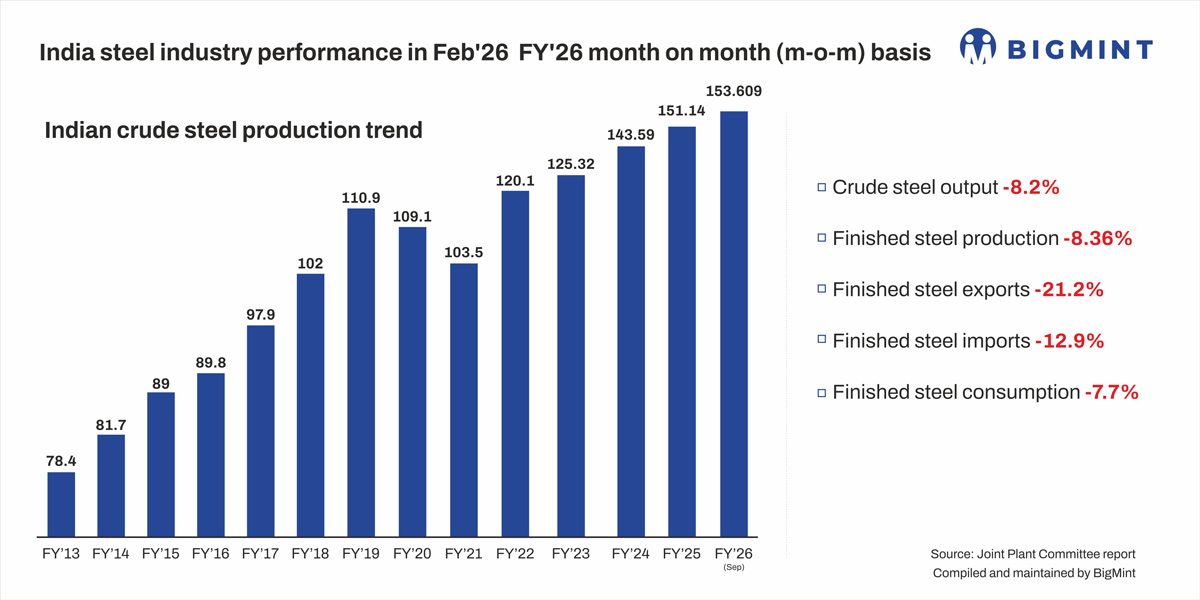
India’s crude steel production increased by over 11% y-o-y to 153.6 million tonnes (mnt) during April 2025-February 2026, supported by steady domestic demand and a sharply improved trade balance, provisional data released by the Joint Plant Committee (JPC) under the Ministry of Steel showed.
Importantly, India was a net exporter of finished steel during Apr’25-Feb’26, with exports of 6.02 mnt surpassing imports of 5.62 mnt.
Highlights of Indian steel industry in Apr’25–Feb’26

Steel production surges, consumption grows slower
India’s crude steel production surged by 11.2% y-o-y during Apr’25-Feb’26, while finished steel output was up by 10.4%. However, consumption increased by a comparatively slower 7.2%.
The slower consumption growth rate also points to the emergence of a supply overhang in India, which aligns with the weak market sentiment observed during parts of the fiscal year, when prices of key commodities such as rebars, wire rods, hot rolled coils (HRC), and structurals remained under pressure.
Finished steel exports rise, y-o-y
India’s finished steel exports increased during Feb’26 as well as across Apr’25-Feb’26, supported by competitive pricing and steady overseas demand.
Exports rose sharply by 36.6% y-o-y to 6.02 mnt during the period. For a large part of FY’26, mills actively pushed overseas sales as export realisations remained more attractive than domestic prices. Weak domestic demand, particularly from the infrastructure and fabrication segments, further prompted producers to divert volumes to export markets.
Finished steel imports decline sharply m-o-m, y-o-y
Finished steel imports fell steeply on m-o-m and y-o-y bases in Feb’26. Similarly, there was a sharp contraction y-o-y during Apr’25-Feb’26.
Imports declined by 37.4% y-o-y to 5.62 mnt during the period. The downtrend was primarily influenced by the safeguard duty in force. Trade participants noted that higher landed costs and regulatory factors limited fresh bookings, keeping import volumes relatively subdued despite pockets of demand.
Leave a Reply