- 304-grade scrap imports rise due to steady demand
- Semi-finished stainless steel imports surge in Jan-Apr’26
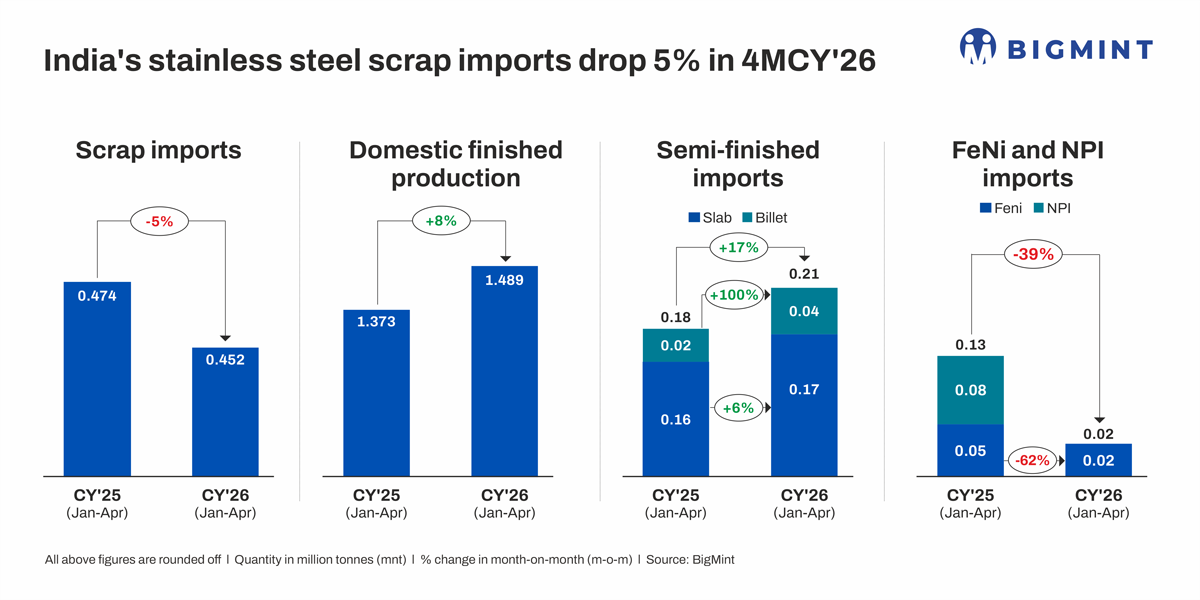
India’s stainless steel scrap imports declined by 5% y-o-y to 0.45 mnt during January-April’26 (4MCY’26), compared with 0.47 mnt in the corresponding period last year. The decline was largely attributed to higher landed costs, currency fluctuations, geopolitical disruptions, and cautious procurement by domestic buyers amid volatile nickel prices. During the period, Indian stainless steel producers largely followed a need-based purchasing strategy while giving preference to domestic scrap, which remained more competitive than imported material.
304 imports remain resilient
Among individual grades, imports of 304-grade stainless steel scrap increased marginally by 2% y-o-y to 0.17 mnt, supported by steady consumption from the 300-series segment.

In contrast, 316-grade scrap imports declined by 2% to 43,000 t, as elevated ferro molybdenum prices and limited availability of prime-grade scrap in overseas markets increased procurement costs. Imports of zurik scrap remained largely stable at 95,000 t, registering a modest 1% increase over the previous year.
Middle East shipments hit by geopolitical disruptions
The United States retained its position as India’s largest supplier of stainless steel scrap during the period, although shipments declined marginally by 1% to 61,000 t. Imports from the UAE fell by 6% to 40,000 t, while shipments from Türkiye declined by 12% to 20,000 t. Market participants attributed the weaker inflows from the Middle East primarily to disruptions caused by the US-Iran conflict, which significantly impacted regional shipping routes.

Higher freight rates, rising marine insurance premiums, container shortages, and longer transit times increased the landed cost of imported scrap, making purchases from the region less attractive. Consequently, Indian buyers either diversified sourcing to other origins or postponed import bookings while awaiting improved freight economics.
Semi-finished imports surge
Imports of stainless steel semi-finished products witnessed strong growth during the period. Billet imports increased by 64% y-o-y to 37,000 t from 22,500 t, while slab imports rose by 43% to 166,000 t from 116,000 t. Indonesia continued to dominate these shipments, reflecting the growing preference among processors for imported semi-finished material to support downstream production.
Ferro nickel and NPI imports
Imports of ferro nickel and nickel pig iron (NPI) registered a sharp decline during Jan-Apr’26. Ferronickel imports dropped 62% to 20,245 t from 52,876 t a year earlier, while NPI imports plunged to just 221 t, compared with 84,000 t in the corresponding period last year. According to industry participants, elevated Indonesian nickel ore prices, tighter RKAB approvals, revised HPM pricing mechanisms, and higher energy costs significantly reduced the competitiveness of imported ferro nickel and NPI. This encouraged stainless steel producers to increasingly rely on stainless steel scrap as a more economical raw material.
Price trends
Higher import prices further discouraged overseas procurement during the four-month period. Imported 304-grade stainless steel scrap averaged around $1,340-1,350/t, nearly $60-70/t higher than the previous year. During March, import offers reached $1,375-1,380/t, and after adding freight, customs duty, port handling and clearance charges, the landed cost remained significantly above domestic scrap prices. In comparison, 304-grade domestic stainless steel scrap was trading around INR 120,000/t, making local procurement considerably more economical and limiting fresh import bookings.
Dollar impact
Currency movement also played a significant role in reducing imports. The US dollar index remained elevated at an average of 92-93 during the period, compared with 85-86 a year earlier. The stronger dollar increased the effective cost of imports for Indian buyers, further reducing the attractiveness of overseas cargoes amid already elevated freight and alloy prices.
Outlook
India’s stainless steel scrap imports are expected to remain cautious in the near term as buyers continue to monitor nickel price movements, freight costs, and currency fluctuations. While domestic scrap availability and its cost advantage are likely to keep imports under pressure, a recovery in stainless steel demand and stabilisation in global logistics could gradually support import volumes during the second half of 2026.
Leave a Reply