- Gas supply cuts to industrial users disrupt petrochemicals, raise risks for metals processing
- Freight, energy and feedstock constraints tighten supply chains across commodities
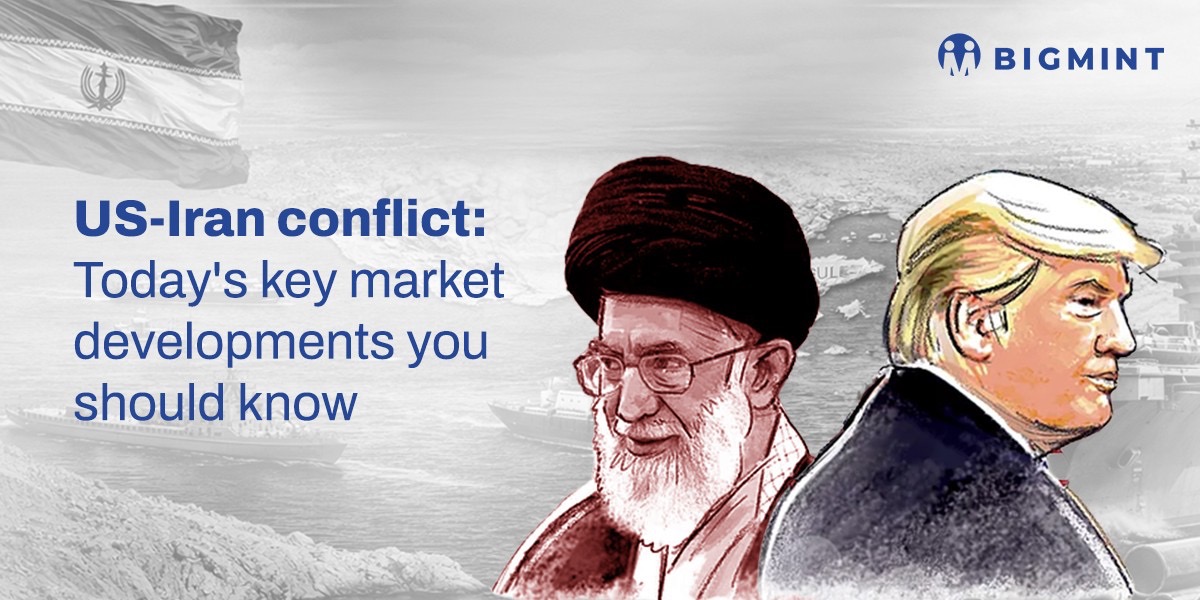
How will the ongoing conflict in the Middle East affect the global metals markets? As the US-Israel and Iran war escalates, BigMint presents a lowdown of the impact of this geopolitical conflict on the Indian metals, raw materials and energy markets:
India’s decision to curb natural gas supplies to industrial users is beginning to cascade across petrochemicals, metals and downstream manufacturing, marking a shift in how the country is managing energy security amid disruptions linked to the Strait of Hormuz.
The government has directed gas distributors to implement full or partial curtailments of supply to petrochemical plants, power producers and other high-consumption industrial units, while prioritising domestic LPG availability and essential sectors, according to media reports.
Refiners have also been instructed to redirect propane, butane, propylene and butenes away from petrochemical production toward cooking gas supply, tightening feedstock availability for polymer producers.
These measures follow disruptions in LNG and LPG flows linked to instability in the Strait of Hormuz, a corridor that typically handles a large share of India’s energy imports. Media reports indicate that prior to the disruption, domestic LPG output met about 40% of demand, with nearly 90% of imports sourced from the Middle East. The immediate impact is visible in India’s polymer sector, where several major producers have cut operating rates.
Indian Oil has shut one polypropylene line at its Paradip complex and reduced operating rates at its Panipat naphtha cracker, while Mangalore Refinery and Petrochemicals has cut output at its polypropylene plant, media reports were quoted as saying on Monday. Reliance Industries has also lowered production across multiple facilities, while Gail has advanced a planned shutdown at its Pata complex to comply with the gas allocation order, the reports added.
With feedstock availability tightening, domestic polymer prices have surged by over 40% across several grades since the conflict began, raising concerns about demand destruction, particularly among small-scale converters. Trade participants note that some processors are already considering temporary shutdowns as margins come under pressure.
India’s dependence on Middle Eastern supply has further amplified the disruption. The region accounts for roughly 53% of polypropylene imports and 62% of polyethylene imports, leaving domestic markets exposed to supply shocks. While some Chinese suppliers have stepped in with limited cargoes, volumes remain insufficient to offset the shortfall, according to media reports.
The emerging picture suggests that gas curbs are no longer limited to petrochemicals but are evolving into a cross-sector constraint, affecting multiple layers of India’s industrial ecosystem.
Steel
Gas supply constraints are beginning to filter into the steel value chain, particularly in secondary steelmaking and downstream processing segments that rely on LPG and other gaseous fuels.
Market participants report that LPG shortages in parts of India have started to disrupt scrap cutting and processing operations, tightening feedstock availability for secondary steel producers.
However, the impact remains uneven across regions. In eastern India, processors and mills are yet to face significant disruptions due to relatively adequate gas inventories, although participants note that prolonged constraints could begin to affect operations.
India’s induction furnace steel market continues to show mixed trends amid volatile input costs and cautious buying sentiment. Billet prices have fluctuated within a narrow band across regions, while rebar prices remain largely range-bound.
Sponge iron prices have softened by INR 100-200/t across several regions, reflecting subdued buying interest even as input cost pressures persist.
The divergence between stable finished steel prices and rising input and logistics costs points to emerging margin pressure across secondary steel producers.
Export activity has also been affected. Disruptions in key shipping corridors and rising freight costs have led many Indian mills to hold back fresh export offers. Several shipments are being rerouted via the Cape of Good Hope, extending transit times and raising logistics costs.
The Gulf remains a major destination for Indian steel exports, making shipping disruptions particularly relevant for regional trade flows.
Ferrous scrap
The impact of gas curbs and freight disruptions is also evident in ferrous scrap markets, where supply conditions remain tight but buying sentiment has weakened.
Imported scrap prices in India have softened as buyers resisted higher offers, with bids for shredded scrap heard around $370-375/t CFR, down from $380-385/t earlier, and HMS (80:20) near $350-355/t CFR.
Suppliers have lowered offers accordingly, with shredded scrap indicated at $372-375/t and HMS around $356-360/t CFR Nhava Sheva and Mundra.
Freight from Europe remains elevated at around $55/t, while container rates have surged from roughly $1,400 to about $2,100, pushing up landed costs even as trading activity remains subdued.
Domestic scrap markets show diverging regional trends. Prices in northern India have firmed on stronger procurement, while western markets such as Mumbai have seen declines, with HMS (80:20) assessed around INR 33,700/t.
Market participants note that the mixed trend reflects fragmented demand conditions and evolving supply constraints across regions.
Non-ferrous metals
Aluminium
Aluminium markets are increasingly reflecting the combined impact of energy disruptions and supply risks in the Middle East.
The region accounts for roughly 9% of global aluminium output, making it a significant contributor to global supply. Aluminium Bahrain has shut three smelting lines, cutting about 19% of its capacity, as disruptions linked to the Strait of Hormuz affect operations.
This development has reinforced concerns that prolonged disruptions could tighten global aluminium availability, with prices hovering around $3,400/t as of 16 March. Inventories at LME warehouses declined slightly to about 445,300 tonnes, indicating tightening supply conditions.
In India, domestic ingot prices were heard around INR 350,000-352,000/t ex-Delhi, with scrap markets also remaining firm amid constrained availability.
Hindalco Industries has invoked force majeure on certain downstream products, highlighting the extent of disruption across supply chains.
Copper
Copper markets have seen limited direct impact from the conflict. Prices eased to around $12,780/t on 13 March, down from $12,900/t earlier in the week, as rising exchange inventories and cautious buying weighed on sentiment.
Market participants note that the Middle East is not a major producer of copper, meaning the conflict has primarily affected prices through sentiment and logistics rather than supply.
Zinc
Gas supply constraints are also affecting zinc value chains, particularly galvanizing operations that rely on LPG. Zinc dross and oxide prices have risen in recent sessions, reflecting tighter feedstock availability and higher processing costs. Continued LPG constraints could further affect downstream zinc consumption.
Coal and energy
Energy markets remain the primary transmission channel through which the Middle East conflict is affecting Indian commodity markets.
Higher crude prices and shipping risks are feeding directly into raw material markets. Premium hard coking coal prices delivered to India have risen to around $249/t, supported by higher freight costs and tighter vessel availability.
Thermal coal prices have also strengthened, with portside RB2 prices rising to around INR 12,200/t, reflecting tighter availability and increased import costs.
Petcoke prices have moved higher as well, with delivered cargoes quoted around $154/t CNF India, supported by firm demand and rising freight rates.
Freight and logistics
Freight markets remain under pressure as shipping disruptions and security risks in the Gulf continue to reshape global trade flows.
Very low sulphur fuel oil prices have surged sharply in recent weeks, reflecting higher energy costs and risk premiums associated with tanker movements through conflict-affected regions.
Insurance costs for vessels transiting high-risk areas have risen significantly, while some shipowners are delaying or rerouting shipments to avoid exposure to security threats.
These developments are extending transit times, tightening vessel availability and raising logistics costs across bulk commodity supply chains.
The combined impact of gas supply curbs, shipping disruptions and rising energy costs is now feeding into multiple layers of India’s industrial ecosystem. Gas curbs in particular are emerging as a system-wide constraint, simultaneously affecting petrochemicals, scrap processing and downstream metals.
If disruptions persist, gas allocation constraints, freight volatility and supply-side tightening could continue to reshape price movements and operating conditions across metals, petrochemicals and energy markets in the coming weeks.
Leave a Reply