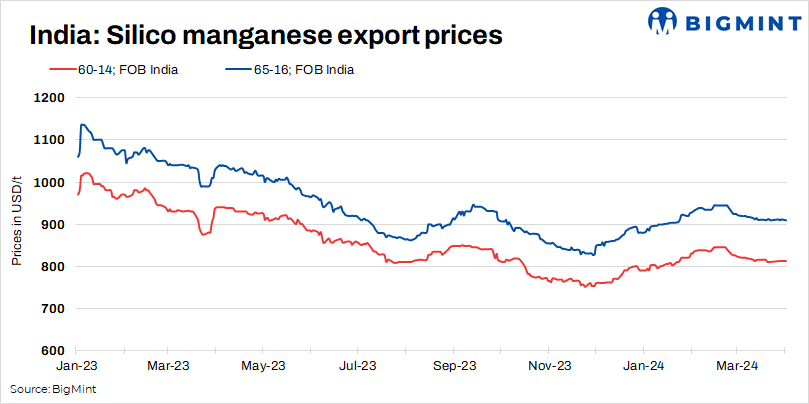
Indian silico manganese exporters are demonstrating resilience. BigMint’s 1 April assessments showed that key grades (60-14 at $812/t FOB and 65-16 at $912/t FOB) holding steady despite subdued import inquiries. This stability suggests either resilient supply chains or a wait-and-see approach from other market players.
Confirmed deals

Market dynamics:
- Demand dips, no immediate price impact: While import inquiries have softened, it has not yet triggered a domino effect on import prices of manganese ore or domestic ore prices set by a key producer MOIL. This suggests potentially resilient supply chains or a wait-and-see approach from other market players.
- Smelter strategy to hold prices: The fact that smelters haven’t resorted to discounted pricing suggests that they may be anticipating a future upswing in demand and are unwilling to erode their margins. This hints at the possibility of price adjustments based on how supply and demand dynamics evolve in the coming weeks.
Global factors
Chinese silico manganese offers inch down: Chinese silico manganese prices remained relatively stable with a minor decline by RMB 100/t ($14/t) as lowered demand weighed on the prices. Prices were at around RMB 6,010/t to 6,110/t ($831/t-$845/t). All prices were ex-works and inclusive of taxes.
In spite of unforeseen difficulties with market demand and production stops in the Ningxia region, the silico manganese market remained largely constant. The ineffectiveness of the raw material markets also hampered overall trading activity.
This has also caused the Indian export price to climb further, as raw material prices have risen in domestic and market demand has been restrained, making it impossible for Indian suppliers to offer discount pricing.
Outlook
The short-term outlook for Indian silico manganese export prices remains stable. However, persistent weakness in demand could exert downward pressure on export prices in the long run.
Furthermore, Vizag, a key silico manganese exporter, may benefit from Andhra Pradesh’s stable power tariffs, potentially increasing production and export competitiveness. This, combined with Vizag’s export orientation, suggest cautious optimism amid continued market uncertainty.