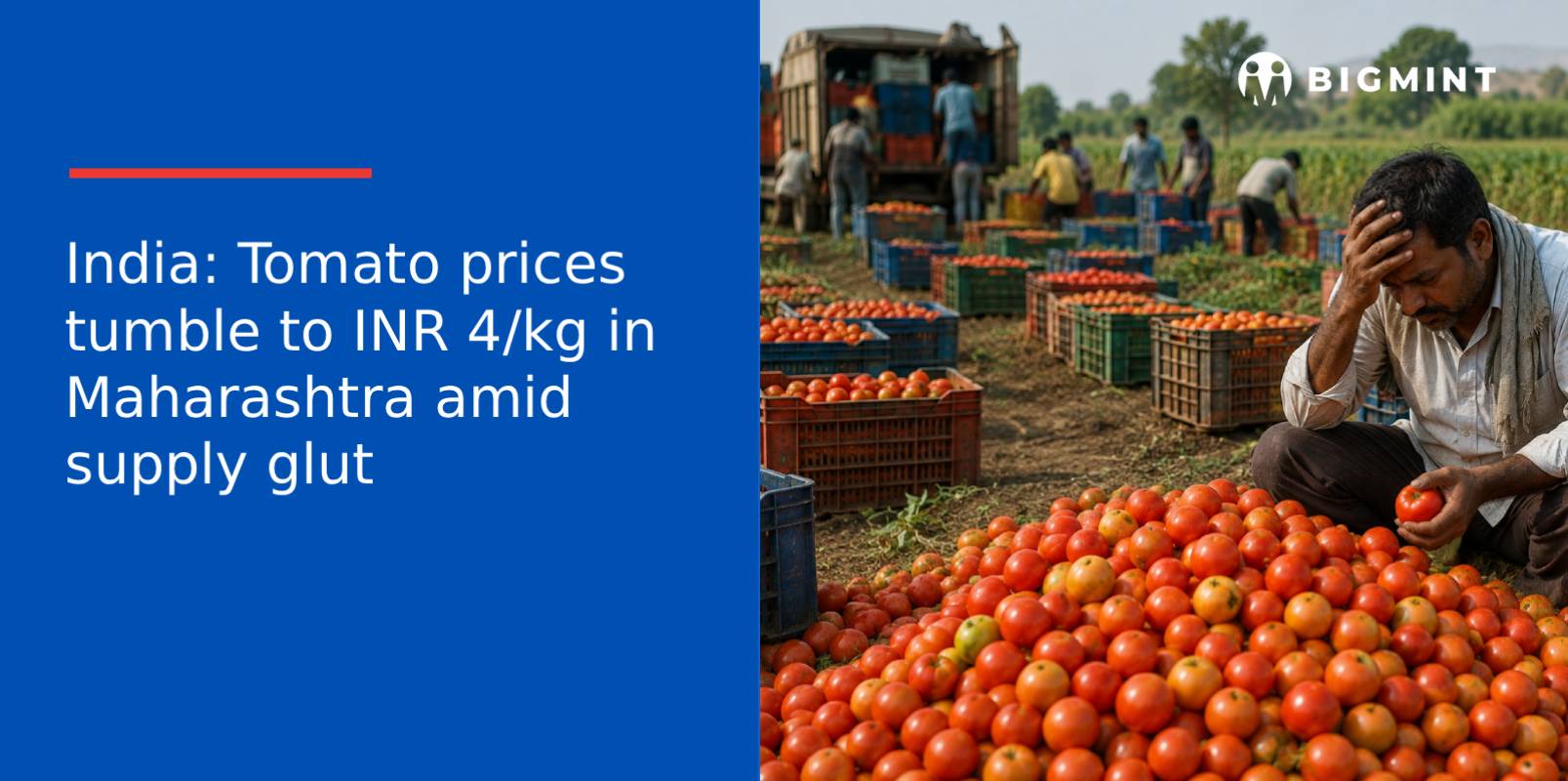
- Oversupply pushes tomato prices to below normal levels
- High costs and limited storage squeeze farmer margins
Tomato farmers in Maharashtra are facing severe financial pressure as a glut of arrivals has pushed wholesale prices in major markets, including Narayangaon, to as low as INR 4/kg. A typical 20-22 kg crate is currently fetching just INR 80-250, compared with the usual INR 300-600/crate.
Heavy arrivals weigh on prices
Around 25,000-30,000 tomato crates are arriving daily in markets across Maharashtra, while Narayangaon alone is receiving nearly 31,000 crates a day. The supply glut has pushed prices sharply lower, particularly for smaller and lower-quality tomatoes, while better-quality produce continues to fetch relatively higher rates.
The decline has left farmers selling below their production costs. Tomato cultivation requires continuous spending on seedlings, fertilisers, pesticides, irrigation and labour, along with repeated spraying, staking, harvesting, sorting and packing. Rising transportation costs have added further pressure on margins.
Perishability leaves farmers with few options
Tomatoes require regular harvesting to prevent overripening and field losses and cannot be stored for long. Farmers therefore have little choice but to sell even when prices are uneconomical, as delaying sales could result in the crop spoiling.
The situation is particularly difficult for growers who had invested heavily in the crop with expectations of earning enough to support their livelihoods and fund the next planting cycle.
Farmers seek policy support
Farmers have called for government intervention to curb extreme price fluctuations and improve market stability. They have also sought facilities for processing surplus tomatoes into value-added products and climate-controlled storage infrastructure that can regulate temperature, humidity and atmospheric conditions to reduce spoilage, microbial growth and premature ripening.
Outlook
Tomato prices are likely to remain under pressure while arrivals continue to exceed demand. Although higher-quality produce may command better rates, weak realisations for lower-quality tomatoes are expected to keep farmer margins under strain. Greater processing and storage capacity could help reduce losses during periods of oversupply.
Leave a Reply