- Kolar, Ahilyanagar record sharpest falls amid substantial local yields
- Heavy arrivals from Malwa belt prompt sharp w-o-w price declines
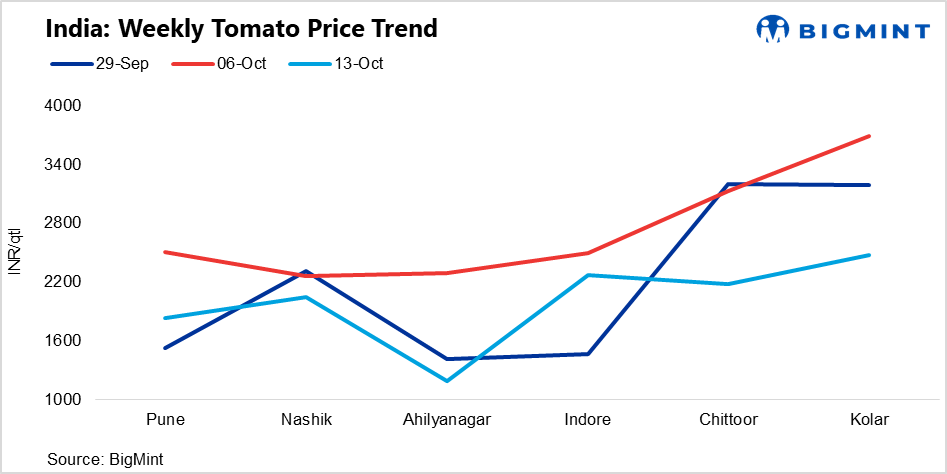
India’s tomato prices declined across all six tracked markets in Maharashtra and other regions in the south in the week ended 13 October, reversing gains recorded in several markets during the previous week. According to BigMint market data, Ahilyanagar, Kolar, and Chittoor recorded the sharpest w-o-w declines. Heavy arrivals, seasonal production pressure, and potentially softer demand during Navratri fasting are likely to have contributed to the correction.
Tomato prices fall across all tracked markets
According to BigMint data, Ahilyanagar recorded the steepest weekly decline, with prices falling 47.7% to INR 1,197/quintal on 13 October from INR 2,290/quintal on 6 October. Kolar prices declined 32.8% to INR 2,475/quintal from INR 3,685/quintal, while Chittoor fell 30.3% to INR 2,182/quintal from INR 3,132/quintal. Pune prices dropped 27.1% to INR 1,830/quintal, while Indore and Nashik recorded more moderate declines of 9.2% and 9.6%, respectively.
In southern markets, substantial local yields in Kolar and Chittoor, combined with reduced demand from neighbouring states, may have increased the volume of tomatoes available for sale relative to buying interest.
In Maharashtra, heavy arrivals at Pimpalgaon, Lasalgaon and Pune APMCs may have added to regional supply pressure, contributing to weaker prices in Pune and potentially influencing nearby trading centres.
Seasonal supply and demand shifts weigh on prices
Indore prices declined to INR 2,270/quintal from INR 2,500/quintal. High incoming arrivals from districts across the Malwa belt, alongside supplies transported from Maharashtra, may have increased availability in the market and limited price support.
The declines also coincided with Navratri, when fasting practices can alter food-purchasing patterns among some consumers. If tomato demand softened during the period while arrivals remained elevated, the resulting imbalance could have accelerated price declines. However, the available price data does not independently establish the scale of this demand effect.
Outlook
Tomato prices may remain under pressure if arrivals continue to exceed buying demand. The combination of seasonal production, inter-state inflows, and potentially weaker festive-period demand could prolong the correction. Price stabilisation will depend on whether market arrivals moderate and buying activity improves in the coming weeks.
Leave a Reply