- Monsoon disrupts domestic coal dispatches
- Higher import costs keep fresh buying need-based
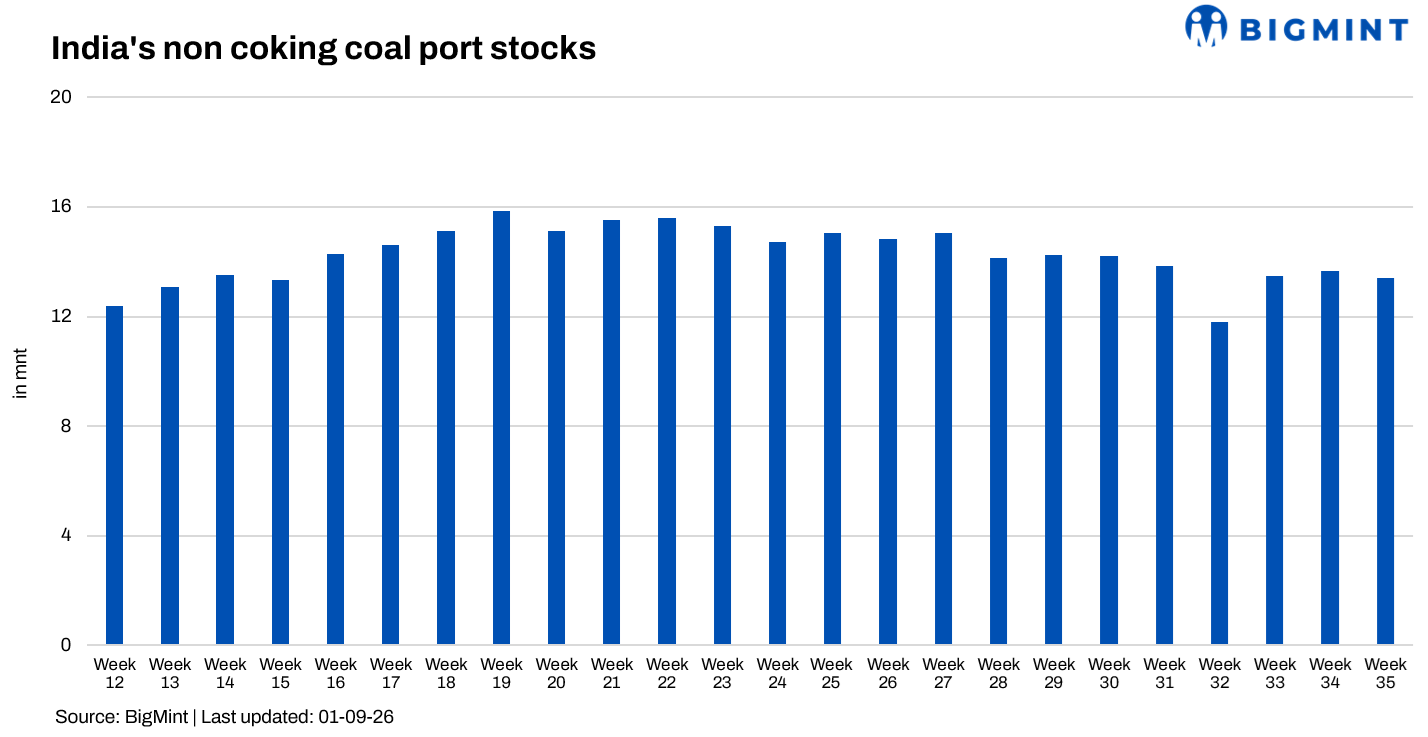
India’s thermal coal inventories at major ports declined 2% w-o-w to 13.40 mnt in week 35 from 13.67 mnt in week 34, as stock reductions at several ports outweighed gains at Mundra, Paradip and Tuticorin. The decline pointed to stronger evacuation of imported cargoes, although it did not indicate a broad recovery in import demand. Monsoon-related domestic coal dispatch disruptions, limited preferred-grade availability and higher imported coal prices continued to shape buying decisions, keeping procurement selective and largely requirement-based.
Port movements point to stronger evacuation
Stock movements were mixed across the port network, but the overall direction turned lower. Mangalore stocks declined 11.3% w-o-w to 0.38 mnt, while Magdalla fell 10.7% to 0.61 mnt and Vizag dropped 14.9% to 0.17 mnt. Kandla and Navlakhi stocks also declined by 5.5% and 8.7%, respectively.
The largest percentage decline was recorded at Gangavaram, where stocks fell 34.4% to 0.08 mnt. Jamnagar, Karaikal, Haldia and Kakinada also recorded notable reductions.

In contrast, Mundra stocks increased 17.2% to 1.83 mnt, while Tuticorin rose 6.8% to 0.70 mnt and Paradip increased 2.8% to 1.30 mnt. Tuna stocks also edged up 3.3% to 0.27 mnt.
The divergence suggested that cargo movements remained highly dependent on individual vessel arrivals and evacuation schedules rather than a uniform change in consumption. The overall decline, however, indicated that more cargo was being cleared from several key import locations.
Major holders continue selective stock management
Inventory levels among major holders also moved lower for some key participants. Adani Enterprises’ stocks declined to 4.89 mnt in week 35 from 4.98 mnt in week 34, while ArcelorMittal’s holdings fell to 1.24 mnt from 1.31 mnt.
Agarwal Coal’s stocks declined further to 0.52 mnt from 0.57 mnt, indicating continued evacuation of available material. In contrast, Adani Power increased stocks to 0.65 mnt from 0.57 mnt, while Tata Power rose to 0.62 mnt from 0.43 mnt. UltraTech Cement’s inventory declined to 0.48 mnt from 0.55 mnt, while NTPL remained unchanged at 0.40 mnt.
The mixed movement showed that inventory management remained company-specific, with some buyers rebuilding stocks while others continued drawing down existing cargoes.

Domestic shortages keep imported coal relevant
Despite lower port stocks, import demand remained cautious because elevated international prices continued to limit affordability. South African RB2 prices at Indian ports had risen to INR 12,500/t, while Indonesian coal prices also strengthened, increasing replacement costs for imported material.
At the same time, monsoon conditions continued to disrupt domestic coal dispatches, while lower auction frequency across coal subsidiaries and difficulty securing preferred grades supported enquiries for imported coal. Rake availability remained another constraint, with power plants continuing to receive priority for domestic coal movement.
The supply situation therefore supported underlying import interest, but high delivered costs prevented a broad increase in fresh bookings. Buyers continued to rely on existing stocks, domestic coal where available and small requirement-based purchases.
The decline in port inventories could support the market if domestic supply constraints persist and post-monsoon consumption improves. However, the current stock movement should be viewed mainly as higher evacuation rather than a decisive recovery in import demand. Continued high import prices and cautious buying could limit the pace of further stock drawdown.
Leave a Reply