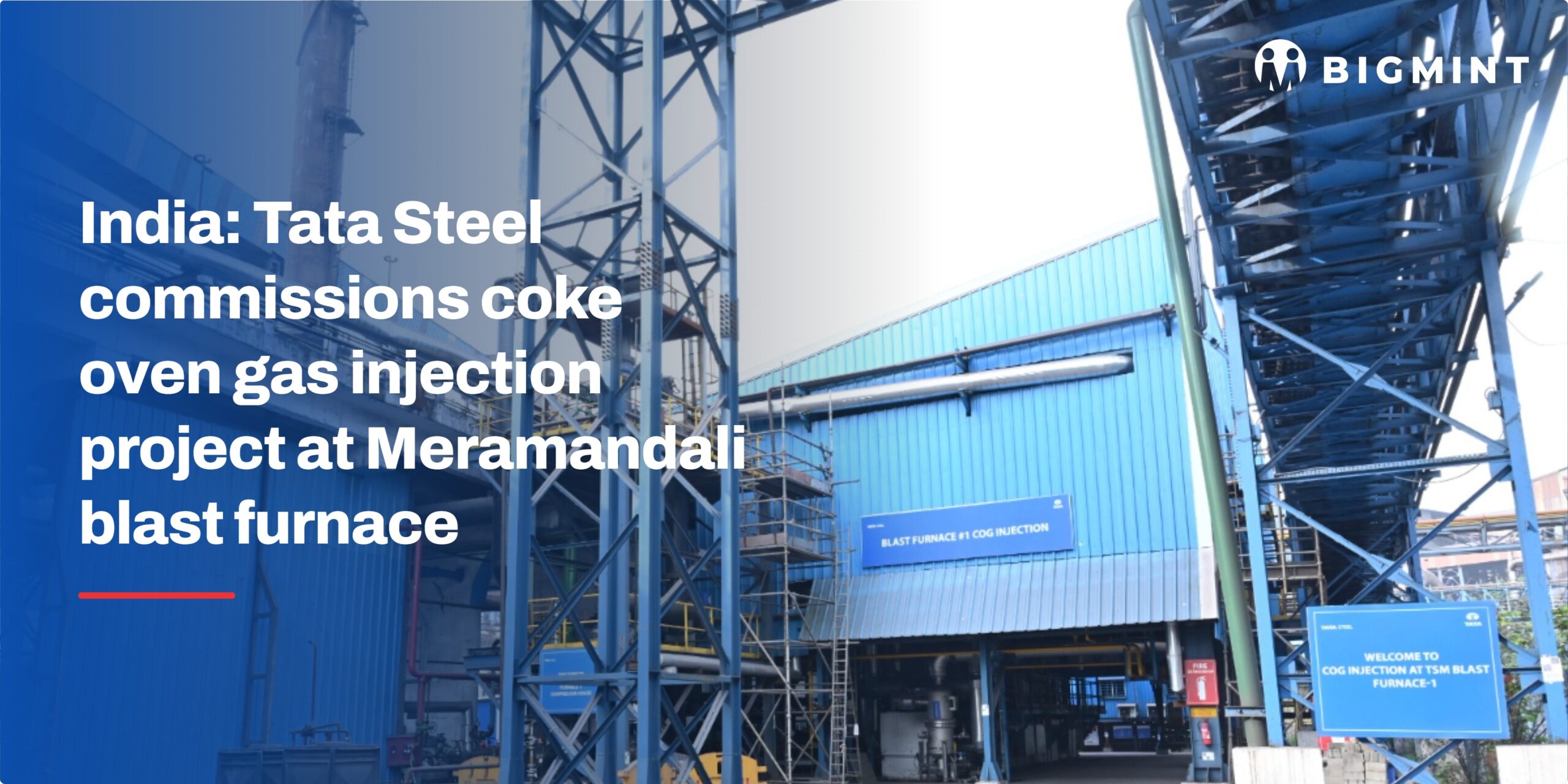
- Coke oven gas injection to reduce BF fuel rate by 10 kg/thm
- Average direct CO2 emission reduction estimated at over 30 kg/thm
Tata Steel has commissioned a coke oven gas (COG) injection project at its Meramandali steel plant in Odisha, using process gases as a partial substitute for fossil fuel in blast furnace operations.
The project has been implemented at Blast Furnace 1 and is aimed at reducing fossil fuel consumption and carbon dioxide emissions, Tata Steel said in a statement on 10 September.
The initiative is part of Tata Steel’s efforts to deploy lower-carbon technologies as it targets net-zero emissions by 2045. The company described the project as the first of its kind in India. Previously, the company has also demonstrated the injection of coal-bed methane, hydrogen, and biochar into blast furnaces.
COG injection to reduce BF fuel rate by 10 kg/thm
COG is a hydrogen- and hydrocarbon-rich byproduct generated during coke production. At integrated steel plants, it is generally used for power generation and heating, while surplus gas may be flared.
Sources in Tata Steel told BigMint that the steelmaker is expecting to reduce the blast furnace fuel rate by roughly 10 kg/tonne of hot metal (thm) through COG injection through the tuyeres at Meramandali. The typical fuel rate of Tata Steel’s blast furnace is around 520/thm while, according to Ministry of Steel data, the typical fuel rate range for blast furnaces is 505-579 kg/thm. The specific energy consumption ranges from 5.4-7.2 Gcal/tonne of crude steel (tcs).
COG normally contains 55-58% hydrogen, 25-27% methane, and 6-7% carbon monoxide. The gas is cleaned first to remove impurities such as sulphur compounds, tar, ammonia, etc. and pressurised raw COG is injected into the blast furnace. SMS Group is providing the gas cleaning systems and technology, while Kobelco supplied the equipment.
In the event of a 10 kg reduction in the fuel rate, average CO2 emission reduction from direct combustion of metallurgical coke is estimated at over 30 kg/thm. This is deduced from the average emission factor of 1 kg of coke in terms of direct combustion, which is roughly 3.04 kgCO2. However, if lifecycle assessments are taken into account, the CO2 reduction will naturally be higher.
The project also enables the blast furnace to operate with a three-fuel injection system, which Tata Steel said could improve operational flexibility and efficiency.
Globally, ROGESA in Germany and ArcelorMittal in Spain have trialled COG injection in blast furnaces for efficiency enhancement, although the exact CO2 reductions from such trials are unavailable in the public domain.
Leave a Reply