- Coal, pellet and scrap shortages push up production costs and spot offers
- Limited bookings on elevated offers aidded sentiments slightly
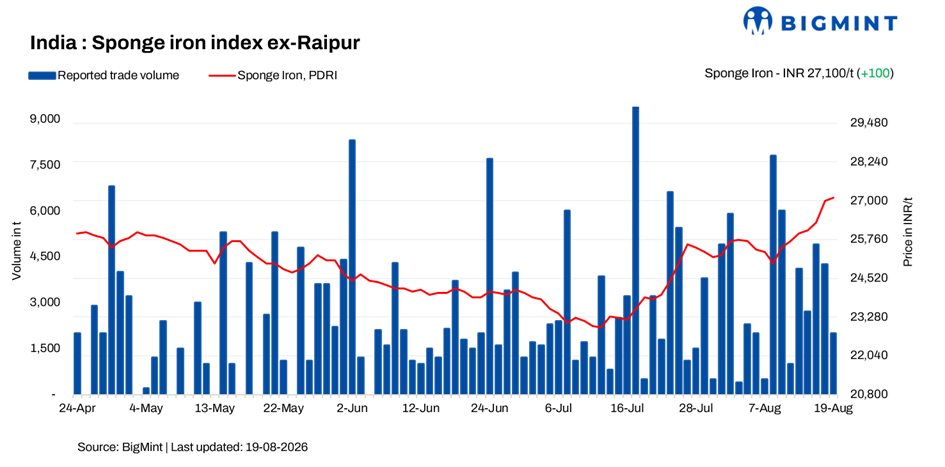
India’s sponge iron market strengthened on 19 August 2026, with prices rising by INR 100-500/t across major regions. Higher raw material costs, tight availability, previous-day bookings and supportive market sentiment encouraged producers to raise offers.
Eastern region:
Sponge iron prices in the eastern region increased by around INR 300-400/t, driven primarily by limited availability of domestic coal. Producers in West Bengal reported shortages of ECL coal, tightening supply and increasing production costs. The supply constraint prompted sellers to raise offers and supported a sharp increase in regional prices.
Southern region:
Prices in the southern region rose by around INR 200/t, supported by improving demand from the finished steel segment. Market participants anticipated a gradual improvement in demand following the monsoon period, while better finished steel sales provided additional support to sponge iron procurement.
Northern region:
Northern sponge iron prices increased by around INR 500/t, the sharpest regional gain, amid limited scrap availability and higher raw material costs. Tight scrap supply increased the attractiveness of sponge iron as an alternative metallic input, allowing producers to raise offers.
Central region:
Prices in the central region increased by INR 100-400/t, as tight pellet availability pushed up DRI production costs. Higher pellet prices and limited spot availability encouraged producers to maintain firmer offers, while some buyers increased restocking amid expectations of further price increases.
Raw material costs remain supportive
Raw material fundamentals continued to provide strong support to sponge iron prices. RB2 coal prices were around INR 11,550/t ex-Gangavaram, while raw pellet prices were around INR 10,450/t DAP-Raipur.
Despite the firm supply-side environment, the decline in daily trade volume to approximately 17,000 t from 24,000 t previously highlights resistance among buyers to higher offers.
Rationale
Prices have been derived based on transactions, offers, bids, and indicative price data sets. Transactions are considered as T1 and given a weightage of 50%, whereas other data sets are considered as T2 and given a weightage of the balance 50%.
Click here for detailed methodology


Leave a Reply