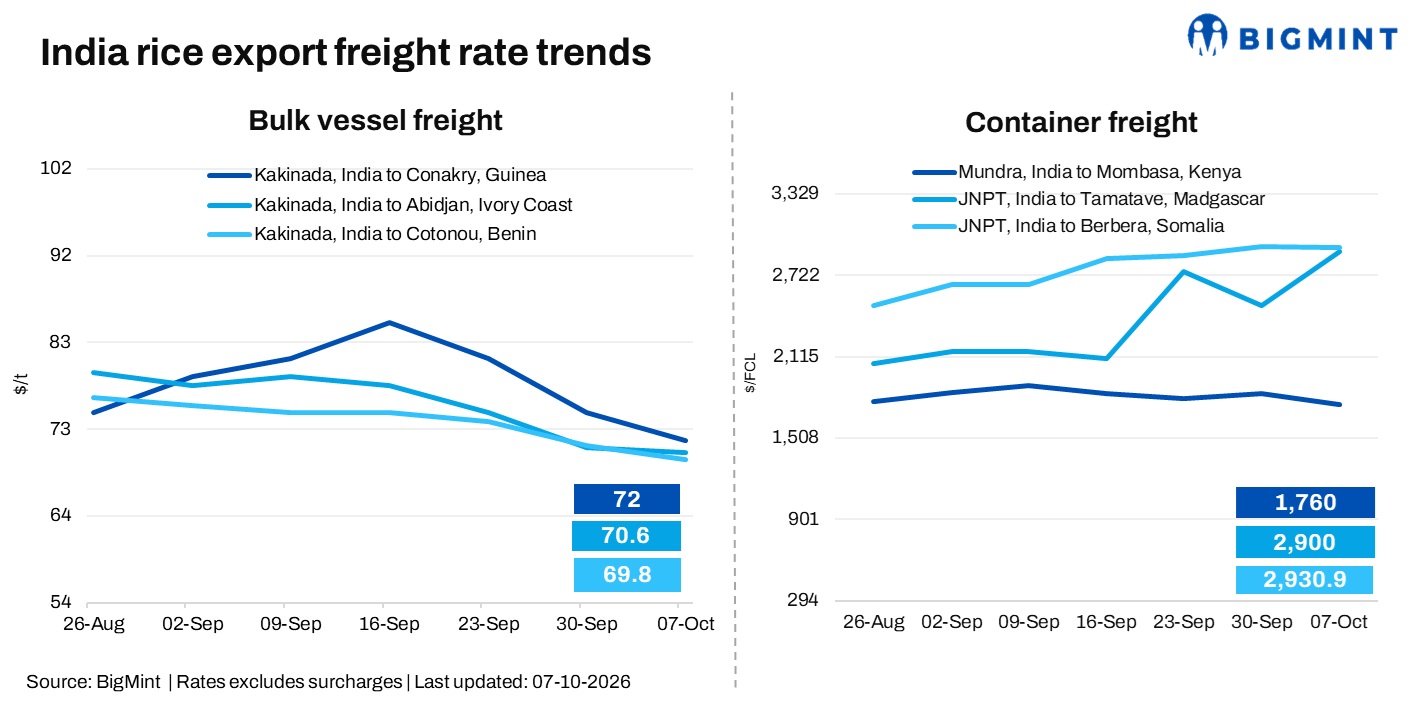
- Bulk sentiment eases as vessel availability improves, but West Africa space remains tight
- Container preference holds firm amid active enquiries and shifting cargo flows
India’s rice freight market showed diverging trends in the week ended 7 October, with bulk freight easing while containerised cargo remained relatively resilient across key destinations. Uneven shipment volumes, changing cargo preferences and operational constraints in West Africa continued to shape freight decisions.
A shipbroker told BigMint, “bulk rates have started coming down. Vessel availability is still limited, with regular vessels mainly operating on the Gulf, Red Sea and East Africa routes. West Africa continues to face space constraints, although freight is more manageable compared with the last few months.”

Bulk market loses momentum
The softer bulk tone comes despite healthy demand and active fixing on select West African routes, while volumes have dipped on some destinations. This has made market activity increasingly route-specific. A rice trader said, “The market is fluctuating a lot at the moment. Volumes have dipped for some destinations, but demand is still there. Exporters are cautious rather than bearish.”
Port conditions are also influencing vessel planning. Conakry continues to face prolonged berthing delays, while congestion at Abidjan is affecting vessel turnaround, keeping operational uncertainty elevated.
Cotonou is seeing a different dynamic, with healthy demand and active fixing, but some cargo is moving towards containers instead of bulk.
A charterer said, “Demand and fixing activity are healthy, but some cargo is shifting towards containers. Traders are looking for more flexibility where operational conditions make bulk shipments more difficult.”
Containers hold firm
While bulk sentiment has softened, containerised cargo continues to see active enquiries across West and East Africa. The shift is particularly visible on lanes where smaller parcels and operational uncertainty make containers more practical.
A shipbroker said, “Container demand has picked up in West Africa. Bulk space remains competitive, but containers are increasingly preferred for some cargoes.”
The container market is, however, not uniformly firm. Better equipment and space availability have eased pressure on some lanes, while limited sailing frequency continues to support freight on select destinations. October carrier schedules and surcharge revisions are adding another layer of uncertainty to shipment planning.
A rice trader said, “Container freight remains under pressure on some routes, but equipment availability and sailing windows are still influencing shipment decisions.”
Rice values soften further
The freight market is also being accompanied by softer Indian rice values. BigMint’s assessment for non-basmati parboiled rice (IR-64 5% PB), FOB Kakinada, stood at $373/t on 7 October, down $4/t w-o-w from $377/t on 30 September.
A shipbroker said, “Buyers are becoming more selective on price. Softer freight is providing some relief, but uneven destination demand and fluctuating shipment volumes are keeping exporters cautious.”
The freight correction offers some relief to shipment economics, although port reliability, vessel availability and container costs remain important considerations for exporters.

Outlook
The contrasting bulk and container trends are likely to persist in the near term. Improving vessel availability and uneven shipment volumes could keep bulk freight under pressure, while tight space and operational constraints may limit the downside on select West African routes.
Containerised cargo is likely to remain an important option for exporters as they assess space, sailing reliability and overall logistics costs. With Diwali approaching next month, fresh fixing activity could remain measured, keeping the market cautious but not bearish.
Leave a Reply