- African demand supports non-basmati shipments.
- Competitive pricing keeps export demand firm.
India’s rice exports from January to June rose to 12.27 million metric tons from 11.68 million tons in the same period a year ago, despite concerns that recent weather patterns could hurt production.
India’s rice exports increase despite lower basmati shipments
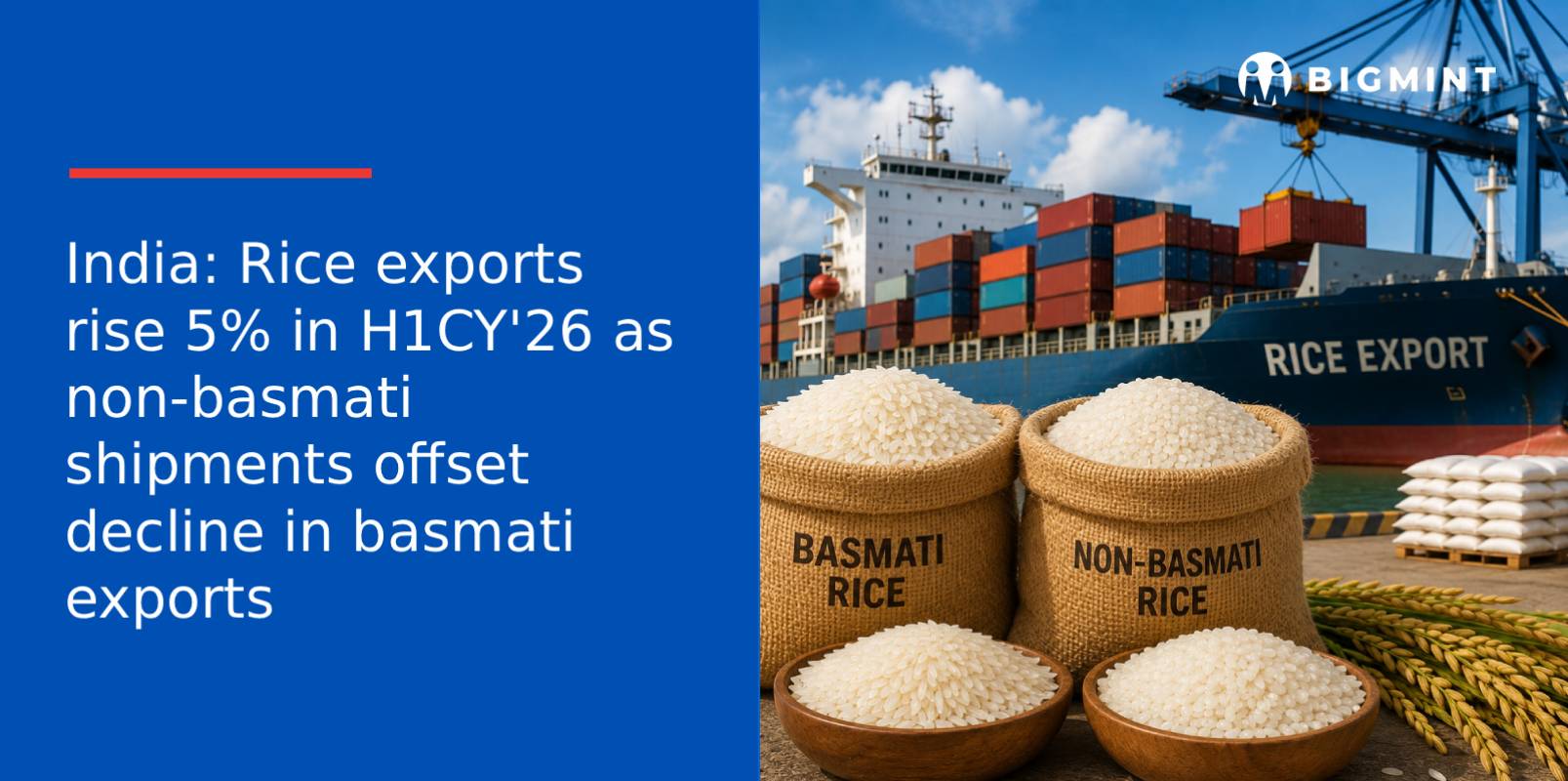
India’s rice exports rose 5% year on year (YoY) during the first half of 2026, supported by higher non-basmati rice shipments that offset a decline in basmati exports, according to two government officials. India exported 12.27 million metric tonnes (MMT) of rice during January-June 2026, compared with 11.68 MMT in the corresponding period last year.
The increase in exports comes despite concerns that recent weather patterns could affect production. India, which accounts for more than 40% of global rice exports, typically exports more rice than the combined shipments of Thailand, Vietnam, and Pakistan.
The higher exports are expected to help keep global rice prices in check while ensuring affordable supplies for price-sensitive buyers across Africa and Asia.
Non-basmati exports support overall growth
Exports of basmati rice declined 5.5% YoY to 3.36 MMT during the first half of 2026, as shipments to markets including Iran fell following trade disruptions caused by the ongoing war with Iran affecting key Gulf markets. While non-basmati rice exports increased 9.6% YoY to 8.9 MMT, supported by stronger demand from African countries.
According to Mukesh Jain, an exporter based in Raipur, Chhattisgarh, ample domestic supplies have made Indian rice significantly cheaper than rice supplied by other major exporters, including Thailand, Vietnam, and Myanmar.
Major export destinations
India primarily exports non-basmati rice to Bangladesh, Benin, Ivory Coast, Guinea, and Cameroon, while basmati rice is mainly shipped to Saudi Arabia, Iraq, Iran, and the United Arab Emirates.
Outlook
India’s rice export momentum is expected to remain supported by competitive pricing and ample domestic supplies, with strong non-basmati demand from African markets likely to offset weaker basmati shipments to Gulf destinations. Export trends will continue to depend on demand across key importing countries and any further developments affecting trade with Iran.
Leave a Reply