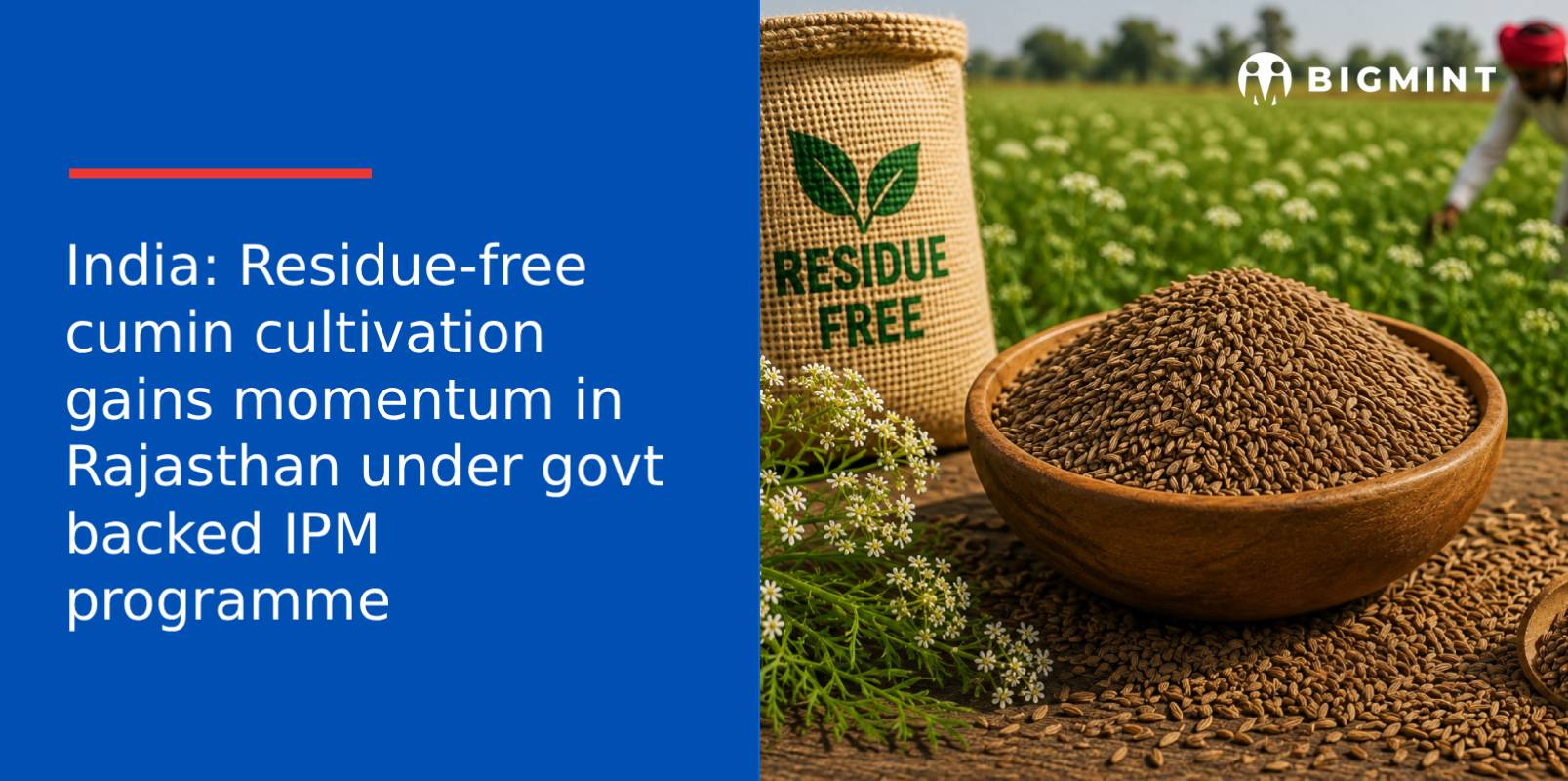
▪ IPM-based residue-free cumin fetches up to 24% premium, lowers cultivation costs
▪ Production at 35,000 tonnes; potential to reach 100,000 tonnes
A Department of Biotechnology (DBT)-funded initiative has demonstrated that residue-free cumin cultivation is commercially viable in western Rajasthan through the adoption of Integrated Pest Management (IPM) protocols and Good Agricultural Practices (GAP). Farmers following the IPM package are realising around 24-25% higher prices than the prevailing market rate while lowering cultivation costs by 25-35% per acre through effective management of fungal diseases and insect pests.
IPM model improves returns and market access
The Biotech-KISAN Hub for the Western Dry Region, implemented by the South Asia Biotechnology Centre (SABC) in collaboration with the ICAR-National Research Centre on Seed Spices (NRCSS), promoted residue-free cumin cultivation across key producing districts of western Rajasthan during 2019-2024. The programme included field demonstrations, farmer training, distribution of biological crop protection inputs and adoption of Good Agricultural Practices. It also facilitated buyback arrangements with corporates and exporters through Farmer Producer Organisations (FPOs), providing assured market access for participating farmers.
The initiative has demonstrated that science-based, location-specific IPM practices can help farmers transition from chemical-intensive cultivation to residue-free cumin that meets stringent international quality standards while improving farm profitability.
Expansion supported by incentives and export demand
Stakeholders indicated that the biological formulations used under the IPM programme have proven effective, although wider adoption will require greater support from industry, research institutions and the Spices Board. Farmer interest is also increasing due to Gujarat’s incentive of ₹5,000 per quintal above the market price for residue-free cumin, encouraging the adoption of biological crop protection practices.
Exporters sourcing residue-free cumin directly from farmers said the production model reduces cultivation costs while ensuring premium realisations. Growing demand for residue-free spices from Europe and the United States has also improved procurement, with buyers increasingly purchasing directly from IPM growers.
Outlook
Residue-free cumin production under the programme has reached 35,000 tonnes, with stakeholders estimating the potential to expand output to 100,000 tonnes. Continued adoption of IPM practices, stronger institutional support and sustained export demand for residue-free spices are expected to drive further growth in Rajasthan’s cumin sector.
Leave a Reply