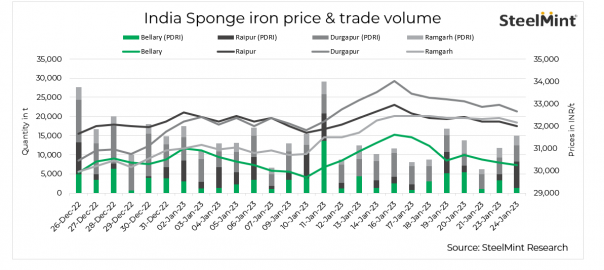
Sponge iron prices in India fell by INR 100-300/t in key locations today. Prices continued to fall as spot trades remained limited due to the constant decline in steel prices in north India, particularly Punjab. This resulted in downward pressure on prices in different regions.
As a result, slight selling pressure was observed among suppliers, resulting in a consistent drop in both offers and bids. The correction in prices made market participants wary, resulting in fewer enquiries. Sources said uncertain price movements have impacted spot trade volumes.
About 19,700 t of trade in sponge iron was recorded today as against 20,860 t on 23 January.
Snapshots of key markets
- Rourkela: Prices trended down on lower bids followed by volatile prices in north India. Buyers were cautious and procured material as per immediate needs and on lower offers. Thus, prices continued to soften.
- Raipur: Bulk booking was seen at lower prices. The market continued to show a downward trend as prices decreased further by INR 200/t. After holding on to high offers sellers finally reduced prices which facilitated movement in the market and resulted in bulk buying. Despite stable demand in the market buyers are sceptical of purchasing material at higher prices. Trading in semi-finished steel remained moderate.
- Bellary: Slow demand and lower enquiries weighed on sponge iron prices today, resulting in a drop in overall sales. Slower movement of semi-finished and finished steel was witnessed across the region.
- Durgapur: Spot trades were moderate as prices in the northern region continued to fall. Prices fell by INR 300/t compared to yesterday.
- Ramgarh: The market remained mostly silent owing to dull trading. Semis movement was impacted due to low demand in the northern region. Sellers were forced to offer at lower rates as prices fell by INR 150-200/t.
Rationale –
This index has been derived based on transactions, offers, bids and indicative price data sets. Transactions are considered as T1 and given a weightage of 50% whereas other data sets are considered as T2 and given a weightage of the balance 50%.
Click for detailed methodology
 T1 – Trade, T2 – Offer/Bid/Indicative


Leave a Reply