- Shift in US sourcing patterns supports India’s exports
- Sustaining competitiveness will be crucial to maintaining market share
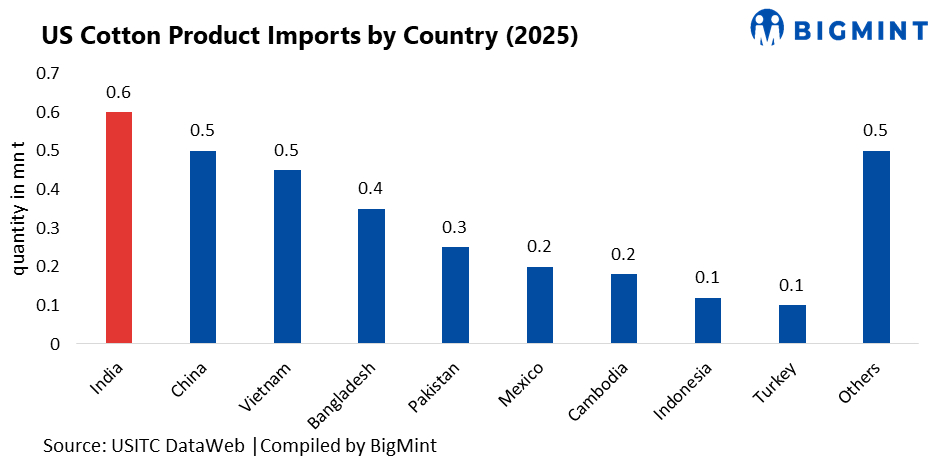
India has emerged as the largest exporter of cotton-based textile products to the United States in 2025, overtaking China in a significant shift in global textile trade. According to trade data, India shipped around 0.6 million tonnes (mnt) of cotton products to the US, slightly higher than China’s around 0.5 mnt, while total US cotton product imports remained broadly stable at about 3.3 mnt. The development indicates a change in sourcing patterns rather than a surge in demand, as American buyers increasingly diversify supply chains away from China.
US-China trade war
The shift has largely been driven by ongoing trade tensions between the US and China, which have resulted in higher tariffs and trade restrictions on Chinese textile products. These policy measures have encouraged US retailers and apparel brands to reduce dependence on China and source more cotton yarn, fabrics, and apparel from alternative suppliers.
India has been one of the key beneficiaries of this transition due to its strong cotton production base, competitive manufacturing costs, and well-established spinning and textile industry. With abundant raw cotton availability and large-scale processing capacity, Indian exporters have been able to meet rising demand from US buyers seeking diversified sourcing options.
Restructuring of global supply chains
Another supporting factor is the gradual restructuring of global textile supply chains, where brands and retailers are spreading procurement across multiple countries to mitigate geopolitical and logistical risks. India’s integrated cotton value chain-from farm production to spinning, weaving, and garment manufacturing-has strengthened its ability to capture additional export demand. This shift also supports the domestic cotton ecosystem, benefiting ginners, spinning millers, and textile exporters through improved demand visibility and higher export opportunities in key markets like the US.
Looking ahead, sustaining this position will depend on several factors including stable cotton production, competitive yarn and fabric pricing, and consistent quality standards. While India has gained market share in the US, competition from other textile manufacturing hubs such as Vietnam, Bangladesh, and Indonesia is likely to remain strong. If India maintains cost competitiveness and strengthens supply chain reliability, it could consolidate its position in the US market, which would continue to support export demand for cotton and cotton-based products in the coming years.
Leave a Reply