- Indian non-basmati rice prices reach one-year highs
- India maintains major price advantage over Thailand
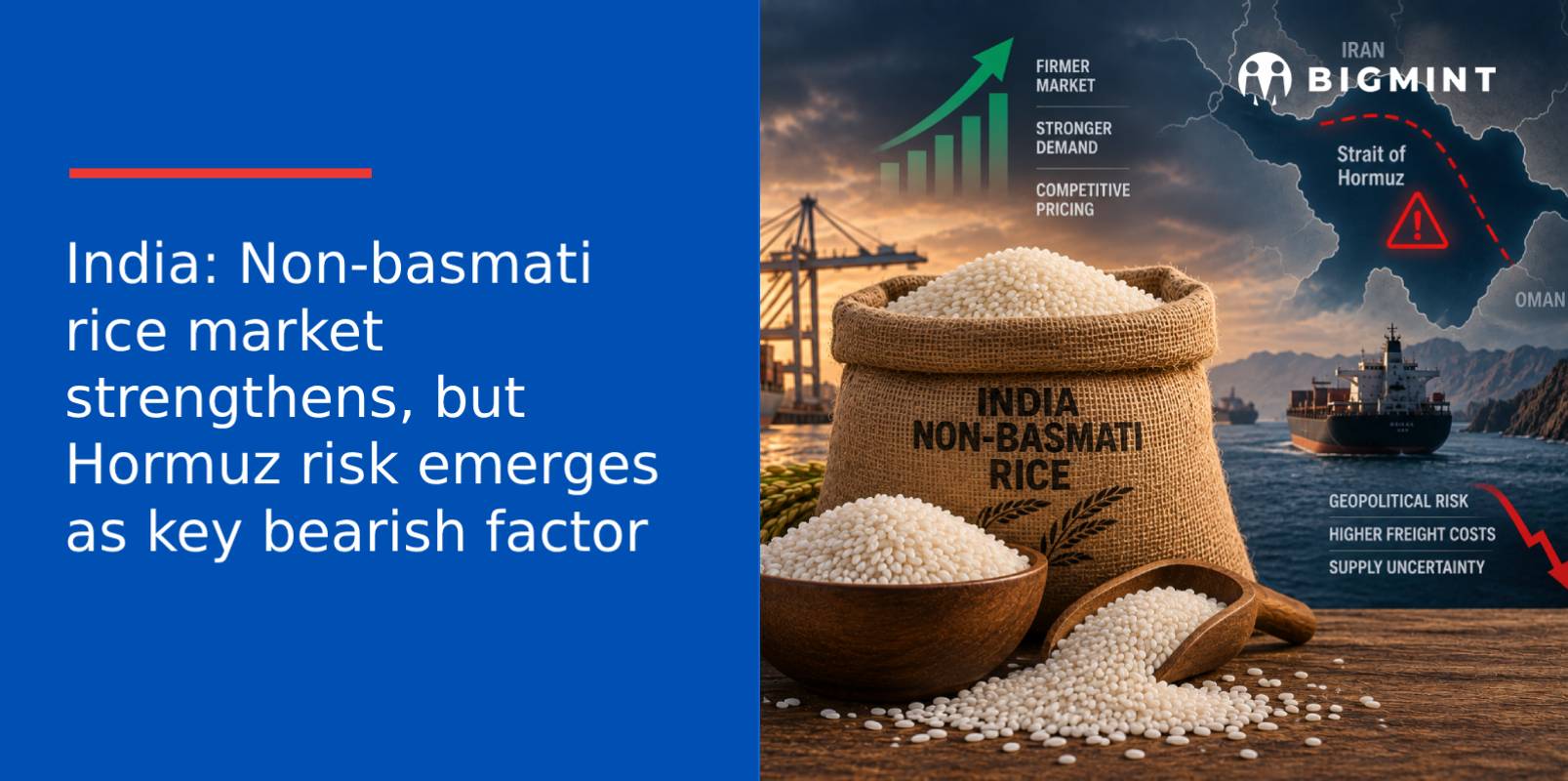
India’s non-basmati rice market remains firm, with 5% Broken PB at $371–377/ton and 5% Broken White at $368–373/ton, both near one-year highs. 16% below-normal August rainfall and the risk of a weak September monsoon are raising concerns over new-crop production and supply, while rising crude prices and Strait of Hormuz risks could limit further gains.
India maintains strong price advantage
Thailand’s 5% Broken Rice has reached around $488/ton, up from $483-485/t last week, supported by expectations of lower production. In comparison, India’s 5% White Rice is priced at $368-373/t, making it around $115-120/t cheaper than Thailand. The significant price difference gives India a strong competitive position in international trade. If buyers continue to prioritise freight and landed costs, Indian exporters could gain additional volume business.
Vietnam supply outlook remains mixed
Vietnam’s 5% Broken Rice prices remain almost steady at $440-445/t. The summer-autumn crop harvest is nearing completion, which could reduce domestic supply ahead. However, weak local buying is limiting price gains. Vietnam’s 2026 rice export estimate stands at around 7.74 mnt. While declining supply provides some support, weak demand and buyer price sensitivity are keeping the market relatively subdued.
Philippines becomes an important demand trigger
The rising import requirement of the Philippines has become an important factor in Asian rice trade, with Thailand, India and other origins competing for demand. If India increases its share of Philippine procurement, this could create additional volume opportunities for exporters. Therefore, actual shipments and tender activity will be more important than export quotations alone in determining demand strength.
Bangladesh tightens aromatic rice exports
Bangladesh has tightened restrictions on aromatic rice exports amid domestic availability concerns. Against earlier export approval of 45,270 t, only 2,419 t had been exported by 30 August. The new system includes a $1.60/kg minimum export price, customs quality checks and conditions for repatriation of export earnings, indicating greater caution over rice availability and exports.
Hormuz risk remains biggest bearish factor
The biggest bearish risk is crude oil above $108/barrel, international unrest and reduced traffic through the Strait of Hormuz. Continued disruption could increase shipping, freight, insurance and transit costs, particularly for shipments to Gulf and West Asia destinations. Higher logistics costs could make buyers more cautious and affect exporters’ shipment capacity.
Outlook
India’s non-Basmati rice market remains positive, supported by weak monsoon concerns, firm export and a significant price advantage over Thailand. However, the next move will depend heavily on new-crop arrivals, export shipments and international buying. At present, export logistics and geopolitical disruption remain the major bearish risks. If Hormuz-related risks persist, higher freight and insurance costs could limit India’s export competitiveness and restrict further price gains.
Leave a Reply