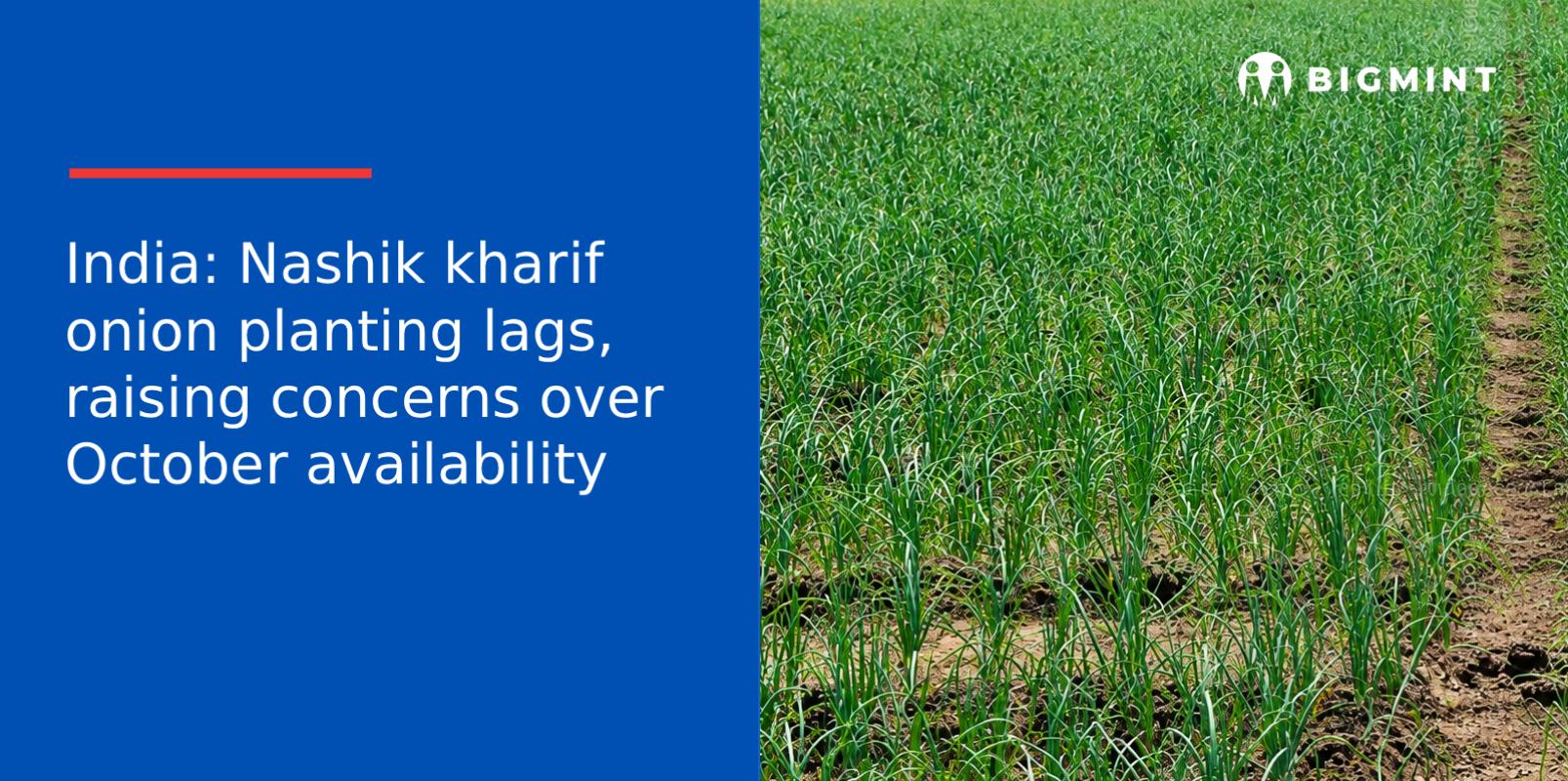
- Kharif onion arrivals likely to be delayed by nearly a month
- Stored summer stocks face depletion before new crop enters markets
Delayed monsoon has significantly slowed kharif onion transplantation in Nashik, raising concerns over a temporary supply gap during October. Transplantation has covered only around 500 hectares so far, against the district’s usual cultivation area of nearly 30,000 hectares, with progress restricted to about 2% due to inadequate rainfall during the sowing period.
While kharif onions normally begin arriving from mid-October, officials now expect substantial arrivals only from mid-November, with regular supplies likely from early December. The delayed crop could therefore extend the period during which markets depend on stored summer onions to meet demand.
Declining summer onion stocks raise risk of October supply crunch
The supply situation is further complicated by the condition of existing stocks. Unseasonal rainfall during the summer onion harvest adversely affected storage quality and shelf life. Around 65% of Nashik’s stored summer onion stocks have already been exhausted, leaving an estimated 7-8 lakh tonnes in storage. These stocks are expected to last only until the end of September or mid-October.
Normally, stored summer onions bridge the supply period from May until fresh kharif arrivals begin. With the new crop now expected to arrive substantially later, the market could face a three-to-four-week supply crunch if existing stocks are depleted before fresh onions reach wholesale markets in sufficient volumes. This could increase competition for available marketable stocks and put upward pressure on prices.
The outlook will depend on how quickly transplantation accelerates following recent rainfall. A faster recovery could narrow the arrival delay, while continued disruption could further tighten availability during October.
Outlook
Onion availability is likely to remain closely monitored through October as stored summer stocks approach depletion while fresh kharif arrivals remain delayed. The key risk is a temporary supply gap between mid-October and mid-November, before substantial arrivals from the new crop begin.
The pace of transplantation following recent rainfall will be critical. If planting accelerates, the arrival delay could narrow; otherwise, the supply crunch could extend and put further upward pressure on onion prices.
Leave a Reply