- Delayed, uneven monsoon rainfall disrupts planting, reduces acreage
- Fresh arrivals delayed by 2 months, increasing pressure on stored stocks
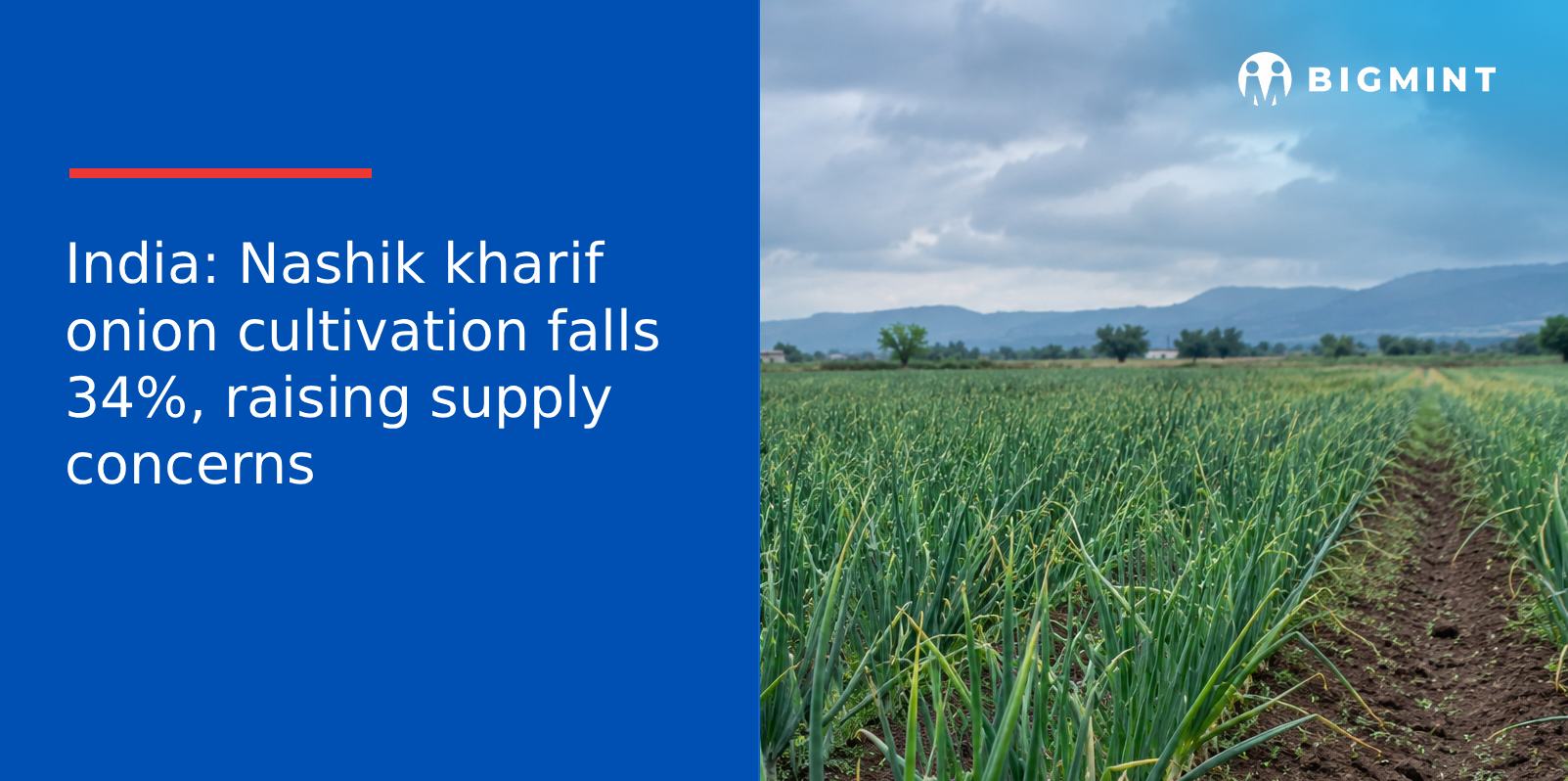
Nashik’s kharif onion cultivation has declined sharply this season due to delayed and uneven monsoon rainfall, raising concerns over crop output and market availability in the coming months. According to state agriculture department data, the area under kharif onion has fallen to 21,243 hectares, about 34.6% below the average area of 32,491 hectares.
Delayed monsoon disrupts onion planting
Kharif onion sowing in Nashik generally takes place from early July to mid-September. This season, rainfall arrived nearly a month late, while dry spells during August and September disrupted planting across major onion-growing areas.
Agriculture officials said rainfall in July was adequate, but insufficient precipitation in the following two months affected plantation activities. The lower acreage is also accompanied by expectations of weaker productivity due to moisture stress and adverse weather conditions.
Lower yields could deepen supply deficit
Officials estimate kharif onion productivity at around 10-11 tonnes per hectare this season, compared with the normal average of about 15 tonnes per hectare. This represents a potential productivity decline of roughly 27-33%, adding to the impact of reduced acreage.
The combination of lower planted area and productivity could significantly reduce the volume available from Nashik’s kharif crop. The extent of the production decline will depend on weather conditions during the remaining crop cycle.
Delayed arrivals increase pressure on stored stocks
Fresh kharif onions normally begin reaching wholesale markets around mid-October. This season, harvesting is expected to start only in the last week of November, with regular arrivals likely from mid-December.
The delay could create a supply gap between mid-October and mid-November, as stored summer onion stocks are reportedly nearing exhaustion. Summer onions harvested during March and April can generally be stored for six to seven months, while kharif onions have a shelf life of less than a month.
Outlook
The timing and volume of kharif arrivals will be critical for market availability. If stored summer stocks decline before fresh supplies increase, wholesale onion prices could remain under upward pressure through October and November. Regular kharif arrivals from mid-December could help ease supply tightness, subject to crop yields and weather conditions
Leave a Reply