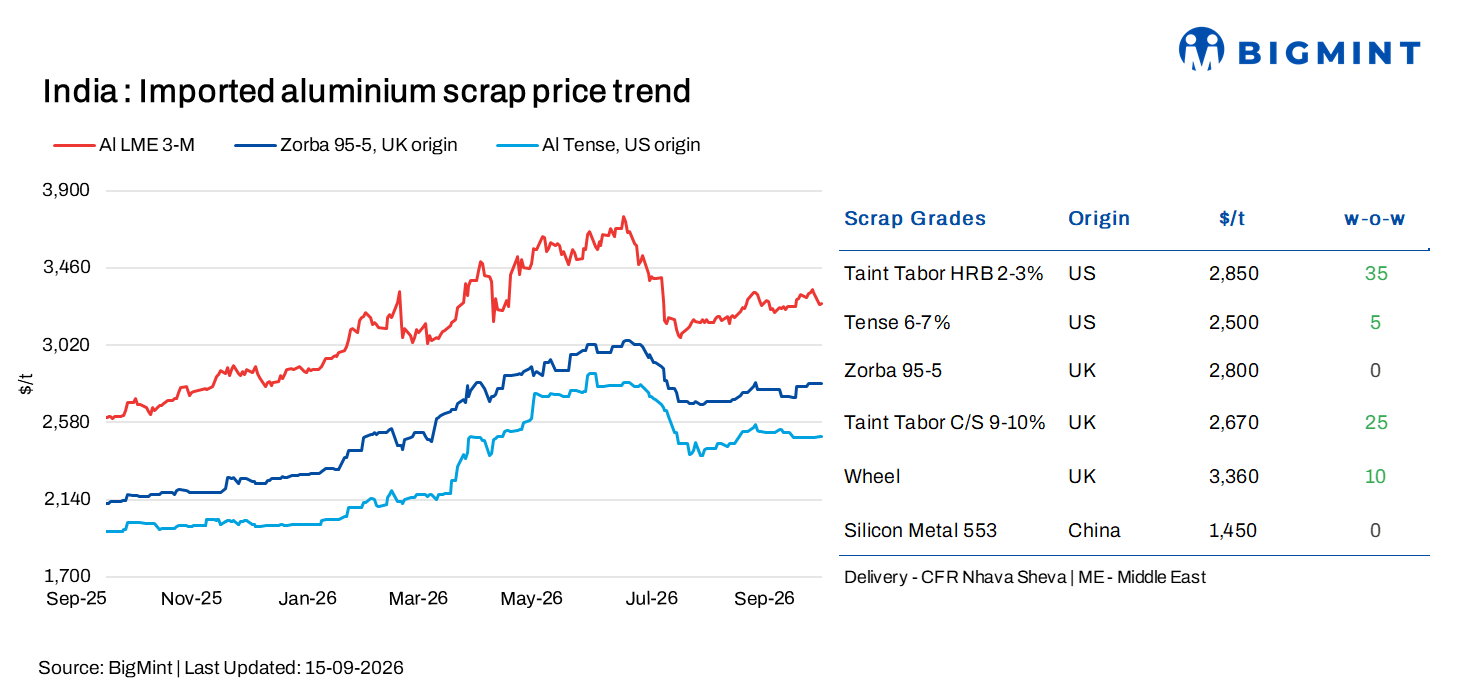
India: Imported aluminium scrap prices gain w-o-w despite softer LME, tight supply

  • Tighter availability supports imported scrap prices
  • Buyers remain cautious amid limited spot enquiries

India’s imported aluminium scrap prices increased w-o-w despite softer LME aluminium prices, supported by tighter scrap availability and renewed supply concerns.

According to BigMint’s latest assessment for CFR Nhava Sheva deliveries, US-origin Taint Tabor HRB 2-3% scrap prices rose by $35/t w-o-w to $2,850/t, from $2,815/t. Meanwhile, UK-origin Taint Tabor C/S 9-10% scrap prices increased by $25/t to $2,670/t, from $2,645/t.

LME aluminium prices correct w-o-w

Three-month aluminium prices on the LME declined by $58/t, or 1.8% w-o-w, to $3,250/t on 11 September, from $3,308/t on 7 September. Prices corrected after the recent rally as profit-taking and position unwinding intensified, while broader macroeconomic pressure from rising oil prices, higher US Treasury yields and increased expectations of a Fed rate hike weighed on base-metal sentiment.

Meanwhile, LME aluminium inventories declined by 425 t, or 0.2%, to 244,100 t on 11 September, from 244,525 t on 7 September. Stocks remained near historically low levels, with supply disruptions in the Middle East continuing to constrain availability and provide underlying support to aluminium prices.

Market scenario

India’s imported aluminium scrap market remained subdued this week, as Ganesh Chaturthi holidays slowed demand and kept trading activity limited. Buyers largely adopted a cautious approach, resulting in fewer spot enquiries and restricted trade volumes.

Market participants continued to assess the impact of the revised PSIC (Pre-Shipment Inspection Certificate) guidelines. While suppliers are generally providing the mandatory no-war-material certificate, compliance with the revised inspection process remains challenging. The same-day uploading of inspection photographs and videos is particularly difficult when material under a single contract is loaded simultaneously from multiple yards. Additionally, limited availability of approved PSIA agencies in some non-Safe Countries could create logistical challenges and potentially delay shipment clearances.

Meanwhile, domestic aluminium Tense scrap demand is showing early signs of improvement, with market activity gradually picking up as buyers prepare for September requirements. As competitively priced imported ADC12 inventories continue to decline, alloy producers are expected to return to the market for fresh scrap purchases. This could provide additional support to domestic scrap demand in the coming weeks.

Outlook

Imported aluminium scrap demand is expected to improve gradually in the coming months as seasonal buying activity strengthens and buyers prepare for higher downstream requirements. Declining inventories of competitively priced imported ADC12 material could further support fresh scrap purchases by alloy producers. However, revised PSIC requirements and tighter scrap availability may continue to influence trade flows and keep the market relatively cautious in the near term.


Comments

Leave a Reply

Your email address will not be published. Required fields are marked *