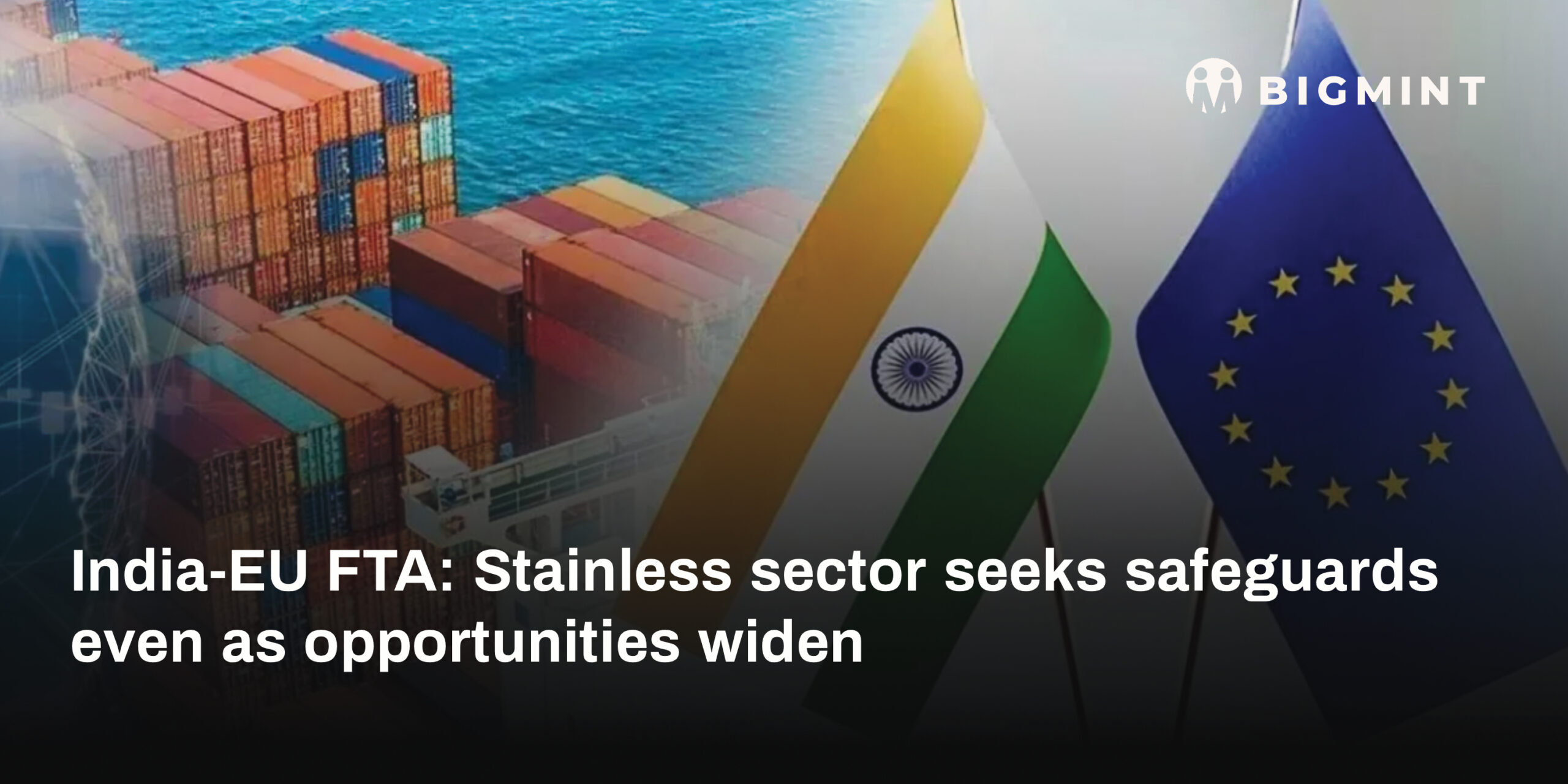
- India-EU FTA expands market access for manufacturers
- Stainless steel sector welcomes exports, flags import risks
India and the European Union have concluded a long-awaited Free Trade Agreement (FTA) on 27 January, opening a 27-nation market for Indian manufacturing exports. The deal is expected to enhance trade flows, improve market access, and strengthen supply-chain linkages once implemented later this year. For Indian exporters, duty-free or concessional access to the EU could significantly boost competitiveness.
However, India’s stainless steel industry has urged caution. Industry body Indian Stainless Steel Development Association (ISSDA) welcomed the agreement’s long-term export potential but flagged risks of increased imports into India, which could pressure domestic producers amid global oversupply and price competition. The association has called for calibrated tariff reductions, phased implementation, and safeguard mechanisms to protect small and mid-sized players.
“The conclusion of the India-EU free trade agreement is a significant milestone in India’s global trade engagement and reflects the government’s sustained efforts to strengthen strategic economic partnerships,” ISSDA President Rajamani Krishnamurti said in a statement.
“While India’s broader trade objectives are advanced, we will closely study the agreement’s provisions and continue engaging with policymakers to ensure that the interests of the domestic stainless steel industry are appropriately safeguarded,” he added.
Market participants note that while the FTA could support investment and technology transfer over time, its success will hinge on balancing openness with protection for sensitive sectors. The stainless steel industry plans to engage with policymakers to ensure trade remedies and review mechanisms are embedded during implementation.
Leave a Reply